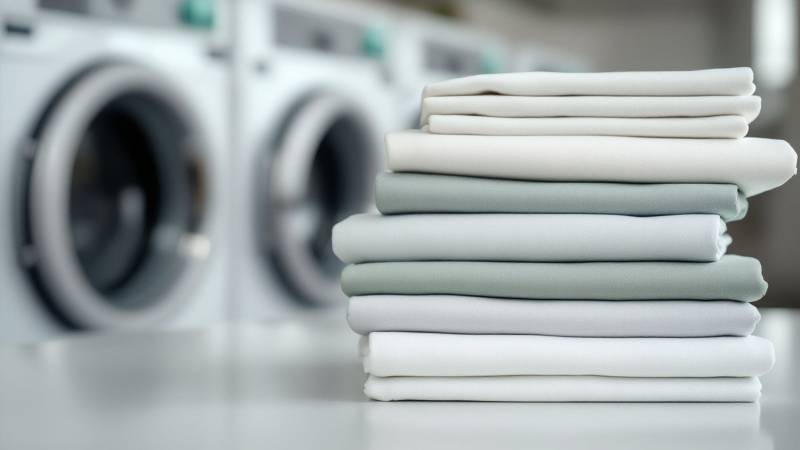
Wash most cotton and cotton-blend sheets on the Normal/Cotton cycle, which the American Cleaning Institute names as the everyday setting for sheets, in warm water with the detergent dose on the label. Dry them on the normal (medium heat) dryer cycle and fold them as soon as they are fully dry (American Cleaning Institute).
Check the fiber first. Silk, linen and rayon "made from bamboo" need a gentle cycle and lower heat, and the care label overrides any general rule.
Key takeaways
- Use the Normal/Cotton cycle and warm water for cotton and polyester-blend sheets; cold is fine for lightly used sheets.
- Switch to hot water and a thorough dry when someone in the house is sick.
- Wash sheets apart from towels: new towels shed lint onto smooth sheets.
- Lower dryer heat does not reduce cotton shrinkage; air drying does.
- Use oxygen bleach, not chlorine, on wrinkle-resistant cotton, rayon from bamboo and silk.
How do you wash sheets in a washing machine?
Follow the same six-step routine the American Cleaning Institute gives for any load, with a few sheet-specific checks.
- Read the label. US law requires textile labels to show fiber content (Federal Trade Commission), and the fiber decides the cycle, temperature and bleach.
- Pretreat stains. Apply a stain remover or liquid detergent to spots before washing; drying can set a stain permanently (American Cleaning Institute). For blood on sheets, see our guide to getting blood out of sheets.
- Sort. Wash whites separately, and keep heavily soiled items apart so lighter loads don't pick up soil and turn gray (American Cleaning Institute).
- Load loosely. Don't overload the washer: laundry needs room to move (American Cleaning Institute).
- Measure detergent. Use the amount on the label; more isn't better, but hard water needs slightly more (American Cleaning Institute).
- Pick the cycle and temperature, then dry and fold promptly once fully dry (American Cleaning Institute).
How often to repeat this is a separate question. The American Cleaning Institute says every two weeks, more often if you sweat a lot at night; our sheet-washing schedule covers the exceptions.
How do you wash sheets so they don't tangle?
Tangling is mostly a crowding problem. Leave space in the drum, and mix small and large items in one load so they can move freely and wash better (American Cleaning Institute). Pillowcases and a flat sheet with a few similar-colored clothes tumble better than a fitted sheet balled up alone.
Should you wash sheets in hot or cold water?
Cold or warm water is enough for routine loads; save hot water for illness. Water heating uses about 90% of a washer's energy, and cold water generally cleans well unless there are oily stains, according to ENERGY STAR. Dropping from hot to warm cuts that energy roughly in half (ENERGY STAR).
The American Cleaning Institute sorts the choice by household risk:
| Situation | Water | Extra steps |
|---|---|---|
| Healthy household, routine wash | Cold or warm | None needed |
| Someone has a cold, flu or COVID-19 | Warmer wash and dry | Don't shake the sheets; wash soon |
| Stomach bug or weakened immune system | Warmest the fabric allows | Gloves; sanitizing cycle or laundry sanitizer |
For a sick person's bedding, the American Cleaning Institute says to wash sheets and pillowcases in hot water and dry them thoroughly. ENERGY STAR also suggests switching to hot water temporarily when someone at home is sick (ENERGY STAR).
Bed bugs are different: water temperature is not the fix. The EPA says a household dryer on high heat for 30 minutes kills bed bugs and eggs, and washing alone might not. Dirty sheets don't cause them: how clean a place is does not determine whether bed bugs are present (CDC). Carry the sheets in a sealed plastic bag and store them sealed afterward (EPA). For the full temperature chart by fabric, see what temperature to wash clothes.
What cycle should I wash sheets on?
Normal/Cotton for cotton and blends, Delicates for silk and other fragile fibers, and Heavy Duty only for very dirty bedding. The American Cleaning Institute matches dryer settings the same way, as in this table.
| Sheet fabric | Wash cycle | Dryer setting |
|---|---|---|
| Cotton, percale, cotton sateen | Normal/Cotton | Normal (medium heat) |
| Polyester, microfiber, cotton-poly blends | Normal or Permanent Press | Permanent Press |
| Linen | Delicate or gentle | Low heat, or line dry |
| Rayon from bamboo | Short, gentle cycle | Low heat, or line dry |
| Silk | Delicates, or hand wash | Air dry |
The linen, rayon and silk rows come from the fiber sources in the next section (the Alliance for European Flax-Linen & Hemp; UGA Extension).
Does a lower dryer setting stop cotton sheets from shrinking?
No. In tests reported by Cotton Incorporated, cotton dried at 100°F, 150°F and 200°F shrank by the same amount, and any tumble drying released all the shrinkage left in the fabric. One wash and dry may remove about 90% of the total (Cotton Incorporated). To limit shrinking, wash in cold water and air dry, as the American Cleaning Institute's education lead advised in a Cotton Incorporated interview.
How do you wash sheets by fabric?
Check the fiber line on the label, then follow the fiber, not the name on the package.
Cotton and percale sheets
Cotton is durable and absorbent and handles the normal cycle (UGA Extension). Many sheets carry a wrinkle-resistant (permanent press) resin finish. UGA Extension warns that chlorine bleach can yellow and weaken resin-treated cotton, so use a dry oxygen bleach on those.
How to wash linen sheets
The the Alliance for European Flax-Linen & Hemp says linen is machine washable and recommends a delicate program at 30°C (86°F) with a mild detergent that has no bleaching agents. Keep the spin gentle, because hard spinning wrinkles flax and shortens its life (the Alliance for European Flax-Linen & Hemp).
- Drying: low heat on a gentle program, removed while slightly damp, or line dried out of direct sun (the Alliance for European Flax-Linen & Hemp).
- Storage: linen dries quickly but wrinkles, and repeated creasing in the same spot weakens it (UGA Extension).
How to wash silk sheets
UGA Extension prefers dry cleaning for silk. If the label allows washing, use a neutral soap with no free alkali and never chlorine bleach. Silk loses strength when wet and is weakened by sunlight and perspiration (UGA Extension), so use the Delicates cycle (American Cleaning Institute) and air dry away from sun. Sheets labeled dry clean only belong with a professional dry cleaner. Our hand-washing guide covers the sink method.
How to wash satin sheets
Satin is a weave, not a fiber. Cotton Incorporated defines satin as a satin weave in silk and sateen as the same weave in another fiber; the long surface floats give it the shine. Satin sheets can be silk or a synthetic such as polyester, so check the label and care for the fiber.
- Polyester satin: gentle cycle, oxygen bleach only, low dryer heat; polyester can pill, attracts lint and melts if too hot (UGA Extension).
- Silk satin: follow the silk steps above.
- Cotton sateen: wash like cotton.
How to wash bamboo sheets
Most "bamboo" sheets are rayon. The Federal Trade Commission says only fabric made directly from bamboo fiber can be called bamboo; rayon or viscose made from bamboo must be labeled that way. UGA Extension notes rayon is weaker when wet and may shrink or stretch, so machine wash it on a short cycle, handle it gently and use oxygen bleach, not chlorine. Dry on low or line dry.
How to wash flannel sheets
Wash flannel in a load by itself. The American Cleaning Institute lists flannels among the "lint losers" that shed onto other fabrics. Cotton flannel follows the cotton shrinkage rules above: air dry it if fit matters (Cotton Incorporated).
How do you keep white sheets white?
Wash whites alone and keep them away from heavily soiled loads; the American Cleaning Institute says whites slowly gray or yellow when they pick up soil from the wash water. Then choose a bleach that suits the fiber.
- Chlorine bleach: for colorfast cotton whites without a resin finish. Dilute it and add it about 5 minutes after the wash starts so it doesn't destroy the detergent's enzymes and whiteners (American Cleaning Institute).
- Oxygen bleach: safe on all washable fabrics and best in warm to hot water, but it maintains whiteness more than it restores it (American Cleaning Institute).
- Yellowed linen: the the Alliance for European Flax-Linen & Hemp suggests a 30-minute soak in water with a small dose of hydrogen peroxide, then a cold rinse.
Why is one side of the bed yellow?
Body oil and sweat are the likely cause. UGA Extension says polyester, nylon and silk absorb body oils and perspiration, and silk yellows with age. Pretreat the yellow area with a prewash stain remover, which the American Cleaning Institute recommends for body soils, then wash in the warmest water the label allows. Our guides to yellow sweat stains and keeping whites white go further.
Can you wash sheets and towels together?
It's better not to. The American Cleaning Institute lists new towels among the fabrics that shed lint, and says permanent press fabrics attract it; polyester also attracts lint (UGA Extension). Smooth or wrinkle-resistant sheets come out fuzzy. See our towel guide for their own settings.
Can you wash bed sheets with clothes?
Yes, if they match. The American Cleaning Institute sorts loads by color, fabric and care instructions, and a mix of large and small items actually moves better than sheets alone. White cotton sheets can go with white cotton tees; a dark satin set should not go with jeans.
Should you wash new sheets before using them?
Yes. Some cotton fabrics are finished with formaldehyde-based resins for wrinkle resistance, and labels don't say which ones (GAO). The GAO found that most of 180 tested textiles had low levels, but some people get allergic contact dermatitis, and washing before use often reduces the levels, though not always.
- Wash new colored sets on their own the first few times, as the American Cleaning Institute advises for any new dark or bright item.
- Expect some shrinkage on the first wash: one wash and dry may remove about 90% of a cotton fabric's shrinkage (Cotton Incorporated).
When is it easier to wash sheets at a laundromat?
When you need to wash every set in the house at once, after illness or a bed bug scare, or when your home machine is small. More than 4,000 laundromats in the LaundroMaps directory report large-capacity machines, as of October 2026 (LaundroMaps directory data). A self-service laundromat lets you run several sets side by side and dry them on high heat. ENERGY STAR notes that a washer uses about the same energy whatever the load size, so full loads are the efficient choice (ENERGY STAR).
If you'd rather not do it yourself, more than 6,700 listings offer wash and fold (LaundroMaps directory data). Drop the bedding at a wash-and-fold service and tell the attendant about any silk, linen or bamboo pieces and their care labels.
Frequently asked questions
Can you put sheets in the washing machine?
Yes. Cotton, polyester, linen and most bamboo-rayon sheets are machine washable; use the Normal cycle for cotton and a gentle cycle for linen and rayon. Silk is the exception: dry cleaning is preferred unless the label allows washing.
How often should you wash your sheets?
The American Cleaning Institute says every two weeks, and more often if you sweat a lot at night. Wash them as soon as possible after someone has been sick.
How long is too long to not wash your sheets?
The American Cleaning Institute's guideline is two weeks for a healthy sleeper. Go shorter if you sweat a lot at night, and wash right away after illness or a stain.
What happens if you don't wash your bedsheets?
Body oil and sweat build up, which yellows whites and some synthetics and makes stains harder to remove. Soil left in the fabric also redeposits in the wash and grays the next load.
Do bed bugs come from unwashed sheets?
No. The CDC says how clean a place is does not determine whether bed bugs are present; they travel in luggage, folded clothes and bedding. If you find them, dry the bedding on high heat for 30 minutes.
Is it okay to sleep on new unwashed sheets?
Most textiles the GAO tested had low formaldehyde levels, but washing first is the safer habit. Some people react to formaldehyde-based wrinkle finishes, and washing often lowers the levels.
How we researched this
We built this guide from the American Cleaning Institute's laundry and health guidance, the University of Georgia Extension fiber-care table, fiber trade groups (Cotton Incorporated and the Alliance for European Flax-Linen & Hemp), and federal pages from the FTC, EPA, ENERGY STAR, CDC and GAO, plus LaundroMaps directory counts. We cite 13 outside sources and favored agencies and extension services over brand advice. We did not lab-test any method, and care labels on your own sheets come first. Researched October 2026.
Sources
- American Cleaning Institute -- Laundry Basics
- Federal Trade Commission -- Bamboo Textiles
- ENERGY STAR (U.S. EPA) -- Clothes Washers
- Centers for Disease Control and Prevention -- About Bed Bugs
- U.S. Environmental Protection Agency -- Preparing for Treatment Against Bed Bugs
- American Cleaning Institute -- Laundry Care for Better Health (Levels of Laundry)
- American Cleaning Institute -- Ask ACI: Home Cleaning After Illness
- Alliance for European Flax-Linen & Hemp -- Washing linen: Linen care tips
- University of Georgia Cooperative Extension (Textiles) -- Understand Your Fibers
- Cotton Incorporated -- A Guide to Improved Shrinkage Performance of Cotton Fabrics (ISP 1009)
- Cotton Incorporated Lifestyle Monitor -- The Endless Laundry Cycle
- Cotton Incorporated -- Textile Glossary
- U.S. Government Accountability Office -- Formaldehyde in Textiles (GAO-10-875) Highlights
- LaundroMaps directory data -- 13,000+ US laundromat listings, October 2026
Related guides
- How to wash a mattress protector, pad or topper: waterproof backings, foam toppers and yellow stains.
- How to wash linen sheets and clothes: cool gentle cycles, low heat and ironing damp.
- How to wash pillows: down, feather, foam and polyester, plus drying times.