What Temperature Should You Wash Your Clothes? The Complete Guide

LaundroMaps Team
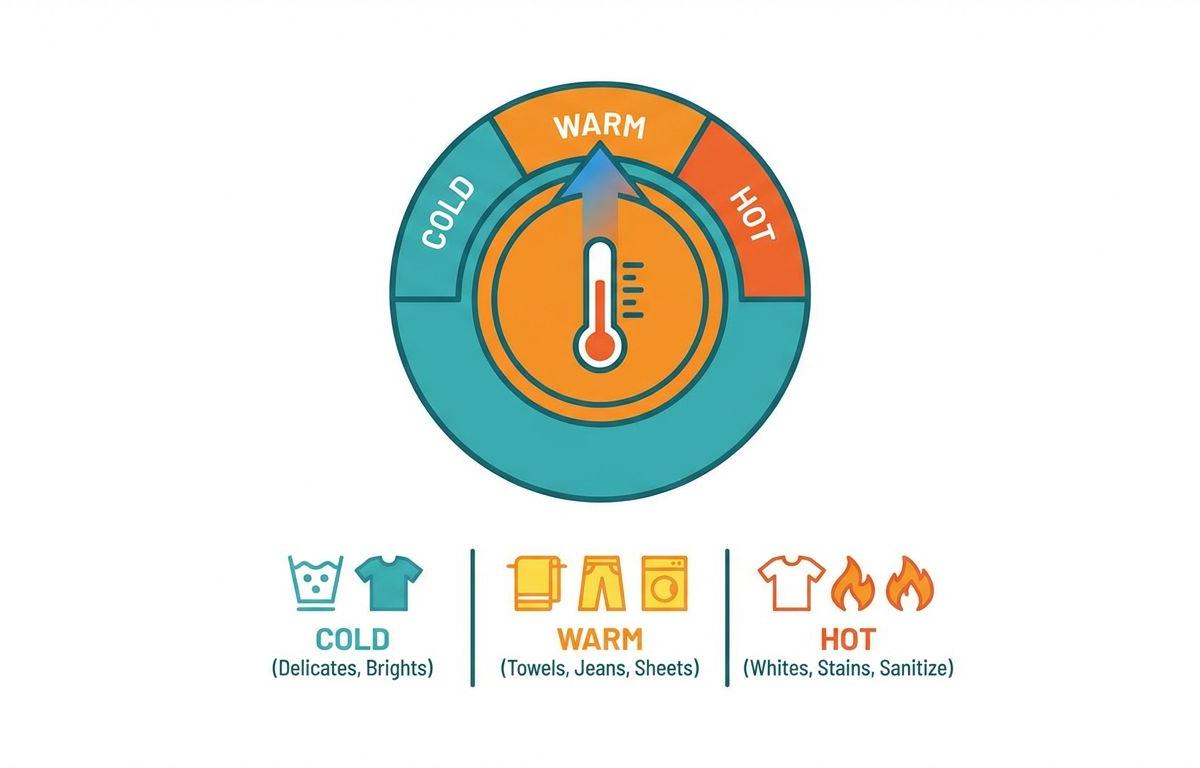
Choosing the right wash temperature is one of the most important laundry decisions you make — and one of the most confusing. Wash too hot and you risk shrinking, fading, and damaging fabrics. Wash too cold and heavily soiled items may not get fully clean.
This guide breaks down exactly what temperature to wash clothes for every fabric type, stain situation, and laundry scenario — whether you're using a machine at home or at a laundromat near you.
Quick Answer: What Temperature Should You Wash Clothes?
For most everyday laundry, cold water (60-80°F / 15-27°C) is the best default. Modern detergents are formulated to work effectively in cold water, and cold washing prevents shrinking, fading, and color bleeding.
Use warm or hot water only when you specifically need it — for heavily soiled items, whites that need brightening, or items that require sanitizing (like bedding and towels).
Wash Temperature Settings Explained
Washing machines typically offer three to five temperature settings. Here's what each one means and when to use it:
What Temperature to Wash Clothes by Fabric Type
Different fabrics respond to heat differently. Here's the ideal wash temperature for each common fabric:
Not sure what fabric your garment is made from? Check the care label — it lists both the material and the manufacturer's recommended wash settings. Our laundry symbols guide explains every symbol you'll find on clothing labels.
What Temperature Removes Stains Best?
Stain type determines the right wash temperature — and getting it wrong can permanently set some stains:
- Protein stains (blood, sweat, egg, dairy): Always start with cold water. Hot water cooks protein stains into the fabric, making them nearly impossible to remove.
- Oil and grease stains: Warm to hot water works best. Hot water helps dissolve oils. Pre-treat with dish soap or a degreasing stain remover first.
- Tannin stains (coffee, tea, wine, juice): Cold water for initial treatment, then wash warm. Avoid hot water initially as it can set tannin stains.
- Dye stains (ink, marker, berry): Cold water only. Heat sets dye stains permanently.
- Mud and dirt: Let it dry first, brush off excess, then wash warm.
For detailed stain-by-stain instructions, see our complete stain removal guide.
Why Cold Water Washing Is Usually Best
Cold water washing has become the recommended default for good reasons:
- Prevents shrinking: Hot water causes natural fibers (cotton, wool, linen) to contract. Cold water keeps garments true to size.
- Preserves colors: Hot water opens fabric fibers, releasing dye. Cold water keeps colors vibrant longer.
- Saves energy: Heating water accounts for about 90% of the energy a washing machine uses. Cold water cuts your energy bill significantly.
- Reduces wrinkles: Cold water produces fewer wrinkles, which means less ironing.
- Modern detergents work in cold: Today's liquid detergents are specifically engineered to dissolve and clean effectively in cold water.
The exceptions — whites, towels, bedding, and heavily soiled work clothes — genuinely benefit from warm or hot water. Everything else does better cold.
When to Use Hot Water for Laundry
Hot water is necessary in specific situations:
- White cotton items: Hot water combined with bleach or oxygen brightener keeps whites looking their best.
- Towels and washcloths: Hot water kills bacteria and removes the oils and residue that cause musty towel smell.
- Bed sheets and pillowcases: Hot water eliminates dust mites and allergens — important for allergy sufferers.
- Kitchen linens: Dish towels and cleaning rags need hot water for proper sanitization.
- Cloth diapers: Hot water is essential for sanitizing reusable diapers.
- After illness: Wash bedding and clothing from sick household members in hot water to kill germs.
Wash Temperature Tips for Laundromat Machines
Laundromat washing machines handle temperature selection differently from home machines:
- Commercial front-loaders: Most have clearly labeled temperature buttons (Cold, Warm, Hot). Select before starting your cycle.
- Older top-load machines: May have a single dial for wash/rinse temperature combinations. "Cold/Cold" is the safest default.
- Card-operated machines: Digital displays typically let you select exact settings before payment.
- No temperature control? Some older laundromat machines default to warm. If you're washing delicates or darks, ask the attendant or use a different machine.
For help using laundromat machines, our laundromat machine guide covers every type of washer you'll encounter.
Frequently Asked Questions About Wash Temperature
Does cold water kill germs in laundry?
Cold water alone does not kill most germs. However, the combination of detergent, agitation, and rinsing removes the vast majority of bacteria. For true sanitization (flu, stomach bugs), use hot water (140°F+) or add a laundry sanitizer product to a cold cycle.
Will cold water get my clothes clean?
Yes. Modern liquid detergents are specifically formulated to dissolve and clean effectively in cold water. For most everyday laundry, cold water cleans just as well as warm or hot — with less risk of damage.
Can I wash everything in cold water?
Almost everything. The main exceptions are white cotton items (which benefit from hot water to prevent yellowing), towels and bedding (which need hot water for sanitization), and heavily soiled work clothes or gym clothes with persistent odor.
Does hot water shrink clothes?
Yes. Hot water causes natural fibers like cotton, wool, and linen to shrink. Synthetic fabrics resist shrinking but can develop permanent wrinkles in hot water. When in doubt, wash cold.
Find a Laundromat Near You
Related guides
- Grease and oil stains: why they need the hottest water the fabric allows.
- Does polyester shrink? What really shrinks clothes: dryer tumbling, more than the heat setting.
