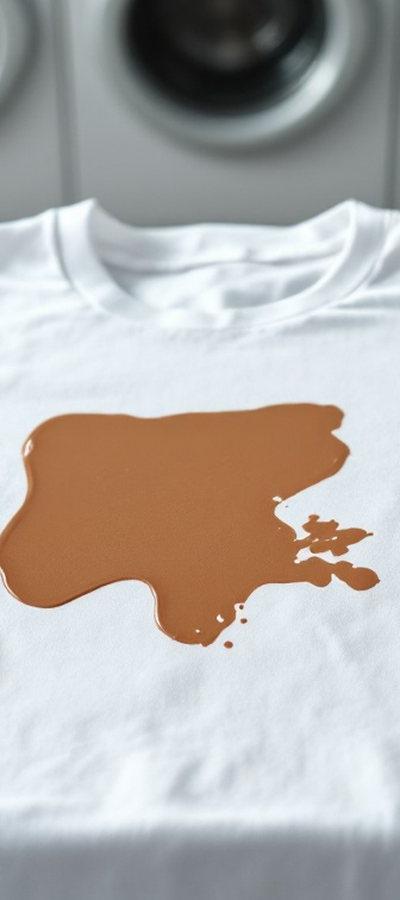
How to Get Blood Out of Clothes and Sheets (Fresh or Dried)

LaundroMaps Team
To get blood out of clothes, soak the stain in cool water for 30 minutes or longer, rub detergent into what's left, rinse and wash (UGA Extension). Never use hot water first: it sets blood stains (American Cleaning Institute). For dried blood, pretreat or soak in a product with enzymes before washing (American Cleaning Institute).
Check the stain before the garment goes in the dryer. If any mark is left, air-dry it and treat again, because dryer heat can make the stain permanent (NMSU Extension; K-State Extension).
Key takeaways
- Fresh blood: cold or cool water only, soaked for 30 minutes or longer, then detergent rubbed in and a normal wash.
- Dried blood: soak in an enzyme presoak for at least 30 minutes, or overnight for old stains.
- Hydrogen peroxide: 3 percent strength, a few drops for 1 to 3 minutes, tested on a hidden seam first.
- Chlorine bleach only on white, bleach-safe fabric, and never mixed with ammonia or vinegar.
- No dryer and no iron until the stain is completely gone.
How do you get fresh blood out of clothes?
Rinse or soak it in cold water as soon as you can, then work detergent into the spot and launder. These steps combine the American Cleaning Institute guide with the University of Georgia's extension guide to blood stains (UGA Extension):
- Scrape off any crust. Brush away dried surface blood with a soft brush or a fingernail before you wet it (Cotton Incorporated).
- Flush from the back. Hold the stain under cold running water, wrong side up, so the blood is pushed out of the fabric instead of through it (UGA Extension; SDSU Extension).
- Soak for 30 minutes or longer in cool water (UGA Extension).
- Work in detergent. Rub a little liquid laundry detergent or bar soap into what's left, then rinse and repeat (UGA Extension).
- Wash as the care label says. If the stain is still visible afterward, rewash with a bleach that's safe for the fabric (American Cleaning Institute).
- Air-dry until you're sure the stain is gone (NMSU Extension).
An enzyme detergent (one that lists enzymes or "bio" action on the label) helps from the first soak. Cotton Incorporated recommends pretreating or soaking cotton in cool water with an enzyme-based, bleach-free detergent (Iowa State Extension).
Why does hot water set blood stains?
Blood is a protein stain, and heat cooks it into the fabric. Iowa State's extension textile specialists explain that hot water, an iron or a dryer cause the protein to coagulate between the fibers of the yarn (Iowa State Extension). In the lab, hemoglobin starts to unfold at 44 to 54°C (about 111 to 129°F) and clumps together at 54 to 70°C (about 129 to 158°F) (a 2004 Biophysical Journal study). That is why every guide we read starts with cold or cool water (American Cleaning Institute; Nebraska Extension).
Our guide to washing temperatures explains when warm and hot cycles are worth using on the rest of a load.
How do you get dried blood out of fabric?
Yes, dried blood can usually be removed, but it takes an enzyme soak rather than water alone. American Cleaning Institute says to pretreat or soak dried blood in warm water with a product containing enzymes, then launder. Iowa State describes enzyme products as ones that "eat" protein stains (Iowa State Extension).
- Start cold. Soak in cool water for 30 minutes or longer (UGA Extension).
- Switch to an enzyme presoak. Soak another 30 minutes or more in lukewarm water with an enzyme presoak product (UGA Extension). Keep the water under 100°F (Iowa State Extension).
- Rub detergent into what's left, then rinse (UGA Extension).
- Still there? Move on to ammonia or hydrogen peroxide (below), then launder (UGA Extension).
How long should you soak an old blood stain?
Longer than the wash cycle. Clorox notes that the wash portion of a cycle is usually not long enough for enzymes to work on heavy stains. The guides we read give these soak times:
| Source | Enzyme soak |
|---|---|
| UGA Extension | 30 minutes or longer, lukewarm water (UGA Extension) |
| Cornell Cooperative Extension | 30 minutes, under a pad kept moist with enzyme solution (Cornell Cooperative Extension) |
| Clorox (on sheets) | At least 30 minutes, ideally 60, in cool water (Clorox) |
| NMSU Extension | Overnight in a laundry presoak, for stubborn protein stains (NMSU Extension) |
For a spot treatment, Cornell mixes 1/2 teaspoon of enzyme product into 1/2 cup of warm water (Cornell Cooperative Extension).
How do you remove set-in old blood stains?
Add ammonia after the enzyme soak. UGA's method for old or stubborn blood is a few drops of household ammonia on the stain, then another wash (UGA Extension). Cornell's lab-tested procedure flushes the spot with 1 tablespoon of ammonia in 1/2 cup of water, then with plain water (Cornell Cooperative Extension). Use clear ammonia without added color or fragrance, test it on a hidden seam because it can change some dyes, and dilute it with an equal amount of water for silk or wool (Cornell Cooperative Extension; UGA Extension).
Will old blood come out of clothes?
Often, but not always. Set-in stains are harder to remove, and stains that have been washed, machine-dried or ironed may never come out completely (NMSU Extension; K-State Extension). Blood holds protein and iron, which bind tightly to fibers once the stain sets (Clorox). Repeat the soak before you give up: Cornell's guide says to be patient and repeat steps as needed (Cornell Cooperative Extension).
Does hydrogen peroxide remove old blood stains?
It can bleach out the last of a blood stain, used briefly and at the right strength. UGA's method is a few drops of 3 percent hydrogen peroxide on the stain for 1 to 3 minutes, then a thorough rinse (UGA Extension). Use the 3 percent solution sold as an antiseptic, not the stronger kind sold for bleaching hair (Cornell Cooperative Extension; K-State Extension).
Sources differ on colored fabric. Older extension guides call 3 percent peroxide safe for all fibers but say dyed fabric must be tested first (K-State Extension; SDSU Extension). Cotton Incorporated goes further and limits it to white and light-colored clothes, because it can bleach color out. The safer path: test it on an inside seam, and on dark cotton use the baking-soda paste Cotton Incorporated suggests instead.
Can you use chlorine bleach on blood?
Only on white, bleach-safe fabric such as white cotton and linen (NMSU Extension). Clorox says to dilute 1/3 cup of its bleach per gallon of water, apply, wait 10 minutes and wash. Never use chlorine bleach on wool, silk or spandex (Cornell Cooperative Extension).
Never mix chlorine bleach with ammonia or vinegar. The fumes can cause serious injury or death, so rinse thoroughly between products and work in a ventilated room (K-State Extension; NMSU Extension). Clorox gives the same warning for its bleach and any other cleaner (Clorox).
How do you get blood out of sheets?
Treat sheets the same way as clothes, with a longer presoak because the stain is often hours old by morning. Clorox recommends a presoak in cool water with an enzyme detergent for at least 30 minutes, ideally 60.
- Strip the bed and rinse the spot under cold running water from the back (UGA Extension).
- Presoak 30 to 60 minutes in cool water with an enzyme detergent (Clorox).
- Wash. Once the presoak has done its work, Clorox washes white sheets in the hottest water the care label allows with 1/3 cup of its bleach, and colored sheets with a color-safe bleach (Clorox).
- Air-dry and check, then repeat if any mark is left (Clorox).
Only raise the water temperature after the presoak. Blood that still looks fresh goes into cold water first (American Cleaning Institute).
A queen or king set with a mattress pad can fill a home washer. Presoak at home, then use a large-capacity machine at a laundromat, or hand the bedding to a wash-and-fold service and tell the attendant where the stain is.
How do you get period blood out of clothes and sheets?
Period blood is a bodily fluid, so it takes the same protein-stain method. American Cleaning Institute says to pretreat or soak body-fluid stains in an enzyme product, then launder with a bleach that's safe for the fabric. Rinse cold first, and don't use the dryer until it's gone (NMSU Extension).
How do you get blood out of a mattress?
Blot it; don't soak it. Clorox blots dried blood on a mattress with cold water and a mild detergent or oxygen cleaner, wipes with a damp cloth, repeats, and lets it air-dry completely. For upholstered cotton, UGA's solution is 1 quart of cool water, 1/2 teaspoon of dishwashing or liquid laundry detergent and 1 tablespoon of ammonia, blotted on and then rinsed out (UGA Extension). UGA warns that overwetting upholstery can leave a ring (UGA Extension).
How do you get blood out of jeans, silk, wool and workout clothes?
The cold-then-enzyme method works on most washable fabrics; what changes is which follow-up treatment the fiber and dye can take. Test every product on an inside seam first: DLI suggests leaving a small amount for about 5 minutes, then rinsing, and skipping it if the color changes.
| Fabric | What to use | What to avoid |
|---|---|---|
| Jeans and dark cotton | Cold soak, enzyme detergent; baking-soda paste for 30 minutes on dark colors (Cotton Incorporated) | Peroxide without a seam test; it can lighten dye (Cotton Incorporated) |
| White cotton and linen | Enzyme soak, then 3 percent peroxide or chlorine bleach (NMSU Extension; UGA Extension) | Hot water before the stain is out (American Cleaning Institute) |
| Silk and wool | Cold water; ammonia only diluted 1:1 with water (UGA Extension; K-State Extension) | Chlorine bleach; rubbing (Cornell Cooperative Extension; DLI) |
| Spandex and athletic wear | Enzyme presoak under 100°F, then air-dry (Iowa State Extension) | Chlorine bleach (Cornell Cooperative Extension) |
Blot rather than scrub on any delicate fabric. DLI says never to rub a stain, especially on silk (DLI). Our guide to washing jeans without fading covers the wash itself once the stain is out.
Do dish soap, vinegar, salt or meat tenderizer get blood out?
Some help as part of a method, but none of the extension guides we read treats them as the main fix. Cold water and an enzyme product do most of the work.
Does Dawn soap get blood out of clothes?
A liquid dish soap can stand in for detergent in the rub-in step. NMSU Extension lists dishwashing liquid alongside liquid laundry detergent and shampoo for working into a stain, left about 30 minutes and then rinsed out. Cornell's detergent solution is 1 teaspoon of mild liquid hand-dishwashing detergent in 1 cup of warm water (Cornell Cooperative Extension). It doesn't replace the enzyme soak on dried blood.
Can vinegar remove blood stains?
Not on its own, in any source we read. Cornell uses a vinegar rinse (1/3 cup vinegar in 2/3 cup water) only as one step after ammonia in its protein-stain procedure (Cornell Cooperative Extension). White vinegar is safe on most fabrics but can change some dye colors, and it must never be mixed with chlorine bleach (K-State Extension).
Does salt or meat tenderizer work?
No source we read recommends salt for blood. Unseasoned meat tenderizer appears in a 1962 Nebraska extension circular: cover the stain, add cool water to make a paste, wait 15 to 30 minutes, rinse and launder (Nebraska Extension). Current extension guides use an enzyme presoak instead (UGA Extension; Iowa State Extension).
Is it safe to wash clothes with someone else's blood on them?
Yes, with sensible handling. The CDC says that at home, laundry from people with transmissible infections does not need special handling or separate washing, and can be washed in warm water with detergent. It also says it's preferable to remove visible blood first.
- Don't shake it out. CDC traces laundry-linked infections to rough handling such as shaking soiled linens (CDC).
- Bag it. Keep soiled items in a bag or bin and away from your own clothes until they're washed (CDC).
- Wear gloves if you have them. OSHA requires gloves for workers who handle blood-soiled laundry, and asks them to handle it as little as possible (OSHA). That rule is for workplaces, but it's a sensible habit at home.
Work in cold water while the stain is still in the fabric, then use warmer water and detergent for the wash itself once it's gone (American Cleaning Institute; CDC).
When should you take a blood stain to a professional?
Take it in when the label says dry clean only, the fabric is fragile, the stain is large, or you're not sure it's blood (DLI). Go soon: DLI advises bringing stained garments in within a few days and not storing them stained, because warmth can set the stain.
Fresh protein stains such as blood are water-soluble, and the longer they sit the harder they are to remove (DLI). Tell the dry cleaner where the stain is and what you've already tried, even if it's no longer visible (DLI). For washable items you'd rather not risk, look for professional stain removal, and see our stain-by-stain guide for other marks on the same garment.
Frequently asked questions
What completely removes blood stains?
Cold water and an enzyme product remove most blood stains. For what's left, use a few drops of 3 percent hydrogen peroxide on fabric that passes a seam test, or chlorine bleach on white, bleach-safe fabric.
What is the best old blood stain remover?
An enzyme presoak product, used for at least 30 minutes, does most of the work on old blood. Follow it with clear ammonia, then 3 percent hydrogen peroxide or, on white bleach-safe fabric, diluted chlorine bleach, rinsing between products.
Can dried blood be removed?
Usually, yes. Soak it in cool water, then in an enzyme presoak for at least 30 minutes, rub detergent into what's left and wash. Stains that have already been through a dryer or an iron may not come out completely.
Does blood come out in the wash?
A normal wash often isn't enough, especially in warm or hot water, which can set the stain. Soak and pretreat first, then wash, and check the stain before drying.
Can you put blood-stained clothes in the dryer?
No. Dryer heat can make a blood stain permanent. Air-dry the item, check it, and treat it again if any mark is left.
How do you get blood out of a white shirt?
Soak it in cold water, then use an enzyme presoak if the stain has dried. If a shadow remains, use 3 percent hydrogen peroxide for 1 to 3 minutes or a diluted chlorine bleach if the shirt is bleach-safe cotton.
How we researched this
We read 19 sources for this guide on 13 October 2026 and cited 17. They include the American Cleaning Institute, Cotton Incorporated, the Drycleaning & Laundry Institute, eight university extension services, the CDC and OSHA, and one peer-reviewed study on how heat changes hemoglobin. A bleach maker was cited only for its own products. Some extension guides are decades old, so we used them only where newer sources agree. We did not lab-test these methods, and we found no authoritative source that recommends salt or plain vinegar for blood.
Sources
- University of Georgia Cooperative Extension -- Remove Stains From Blood
- American Cleaning Institute -- Stain Removal Guide
- New Mexico State University Cooperative Extension -- Removing Clothing Stains (Guide C-502)
- Kansas State University Research and Extension -- Spot & Stain Removal for Washable Fabrics (C-638)
- Cotton Incorporated -- How to Remove Blood Stains From Cotton Clothes
- South Dakota State University Extension -- Stain Removal Chart (FS 519)
- Iowa State University Extension and Outreach -- AnswerLine: Sport Stains
- Biophysical Journal -- Protein Thermal Aggregation Involves Distinct Regions: Heat-Induced Unfolding and Aggregation of Hemoglobin
- University of Nebraska-Lincoln Extension -- Common Stains: How to Remove Them (EC62-1159)
- Cornell Cooperative Extension -- Removing Stains at Home
- The Clorox Company -- How to Get Blood Stains Out of Sheets
- The Clorox Company -- How to Remove Blood Stains from Clothes & Sheets
- Drycleaning & Laundry Institute International -- A Guide to Home Stain Removal
- U.S. Centers for Disease Control and Prevention -- Laundry and Bedding: Environmental Infection Control Guidelines
- U.S. Centers for Disease Control and Prevention -- Guideline for Isolation Precautions: Fundamental Elements to Prevent Transmission
- U.S. Occupational Safety and Health Administration -- 29 CFR 1910.1030: Bloodborne Pathogens
- Drycleaning & Laundry Institute International -- Got Milk Stains?