How to Get Stains Out of Clothes: A Stain-by-Stain Guide

LaundroMaps Team
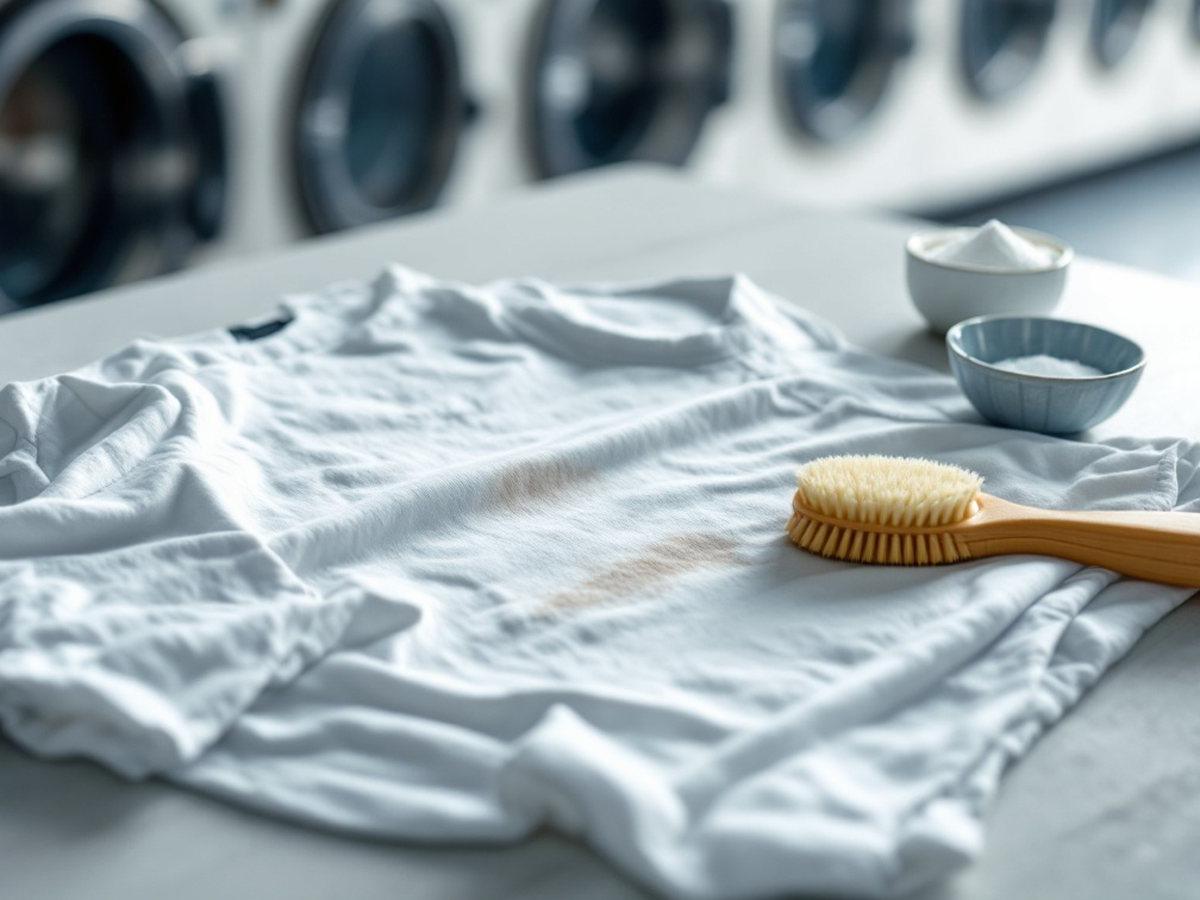
To get a stain out of clothes, blot or scrape off the excess, rinse from the back of the fabric, pretreat with liquid laundry detergent or a stain remover, and wash (Iowa State Extension). Use cold water on protein stains like blood, milk and egg, and the hottest water the fabric allows on oily ones (Iowa State Extension; UGA Extension). Keep the item out of the dryer until the stain is gone (ACI).
Speed matters most. Fresh stains are much easier to remove than stains more than 24 hours old (Iowa State Extension), and the Drycleaning & Laundry Institute (DLI) says many stains begin to set after a week (DLI).
Key takeaways
- Blot, don't rub, and work from the back of the fabric so you push the stain out.
- Cold water first for protein stains (blood, milk, egg, vomit); the hottest safe water for oil and grease.
- Test any remover on a hidden seam first, and follow the care label.
- Air-dry and check before using the dryer or an iron, because heat sets stains.
- Never mix chlorine bleach with ammonia or any other cleaner.
What should you do first when you get a stain?
- Act quickly. A stain gets harder to remove with time and with heat (Texas A&M AgriLife).
- Lift off the excess. Scrape off solids and blot liquids with a clean cloth. Never rub: it spreads the stain and can abrade or tear the fabric (DLI; Smithsonian MCI).
- Read the care label and never use a product or method it prohibits (UGA Extension).
- Test first. Try the remover on a hem or seam allowance, rinse and check. Fabric looks darker wet, so a color change may only show once it dries (Texas A&M AgriLife).
- Rinse from the back. Flushing from the back of the fabric pushes the stain out instead of in (Iowa State Extension).
- Pretreat and leave the product on for the time its label gives (Iowa State Extension). If you need more than one remover, rinse thoroughly between them (NMSU Extension).
- Wash the whole item, then air-dry it and check the spot before any dryer or iron (Texas A&M AgriLife; Iowa State Extension).
Most stains take more than one try. Some need a second or third treatment (Iowa State Extension), and the Smithsonian's conservation lab says even an effective treatment may need five to seven repeats (Smithsonian MCI).
Is hot or cold water better for removing stains?
Cold is the safer start. ACI says most stains come out in cold water, with the warmest setting the fabric allows saved for very dirty clothes and tough stains (ACI). If you don't know what a stain is, start with cold water (Iowa State Extension).
Which stains should never be removed with hot water?
Protein stains: milk, baby formula, blood, body fluids, mud and insect spots. Hot water "cooks" the protein and sets the stain, so rinse them through with cold water from the back (Iowa State Extension). UGA Extension says never to use hot water on egg (UGA Extension).
Which stains need hot water?
Oil-based stains, such as butter, mayonnaise, salad dressing, lotion, automotive grease and collar soil, wash out in the hottest water the fabric can take, with liquid detergent (Iowa State Extension). NMSU Extension defines that as very hot for cotton and linen, hand-hot for synthetics such as nylon, and just warm for wool (NMSU Extension).
Does hot water set stains?
It can. The Smithsonian Museum Conservation Institute says hot water sets stains (Smithsonian MCI), and DLI's advice right after a spill is to avoid all heat and dilute sugary drinks, coffee, wine and food with a little cold water (DLI). Iowa State Extension allows a hot wash for fresh tannin stains like coffee and juice when the fabric can take it (Iowa State Extension), but cold first is the safer order. Heat from the dryer or an iron sets stains too (NMSU Extension). For the settings themselves, see our wash temperature guide.
What type of stain is it?
Stain guides sort stains into families because each family needs a different first step. They don't always agree on where a stain belongs (grass, mud and chocolate get filed differently), and some stains fit more than one family (Texas A&M AgriLife). Mixed stains like coffee with cream need the greasy part treated first (Cornell Extension).
| Type | Examples | Start with | Avoid |
|---|---|---|---|
| Protein | Blood, milk, baby formula, egg, vomit, mud | A cold rinse, then an enzyme presoak (Iowa State Extension) | Hot water, an iron or the dryer (Iowa State Extension) |
| Tannin | Coffee, tea, fruit juice, berries, wine, beer | Warm water and dish detergent, then the hottest safe wash (Iowa State Extension) | Bar or natural soap, which can set them (Iowa State Extension) |
| Oil-based | Butter, salad dressing, lotion, grease, collar soil | Dish soap or a stain remover, then the hottest safe wash (Iowa State Extension) | Drying before the stain is gone (ACI) |
| Dye | Ink, grass, mustard, turmeric, hair dye, dye transfer | A liquid-detergent pretreat, then a long soak: non-chlorine bleach for colors, vinegar and water for whites (Iowa State Extension) | Ammonia on mustard or turmeric, which turns the yellow red (UGA Extension) |
| Combination | Gravy, ketchup, makeup, candle wax, ballpoint ink | The oily or waxy part first, then the rest (Iowa State Extension) | Treating only one part of the stain |
To identify a mystery stain, NMSU says to note what made it, where it is, how it smells and how it feels: oily, sticky or hard (NMSU Extension). Location helps too: food lands near the neckline and cuffs, mud on the lower edges of pants (Texas A&M AgriLife).
How do you remove the most common stains?
The chart below gives the first-line method for 42 common stains on washable clothes, with the source for each. Check the care label first, and send dry-clean-only items to a professional (Iowa State Extension).
Food and drink stains
| Stain | What to do | Watch out for |
|---|---|---|
| Coffee and tea | Sponge or soak in cool water, pretreat with a prewash remover or liquid detergent, then wash with chlorine bleach if safe for the fabric, or oxygen bleach (ACI) | Coffee with milk and sugar is harder to remove (DLI) |
| Red wine | Sponge with cool water or soak about 30 minutes, pretreat with a prewash remover, then wash with chlorine bleach if the fabric allows (ACI) | Skip the salt: it can set tannin stains like wine (Smithsonian MCI) |
| Beer | Rinse promptly in cool water, pretreat, then wash with a fabric-safe bleach (UGA Extension) | No bar soap on tannin stains (Iowa State Extension) |
| Soda and fruit drinks | Sponge with cool water or soak about 30 minutes, pretreat, then wash (ACI) | An unseen spill turns brown later as the sugar caramelizes (Smithsonian MCI) |
| Fruit juice and berries | Rinse in cool water, then soak in an enzyme product for at least 30 minutes and wash (UGA Extension; ACI) | Don't use soap, which sets fruit stains (UGA Extension) |
| Tomato sauce and ketchup | Lift off the excess, run cold water through the back of the stain, rub in liquid detergent, then wash (ACI) | Don't dab it or run water through the front, which drives it deeper (ACI) |
| Barbecue sauce | Flush cold from the back, work in liquid detergent with a soft brush, rinse, sponge with white vinegar and repeat, then wash with a fabric-safe bleach (ACI) | It mixes protein and dye: treat the protein part first (Iowa State Extension) |
| Mustard | Flush with cold water, pretreat with a prewash remover, then wash in the hottest safe water with bleach if the label allows (ACI) | It contains turmeric, a yellow dye that can become permanent if not treated right away (UGA Extension) |
| Curry and turmeric | Pretreat with liquid detergent and rinse, then soak for hours in non-chlorine bleach (colors) or vinegar and water (whites) (Iowa State Extension) | Ammonia turns the yellow red (UGA Extension) |
| Chocolate | Scrape off the excess, soak in cool water, pretreat, then wash in the hottest safe water (ACI) | It's a combination stain: treat the greasy part first (UGA Extension) |
| Milk, ice cream and dairy | Soak in an enzyme product for at least 30 minutes (several hours if it's old), then wash (ACI) | Hot water first cooks the protein (Iowa State Extension) |
| Egg | Scrape off the excess, then soak at least 30 minutes in cool water with an enzyme detergent (UGA Extension) | Never hot water on egg (UGA Extension) |
| Baby formula | Soak in an enzyme product for at least 30 minutes, then wash (ACI) | Never start with hot water (Iowa State Extension) |
| Butter, cooking oil and salad dressing | Pretreat with a prewash remover or liquid detergent, then wash in the hottest safe water (ACI) | Synthetic fabrics attract oily stains, which may need repeat treatments (Iowa State Extension) |
| Gravy | Pretreat with a prewash remover and wash, or soak 15 to 30 minutes in warm water with an oxygen-type bleach (UGA Extension) | Dissolve the oily part first (Smithsonian MCI) |
Body and personal-care stains
| Stain | What to do | Watch out for |
|---|---|---|
| Blood | Fresh: soak in cold water, then wash. Dried: pretreat or soak in warm water with an enzyme product (ACI) | Hot water sets fresh blood (ACI) |
| Sweat and yellow underarms | Use a prewash remover or rub with bar soap, then wash in the hottest safe water; stubborn stains get an enzyme product or oxygen bleach (ACI) | If the color changed: ammonia on fresh stains, white vinegar on old ones (ACI) |
| Deodorant and antiperspirant | Light: pretreat with liquid detergent. Heavy: a prewash remover for 5 to 10 minutes, then wash with oxygen bleach (ACI) | Aluminum compounds can bond with fabric, so some won't come out (Iowa State Extension); never iron the spot (UGA Extension) |
| Collar ring | Pretreat with a prewash remover, liquid detergent or a powder-detergent paste, then wash (ACI) | It's body oil: use the hottest safe water (Iowa State Extension) |
| Urine | Rinse in cool water, soak in cool water with heavy-duty liquid detergent, then wash in hot water (UGA Extension) | No ammonia on cat urine (Smithsonian MCI); old urine stains may not come out (Cornell Extension) |
| Vomit and feces | Wear gloves, don't shake the items, and wash promptly in hot water on the longest cycle (CDC) | The CDC's germ-killing step is a high-heat dry, which can set any stain that's left (CDC; NMSU Extension) |
| Makeup and foundation | Pretreat with a prewash remover, liquid detergent or a powder paste, or rub with bar soap, then wash (ACI) | It's oil plus color: treat the oily part first (Iowa State Extension) |
| Lipstick | Lay it face down on paper towels and dab with 70% or 90% rubbing alcohol until no more color transfers, then wash (ACI) | Long-lasting lipsticks need extra work (ACI) |
| Mascara | Cornell's guide groups it with oily, waxy stains, treated first with a dry-cleaning solvent (Cornell Extension) | Only one guide we read covers mascara on clothes |
| Nail polish | Lay it face down on paper towels and apply nail polish remover to the back, changing towels often (ACI) | Never on acetate or triacetate, which it dissolves (UGA Extension); it may not come out at all (ACI) |
| Sunscreen | Pretreat with a prewash remover, then wash in the hottest water safe for the fabric (ACI) | For sunscreen with avobenzone, use a rust remover, not chlorine bleach (Iowa State Extension) |
| Perfume | Pretreat with a prewash remover or liquid detergent, then wash (ACI) | It can affect dyes (DLI) |
| Hair dye | Pretreat with liquid detergent, then soak for hours in non-chlorine bleach (colors) or vinegar and water (whites) (Iowa State Extension) | Color removers can fade colored fabric (Iowa State Extension) |
Ink, wax and sticky stains
| Stain | What to do | Watch out for |
|---|---|---|
| Ballpoint ink | Sponge with rubbing alcohol or cleaning fluid, working from the back over paper towels, then rinse and wash (ACI) | Laundering can set ink, so treat it before washing (Texas A&M AgriLife) |
| Permanent marker | Dab with 70% rubbing alcohol over paper towels until no more ink lifts, rinse, then wash (Iowa State Extension) | Permanent ink may not come out completely (UGA Extension) |
| Crayon | A few spots: rub with bar soap and wash in the hottest safe water. A whole load: hot water, laundry soap and 1 cup of baking soda (ACI) | Clean leftover wax out of the washer and dryer afterward (UGA Extension) |
| Candle wax | Scrape it off, press between paper towels with a warm iron, changing towels often, then sponge with a prewash remover and wash (ACI) | The iron can dye polyester-cotton with the wax's color (Smithsonian MCI) |
| Chewing gum | Harden it with ice, scrape it off, then sponge with a cleaner over paper towels and wash (UGA Extension) | Change the towels as they pick up residue (UGA Extension) |
| Glue and adhesives | Harden with ice or cold water, scrape, then saturate with a prewash remover and wash (ACI) | Super glue: Cornell soaks it in cool water until it softens (Cornell Extension), while UGA says it can't be removed (UGA Extension) |
| Tree sap and tar | Scrape, lay face down on paper towels and sponge with cleaning fluid, changing towels often, then wash in the hottest safe water (ACI) | Never combine an ammonia soak with chlorine bleach (ACI) |
| Grease and motor oil | Pretreat with a prewash remover or liquid detergent, then wash in the hottest safe water; heavy stains get cleaning fluid from the back over paper towels (ACI) | Don't dry it until the stain is gone (ACI) |
Outdoor and household stains
| Stain | What to do | Watch out for |
|---|---|---|
| Grass | Pretreat or soak in an enzyme product, then wash with chlorine bleach if safe, or oxygen bleach (ACI) | Polyester and spandex uniforms: skip chlorine bleach and air-dry (Iowa State Extension) |
| Mud | Let it dry, brush off as much as you can, then pretreat with a detergent paste or liquid detergent and wash (ACI) | Red clay acts like rust: chlorine bleach can set it (Iowa State Extension) |
| Rust | Use a rust remover made for fabrics, then wash (ACI) | Chlorine bleach makes rust worse (ACI) |
| Mildew and mold | Brush it off outdoors, then wash with a fabric-safe bleach in the hottest recommended water (UGA Extension; ACI) | Badly mildewed fabric may be beyond repair (ACI) |
| Dye transfer (color bleeding) | Soak several hours in cold water to release the dye, then rewash with non-chlorine bleach (colors) or chlorine bleach (whites) (Iowa State Extension) | Rewash right away, without drying (Texas A&M AgriLife) |
| Scorch marks | Wash with chlorine bleach if safe, or soak in oxygen bleach and hot water (ACI) | Severe scorch can't be removed (UGA Extension) |
Step-by-step stain guides
- How to wash white clothes: keeping whites bright and stain-free.
- Grease and oil stains: fresh spots, dried-in stains and what to check before the dryer.
- Ink stains: ballpoint pen, Sharpie and marker, dried ink and ink in the dryer.
- Blood stains: fresh and dried blood on clothes, sheets and mattresses.
- Paint stains: wet and dried acrylic, latex and oil-based paint.
- Food and drink stains: chocolate, coffee, wine, tomato sauce and mustard.
- Gum: ice, scrape, pretreat, and what to do after the dryer.
- Nail polish, makeup and sunscreen stains: remover, acetate warning and orange sunscreen marks.
- Wax, crayon and Chapstick: ironing, crayon loads and the dryer drum.
- Glue and tree sap: super glue, hot glue and sap, by adhesive type.
- Mold and mildew stains: spots on whites, colors and set-in stains.
- Urine stains and smell: cat, dog and bedwetting accidents on clothes and bedding.
- Hydrogen peroxide as a stain remover: which stains it lifts, how long to leave it, and when it bleaches color.
- Deodorant and sweat stains: white marks, yellow armpits and old buildup.
Will old or set-in stains come out of clothes?
Often, yes. ACI says old stains can still be removed (ACI), and the Smithsonian's conservation lab says a stain under two months old can generally be treated, although a day-old stain is easier than a two-week-old one (Smithsonian MCI).
How to remove old stains from clothes
- Identify it by what made it, where it is, its smell and its feel (NMSU Extension).
- Soak it longer. For aged protein food stains, ACI extends the enzyme soak from 30 minutes to several hours (ACI); NMSU uses an overnight laundry presoak for milk, egg, blood and perspiration (NMSU Extension).
- Pretreat and wash again, then air-dry and recheck before any heat (Iowa State Extension).
- Repeat as needed: several rounds are normal (Smithsonian MCI).
- Last resorts: a commercial rust remover or color remover is harsh, so save it for when other methods fail, and test a seam first (NMSU Extension).
Can a dried stain be removed after the dryer?
Sometimes. Dryer heat can set a stain, but ACI says that isn't necessarily hopeless (ACI). For dried blood, ACI switches to warm water with an enzyme product (ACI). Dried tomato stains are often permanent (ACI), and an oily stain that has yellowed with age won't respond to the Smithsonian's solvent methods (Smithsonian MCI).
Some stains are unlikely to come out at all. Cornell lists acids, bleaches, acne creams with benzoyl peroxide, disinfectants, old urine and some yellow dyes (Cornell Extension). Professional cleaners hit the same wall when a stain is very old and oxidized, the fabric is too delicate, or the dye would come out with the stain (DLI).
How do you get stains out of white clothes?
Whites can take stronger treatments, but only some whites take chlorine bleach. NMSU says chlorine bleach is best for white cotton and linen, while all-fabric oxygen bleach is safer for colors and permanent-press fabrics (NMSU Extension). Never use chlorine bleach on silk, wool or spandex (Texas A&M AgriLife).
- Treat the stain first, by its family, then bleach the whole garment rather than just the spot, to avoid uneven color (ACI).
- Dye stains on whites (ink, mustard, hair dye, dye transfer): soak several hours in equal parts white vinegar and cool water, or a weak chlorine bleach solution per the label; a commercial color remover is the next step (Iowa State Extension).
- Watch the clock. Fresh bleach should work within 15 minutes, and longer bleaching can weaken the fabric (Iowa State Extension).
- Test the fabric. Clorox's colorfastness test for its bleach: stir 2 teaspoons of bleach into 1/4 cup of water, put one small drop on a hidden seam, wait 1 minute, then rinse and blot. Any color change means no chlorine bleach (Clorox).
- Rust on whites needs a rust remover, never chlorine bleach, which sets it (Iowa State Extension).
For keeping whites bright wash after wash, see our guide to washing white clothes.
What is the best laundry stain remover?
No single product or method removes every stain (Cornell Extension), so match the remover to the stain family:
- Enzyme presoaks and detergents for protein stains; product names with "bio" or "enzyme action" usually mean enzymes (Iowa State Extension). Keep them off silk and wool, which are protein fibers themselves (Smithsonian MCI).
- Liquid laundry detergent or a prewash remover for oily and combination stains (Iowa State Extension).
- Dish detergent and warm water as the pretreatment for tannin stains like coffee and juice (Iowa State Extension).
- Oxygen bleach, labeled with hydrogen peroxide or sodium percarbonate, for colors (Iowa State Extension); it works best in water hotter than 130°F (Texas A&M AgriLife).
- Chlorine bleach for white cotton and linen only (NMSU Extension).
- Rubbing alcohol for ballpoint ink and permanent marker (ACI; Iowa State Extension).
- A fabric rust remover for rust stains (ACI).
Does Dawn and vinegar remove stains?
Each has a place, used separately or as a weak soak. Dish detergent in warm water is Iowa State's pretreatment for tannin stains (Iowa State Extension), and UGA's coffee and tea soak is 1 quart of warm water with 1/2 teaspoon of dish liquid and 1 tablespoon of white vinegar for 15 minutes (UGA Extension). Vinegar and water also lift dye stains from whites (Iowa State Extension). Use dish liquid only to pretreat: ACI says it doesn't belong in an automatic washer (ACI).
Which stain-removal mistakes are dangerous?
- Mixing chlorine bleach with ammonia or any other cleaner. The vapors can be very dangerous to breathe (CDC; ACI). Rinse thoroughly between removers (NMSU Extension).
- Mixing ammonia and alcohol. Use them one at a time (UGA Extension).
- Solvents near sparks or flames. Use them in a well-ventilated room, and never use gasoline or lighter fluid as a stain remover (Cornell Extension).
- Acetone on acetate. Nail polish remover dissolves acetate and triacetate (UGA Extension).
- Removers within children's reach. Some stain removers are poisonous, so lock them up (NMSU Extension).
- Fuel in the dryer. For gasoline on clothes, use liquid detergent only, air-dry outside, and keep the item out of the dryer until the smell is completely gone (Iowa State Extension).
When should you take a stain to a professional?
Iowa State says not to treat "Dry Clean Only" items at home: take them to a dry cleaner within 24 to 48 hours. Leather, suede and fur need professional cleaning too (Iowa State Extension). A professional is also the right call when a pretest transfers or changes the color (Cornell Extension), or for paint and resin stains that need solvents with special ventilation (Smithsonian MCI).
Tell the cleaner what was spilled, even if you can't see it anymore, and skip household cleaners and stain sticks on anything you're taking in, since they can make the stain harder for a professional to remove (DLI). You can also ask a dry cleaner to treat just the stain without cleaning the whole item (Smithsonian MCI).
As of October 2026, more than 2,100 businesses in the LaundroMaps directory list stain removal as a service, and more than 4,100 list dry cleaning (LaundroMaps directory data). Find professional stain removal or a professional dry cleaner near you. For a pile of stained towels or sheets that needs a big, hot wash, you can find a laundromat near you.
Frequently asked questions
Can rubbing alcohol (surgical spirit) be used to remove stains?
Yes, on some stains: rubbing alcohol is a first-line treatment for ballpoint ink, permanent marker and lipstick. Test it on a hidden seam first, because it can damage acetate, triacetate, modacrylic and acrylic fabrics and can lift some dyes.
Do salt or club soda get red wine out?
The guides disagree. Some extension guides suggest salt or club soda on fresh wine, but the Smithsonian's conservation lab says salt can set tannin stains like wine, and club soda contains salt. The safer route is cool water, then a prewash remover and a wash.
How do you get stains out of clothes without washing them?
Spot-treat the stain itself: put an absorbent pad underneath, apply the remover sparingly, tamp or blot instead of rubbing, then flush the spot with water. For dry-clean-only items, ask a cleaner to treat just the stain.
How long should stain remover sit before washing?
Follow the product label. Iowa State says to rinse or wash within the time limit a commercial remover gives, and Texas A&M warns that leaving some products on longer than recommended can change or remove color.
Why did a stain appear after washing?
Some spills, such as sugary drinks, food and oils, dry without leaving a visible mark, then turn yellow or brown later with time or heat as they oxidize. Treat known spills even when you can't see them.
How we researched this
We read 47 sources for this guide in October 2026: the American Cleaning Institute's stain guide; extension stain guides from Iowa State (HS 305, May 2026), Cornell, New Mexico State, Texas A&M, Georgia and Mississippi State; the Smithsonian Museum Conservation Institute; the Drycleaning & Laundry Institute; the CDC; and Clorox's instructions for its own bleach. Where they disagreed, such as salt on red wine or hot water on coffee, we gave the more cautious method. We didn't lab-test these methods; some guides we drew on, such as Texas A&M's (1998) and Cornell's (2005), are older, so we checked their advice against current sources.
Sources
- Iowa State University Extension -- Quick and Easy Stain Removal for Clothing (HS 305)
- University of Georgia Extension -- Remove Stains From Oil-Based Foods
- American Cleaning Institute -- Stain Removal Guide
- Iowa State University Extension -- Holiday Stains
- Drycleaning & Laundry Institute -- Stains: What to Do When You Spill Something on Your Clothes
- Texas A&M AgriLife Extension -- Quick Stain Removal Guide: Washable fabrics (L-5199)
- Smithsonian Museum Conservation Institute -- Stain Removal
- University of Georgia Extension -- Remove Stains From Blood
- New Mexico State University Extension -- Removing Clothing Stains (Guide C-502)
- Cornell Cooperative Extension -- Removing Stains at Home
- Iowa State University Extension -- Dealing with Sport Stains
- University of Georgia Extension -- Remove Stains From Mustard
- University of Georgia Extension -- Remove Stains From Alcoholic Beverages, Beer, Wine
- University of Georgia Extension -- Remove Stains From Fruits, Red Vegetables, Jam/Jelly/Preserves
- University of Georgia Extension -- Remove Stains From Chocolate/Cocoa (Candy, Ice Cream, Syrup)
- University of Georgia Extension -- Remove Stains From Gravy
- University of Georgia Extension -- Remove Stains From Antiperspirant, Deodorant
- University of Georgia Extension -- Remove Stains From Urine (Human, Animal)
- Centers for Disease Control and Prevention -- How to Prevent Norovirus
- University of Georgia Extension -- Remove Stains From Fingernail Polish, Lacquer
- American Cleaning Institute -- Ask ACI: Bug Spray and Sunscreen on Clothes
- University of Georgia Extension -- Remove Stains From Ink (Ballpoint, Felt Tip, India, Mimeo, Stamp Pad)
- University of Georgia Extension -- Remove Stains From Crayon
- University of Georgia Extension -- Remove Stains From Chewing Gum
- University of Georgia Extension -- Remove Stains From Glue (Airplane, Super, Adhesive/Cellulose Tape)
- University of Georgia Extension -- Remove Stains From Mildew, Mold
- University of Georgia Extension -- Remove Stains From Scorch, Burns
- American Cleaning Institute -- Hope for Removing Old Stains
- American Cleaning Institute -- Laundry Basics
- Clorox -- How to Test Fabric for Colorfastness to Bleach
- University of Georgia Extension -- Remove Stains From Coffee, Tea
- Centers for Disease Control and Prevention -- Cleaning and Disinfecting with Bleach
- LaundroMaps directory data -- 13,000+ US laundromat listings, October 2026