How to Clean a Washing Machine: Front-Load and Top-Load

LaundroMaps Team
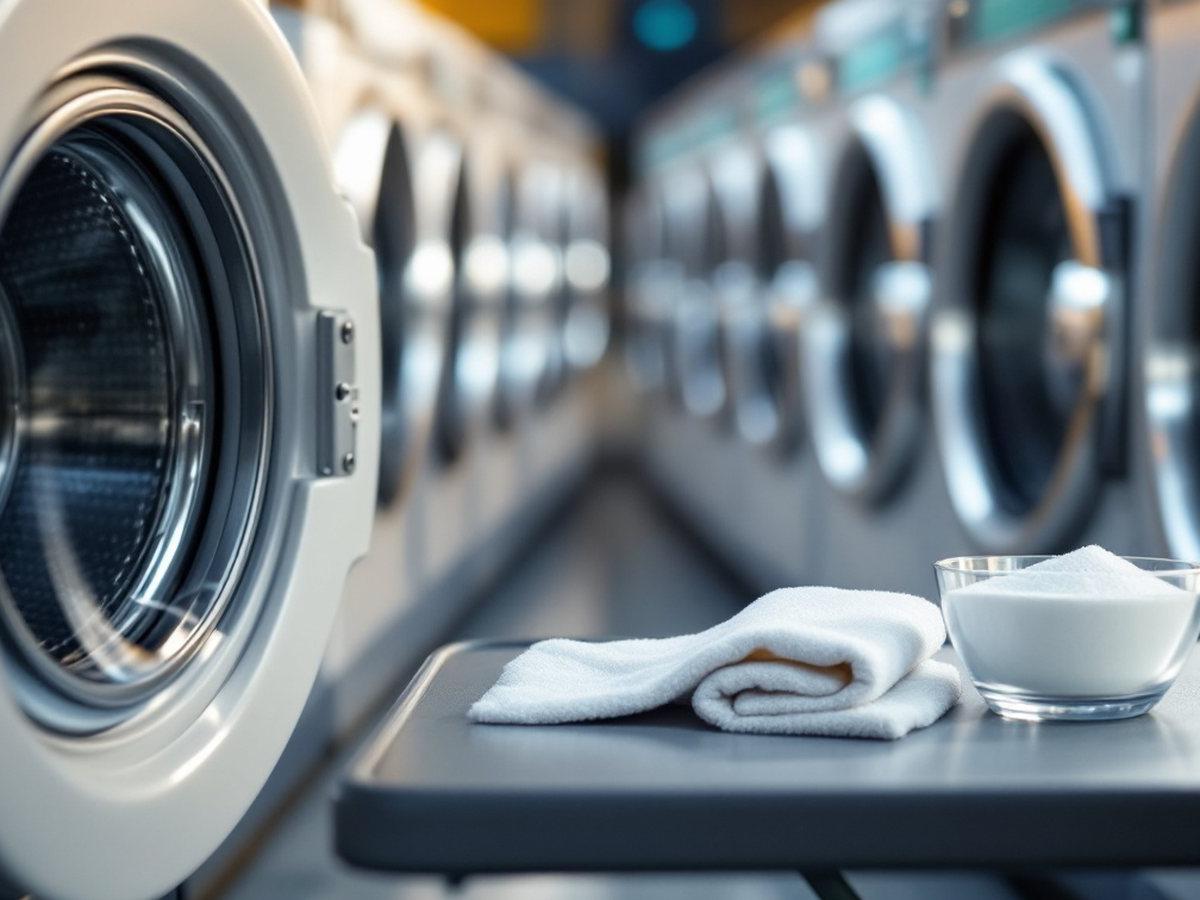
Run an empty hot cycle, or your washer's tub clean cycle, with a washing machine cleaner or liquid chlorine bleach if your manual allows it, then wipe the door seal and dispenser and leave the door open to dry. Repeat every 30 days or 30 cycles (Whirlpool). Never add vinegar to bleach: the mix releases chlorine gas (Washington State Department of Health).
Machine smells come from damp residue, so the open door matters as much as the cleaner. The steps below cover front-loaders, top-loaders, vinegar and baking soda, and what to do if the smell stays.
Key takeaways
- Clean the tub every 30 days or 30 cycles, and the dispenser drawer monthly.
- Use a washer cleaner tablet or 1 cup of liquid chlorine bleach if your manual allows it, in an empty hot cycle.
- Wipe under the rubber lip of a front-loader's door seal, where mold hides.
- Leave the door or lid open after every wash so the drum dries.
- Never mix bleach with vinegar or any other acid.
- Vinegar in the drum can weaken rubber seals and hoses, so keep it to removable dispensers and the outside.
How do you clean a washing machine, step by step?
The same six steps work on most washers, and Whirlpool says to check your use and care guide first. Cleaning the tub takes about 10 to 15 minutes of your time plus the cycle (Whirlpool's front-loader guide).
- Empty the drum. Remove any item left in the tub (Whirlpool).
- Add the cleaner. Put a washing machine cleaner tablet on the bottom of the tub. Without one, liquid chlorine bleach may work, but check your manual first (Whirlpool).
- Run it hot. Pick the washer's cleaning cycle, or a normal cycle on the hot setting (Whirlpool).
- Rinse. If you used bleach, run a rinse and spin afterward so none is left behind (Whirlpool).
- Wipe the parts the cycle can't reach. Clean the door or lid, the seal and the dispenser drawer (Whirlpool).
- Let it dry. Leave the door open so the tub dries out (Whirlpool).
Unplug the machine before you reach into it for any maintenance, as GE Appliances advises.
How do you clean a front-load washer?
Front-loaders need extra attention at the door, because the airtight seal that stops leaks also traps moisture. ENERGY STAR notes that the airtight seal can trap moisture and lead to mold (ENERGY STAR). Warm, damp residue from detergent and softener can grow mold and mildew in the drum and along the gasket (the rubber door seal) (Whirlpool's front-loader guide).
- Gasket: wipe the seal and the inside of the door glass with a damp cloth, and wipe under the rubber lip to reach every crevice (Whirlpool's front-loader guide).
- Dispenser: take out a removable drawer and soak it in hot water or wash it with mild detergent, then rinse and dry it. Wipe a fixed dispenser with a cleaning wipe or all-purpose cleaner (Whirlpool's front-loader guide).
- Drain pump filter: if your model gives you access, clean it from time to time, following the owner's manual (Whirlpool's vinegar guidance).
- Door: leave it ajar after every wash. ENERGY STAR suggests an hour or two for the moisture to evaporate, and says to make sure children do not climb in while it is open (ENERGY STAR).
Our guide to front-load versus top-load washers explains why front-loaders use less water and where each type struggles.
How do you clean a top-load washer?
Top-loaders dry out more easily, but residue still builds up under the lid and around the agitator. GE Appliances says odors usually come from leaving the lid closed, which keeps the tub's air and moisture stagnant (GE Appliances).
- With a Basket Clean cycle: empty the basket, pour in 1 cup of liquid bleach, vinegar or a washer cleaner, close the lid and run the cycle without interrupting it (GE Appliances).
- Without one: fill the washer with hot water on the longest cycle and add 3/4 cup of a water softening additive, with baking soda or vinegar as substitutes. Repeat if the odor lingers (GE Appliances).
- Agitator: if the cap comes off easily, clean inside it with a cloth or scrub brush. Do not force it, because not every cap is removable (Whirlpool).
- Lint filter: it sits in the agitator or near the top of the tub on some models. Keep it clear (Whirlpool's vinegar guidance).
- Lid: keep it open between loads so the tub can dry (GE Appliances).
After a bleach cycle the inside may smell of bleach for a while (GE Appliances).
What can you run through a washing machine to clean it?
A washer cleaner tablet is the first choice in Whirlpool, and the manual always wins over general advice. Other products are possible only as far as your manual allows (Whirlpool).
| Product | What the sources say |
|---|---|
| Washing machine cleaner tablet | Place on the bottom of the empty tub and run a hot or cleaning cycle (Whirlpool) |
| Liquid chlorine bleach | 1 cup in an empty cycle once a month is what some makers recommend, but it is not recommended for certain washers (ENERGY STAR; Whirlpool) |
| Baking soda | Generally safe, and it helps deodorize. Check your manual (Whirlpool) |
| White vinegar | Acid can weaken rubber seals and hoses, so keep it out of the drum (Whirlpool's vinegar guidance) |
| Dish soap | Not recommended: it makes far more suds than washer detergent and can leave a mess (Whirlpool) |
For what baking soda does in a wash, see our baking soda in laundry guide.
Is it safe to put white vinegar in a washing machine?
Not in the drum. Whirlpool's vinegar guidance warns that vinegar's acidity can weaken rubber seals and hoses over time, which can lead to costly repairs. GE Appliances, by contrast, lists vinegar as an option in its tub cleaning steps (GE Appliances). The sources disagree, so the safer choice is a washer cleaner, or baking soda if your manual allows it.
Where do I put white vinegar in my washing machine to clean it?
Use it where it will not sit against rubber for long. Remove the detergent and softener drawers, soak them in equal parts white vinegar and water, scrub with a soft brush, then rinse and dry them. A cloth dampened with a vinegar and water mix also cleans the outside (Whirlpool's vinegar guidance).
Can you run vinegar through a front-load washer?
If your manual says it is fine, GE lists it for top-loaders. For front-loaders the rubber door seal is the concern, so Whirlpool's vinegar guidance points to a cleaner tablet instead. For everyday laundry use, see vinegar in laundry.
Which cleaners must you never mix in the washer?
Never combine chlorine bleach with vinegar or any other acid. Washington State Department of Health explains that bleach mixed with an acid gives off chlorine gas, which irritates the eyes, nose and throat and can cause coughing and breathing problems. Its list of acid products includes vinegar, toilet bowl cleaners and rust removers (Washington State Department of Health).
- Bleach and ammonia make toxic chloramine gases (Washington State Department of Health).
- Bleach and hydrogen peroxide also react (Washington State Department of Health).
If you breathe chlorine gas, leave the area and get fresh air, then call Poison Control at 1-800-222-1222 (Poison Control).
How do I get the smell out of my washing machine?
Find the source first. A musty smell usually means damp residue in the tub, seal or dispenser (Whirlpool's front-loader guide).
- Run the clean cycle with a cleaner, as above, and repeat if the odor lingers (GE Appliances).
- Clean the seal and the dispenser, the two places residue and mold collect (Whirlpool's front-loader guide).
- Check the drain hose. If it is pushed too far into the standpipe, it can siphon drained water back into the washer and cause a musty smell. Clip it to the side of the standpipe (GE Appliances).
- Keep it dry. Leave the door or lid open and unload clothes as soon as the cycle ends (Whirlpool's front-loader guide).
If the smell remains after a thorough cleaning, Whirlpool's front-loader guide suggests a technician. If it is your clothes that smell, our guide to musty smells in clothes after washing covers the laundry side.
How often should you clean a washing machine?
About once a month, or every 30 cycles, whichever comes first (Whirlpool's front-loader guide). GE Appliances also recommends monthly tub cleaning for top-loaders (GE Appliances). Clean sooner after something unusual, like a load with severe color bleeding (Whirlpool).
Between cleanings:
- Warm up occasionally. If you usually wash cold, run a hot cycle now and then to clear buildup (Whirlpool).
- Don't overdo detergent. Using the proper amount helps prevent buildup (GE Appliances).
- Empty the washer promptly. Wet clothes left inside encourage mold and mildew (Whirlpool's front-loader guide).
- Dehumidify. In a damp laundry room, a dehumidifier helps (Whirlpool's front-loader guide).
Cold washing is fine for most loads, and ENERGY STAR says switching to hot is reasonable when someone in the household is sick (ENERGY STAR). Our wash temperature guide covers when each setting makes sense.
What about washers at the laundromat?
You don't clean laundromat machines. The owner services them, and the signs of a neglected one are the same as at home: a musty smell, residue in the dispenser or a slimy door seal. Pick a different machine and tell the attendant, and keep your own laundry out of a washer that looks dirty.
If your home washer is the problem and you can't fix it quickly, a self-service laundromat keeps your laundry moving while you clean it. To find a laundromat near you, use the finder. Our machine guide shows how each type works.
Frequently asked questions
How do I deep clean the drum of my washing machine?
Empty the drum, add a washer cleaner tablet, and run the cleaning cycle or a hot normal cycle. Wipe the door seal and dispenser, then leave the door open to dry. Do this every 30 cycles.
What is the best hack for cleaning a washing machine quickly?
Run the washer's tub clean cycle with a cleaner, then wipe the door seal and leave the door open. If your washer has no clean cycle, use a hot cycle.
Can I put vinegar and baking soda in my washing machine to clean it?
GE Appliances lists baking soda or vinegar as options in a hot cycle, while Whirlpool warns that vinegar can weaken rubber seals and hoses. Baking soda alone is the safer choice. Check your manual first.
How to really deep clean a washing machine?
Do the full routine in one go: a hot cleaner cycle, then the door seal, dispenser drawer, agitator cap and lint filter by hand, then a rinse. Leave the door open afterward to dry.
Can I clean a washing machine with bleach?
Sometimes. Liquid chlorine bleach works on some models, but not all, so check your manual. Run a rinse afterward, and never combine it with vinegar or another acid.
What dissolves washing machine gunk?
A washer cleaner tablet in a hot, empty cycle is the first choice. Wipe the gasket, dispenser and lid by hand afterward, because the cycle alone does not reach them.
How we researched this
We read maker guidance from GE Appliances and Whirlpool, ENERGY STAR's washer page, and chemical safety pages from the Washington State Department of Health and Poison Control, seven sources in all, on October 14, 2026. We gave priority to agency safety pages and the makers' own instructions for their machines. We did not test any method ourselves, and this guide does not cover commercial laundromat machines, which the operator maintains. Always follow your own washer's manual if it differs.
Sources
- Whirlpool -- How to Clean a Washing Machine: A 6-Step Guide
- Washington State Department of Health -- Dangers of Mixing Bleach with Cleaners
- Whirlpool -- How to Clean a Front Loading Washing Machine
- GE Appliances -- Washing Machine Cleaning Tips
- ENERGY STAR (U.S. EPA and U.S. DOE) -- Clothes Washers
- Whirlpool -- Should You Clean Your Washing Machine with Vinegar?
- National Capital Poison Center -- Chlorine gas: What happens if you mix bleach and other cleaners