Laundromat Machine Guide: How to Use Every Type of Washing Machine Like a Pro
LaundroMaps Team
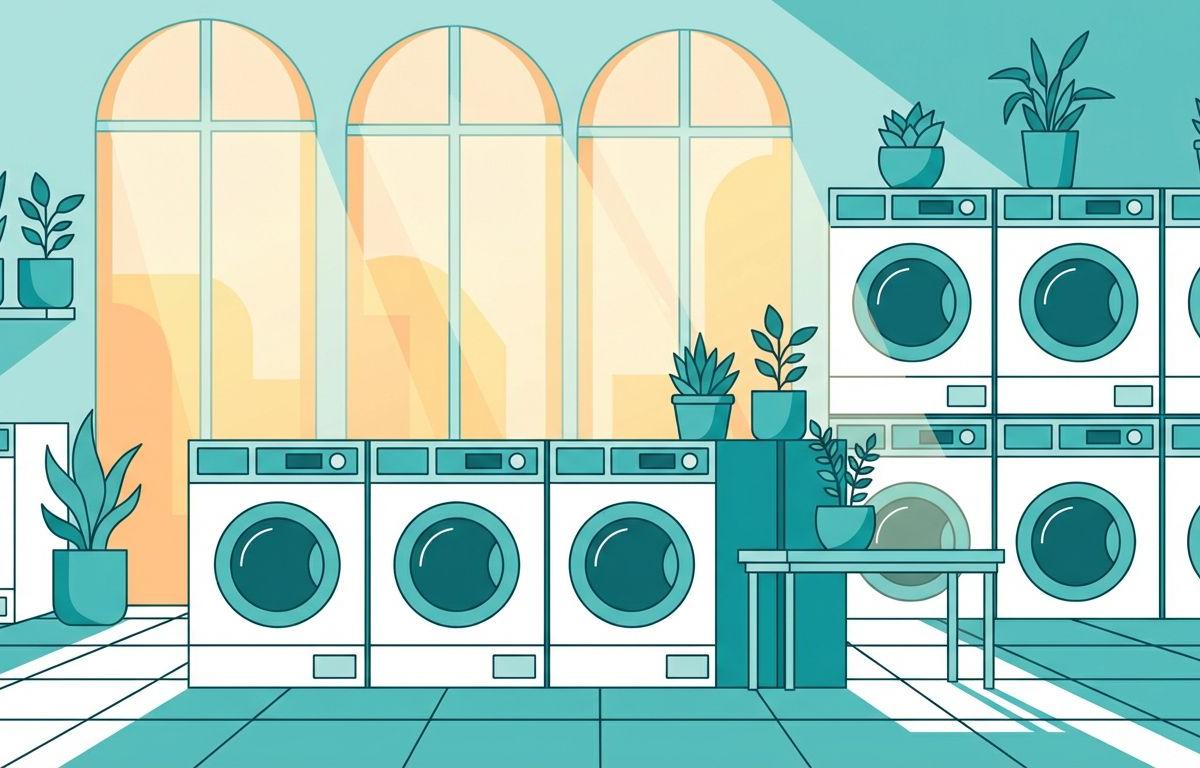
Stepping into a modern laundromat, like those "Fresh • Local • Spotless" locations you'll find through LaundroMaps, can sometimes feel like entering the command center of a textile cleaning spaceship. Rows of gleaming machines, each with its own array of buttons, dials, and compartments, stand ready. But which one is right for your load? And how do you ensure you're using it correctly for the best possible clean while being kind to your clothes and the machine itself? This comprehensive "laundromat machine guide" is here to demystify the different "washing machine types" you'll encounter, transforming you from a cautious button-pusher into a confident laundry pro.
1. Introduction to Laundromat Machine Variety: More Than Just a Tub!
Laundromats typically house a variety of "commercial washing machines" designed for durability and efficiency. The primary types you'll encounter are top-loading machines, front-loading machines, and increasingly, high-efficiency (HE) versions of both. Understanding the nuances of each—how they operate, their strengths, and their specific requirements—is key to achieving optimal cleaning results, extending the life of your garments, using resources wisely, and ensuring a smooth laundry day.
2. The Classic Workhorse: Top-Loading Machines
Top-loading washing machines are characterized by a lid on top that opens to a vertically oriented drum. Many traditional top-loaders feature a central agitator—a tall spindle that twists back and forth to move clothes through the water and detergent. Some newer top-loaders, particularly HE models, use an impeller instead. Operating a traditional top-loader usually involves opening the lid, distributing your clothes evenly around the agitator, and adding detergent. You'll then select your load size, wash cycle, and temperature. Best practices for top-loaders include not wrapping clothes tightly around the agitator, as this can lead to uneven cleaning and stretching. Common user errors involve overloading or creating an unbalanced load, causing the machine to thump loudly or stop mid-cycle.
3. The Gentle Giants: Front-Loading Machines
Front-loading washing machines clean clothes by tumbling them through a small amount of water, relying on gravity and the friction of clothes against each other and the drum paddles. Advantages of front-loaders are numerous. They are generally much gentler on clothes, with superior cleaning performance, especially for tough stains. They use significantly less water and energy, and their high-speed spin cycles extract more water from clothes, leading to shorter drying times. Proper use starts with loading clothes loosely into the drum. Detergent, fabric softener, and bleach must be added to the correct compartments in the dispenser drawer. Common errors include using too much detergent, which causes excessive suds that reduce cleaning action, and trying to open the door mid-cycle.
4. The Efficiency Experts: High-Efficiency (HE) Washing Machines
"HE washing machines" are designed to provide excellent cleaning while using substantially less water and energy. HE machines can be either top-loading (using an impeller) or front-loading (all front-loaders are essentially HE by design). The most crucial special requirement for any HE machine is the use of HE detergent. Using regular high-sudsing detergent will create overwhelming foam, prevent clothes from rubbing against the drum (essential for cleaning), trigger error codes, and can damage sensitive electronic components. HE machines clean effectively with lower water levels by using sophisticated wash motions in conjunction with the concentrated cleaning power of HE detergents and often higher spin speeds.
5. Commercial vs. Residential Machine Differences
The "commercial washing machines" in a LaundroMaps laundromat differ from home machines. They are engineered for durability, designed to withstand constant heavy use with more robust motors, suspension systems, and components. Laundromats offer a wider range of capacities, including extra-large machines for comforters and bulky items. Commercial machines have more straightforward, rugged controls, prioritizing ease of use and resilience. Modern laundromats increasingly feature high-efficiency commercial machines, mirroring the trend toward resource conservation.
6. Choosing the Right Size for Your Load
Selecting the appropriately sized machine is crucial. Using a machine that's too small leads to poorly cleaned clothes, inadequate rinsing, and machine strain. Using an enormous machine for a few items wastes money and resources. Laundromats typically label machines by capacity (e.g., "Double Loader," "4-Loader") or by weight (e.g., 20lb, 40lb, 60lb, 80lb). Regardless of size, do not fill the drum more than about three-quarters full with dry clothes. Your laundry needs room to move freely for effective cleaning and rinsing. Always opt for larger machines when washing bulky items like comforters or sleeping bags.
7. Understanding Cycles and Settings
The Normal or Cotton cycle is the workhorse for sturdy cotton items, linens, and everyday mixed loads. The Permanent Press cycle uses gentler agitation and slower spin for synthetics prone to wrinkling. The Delicates or Gentle cycle is for fragile items like lingerie and silk, using very low agitation. The Heavy Duty cycle offers extended wash time for heavily soiled, durable items. The Bulky or Large Items cycle ensures large pieces are thoroughly wetted and rinsed. A Quick Wash cycle is suitable for lightly soiled items needing a refresh. For water temperature: Cold for most loads and delicates; Warm for moderately soiled items; Hot for heavily soiled whites or sanitization.
8. Detergent and Additive Guidelines by Machine Type
For all "HE washing machines," you must use HE detergent. For traditional non-HE top-loaders, both powder and liquid detergents work fine. For front-loading machines, liquid detergent is preferred as it's less likely to cause dispenser clogs. Laundry pods should be placed directly into the drum before adding clothes, not in the dispenser drawer. For bleach, always add it to the designated dispenser. Fabric softener must go into its specific compartment so it releases during the final rinse. Avoid overusing any additive—more is not better and leads to residue on clothes and buildup in machines.
9. Common Problems and Quick Fixes
If a machine won't start, check that the door is securely closed and payment was accepted. If a front-loader door is stuck after a cycle, wait a few minutes for the safety lock to release. An unbalanced load will cause the machine to stop or thump—open the lid and redistribute wet clothes evenly. Water not draining is an internal issue; alert the attendant. Excessive suds are almost always caused by too much detergent or non-HE detergent in an HE machine—run additional rinse cycles to clear them. If clothes are still very wet after the final spin, the load may have been too small or unbalanced; try a spin-only cycle or notify the attendant.
10. Maximizing Cleaning Results and Machine Lifespan
Achieving the best cleaning results is a partnership. By correctly sorting clothes, choosing the right machine size, using proper HE detergent for HE machines, selecting appropriate cycles and temperatures, and promptly removing laundry, you ensure your clothes get "Fresh • Local • Spotless" while helping maintain the equipment for everyone. Armed with this knowledge, you can approach any "washing machine type" with confidence, making your laundry day more efficient, effective, and economical. LaundroMaps is proud to connect you with facilities that invest in quality equipment, and we hope this guide empowers you to make the most of them.
Related guides
- How to clean a washing machine: front-load and top-load steps, vinegar and smells.
- Washer and dryer cycles explained: what permanent press means and how long each cycle takes.