How to Wash Towels So They Stay Soft, Fresh and Absorbent

LaundroMaps Team
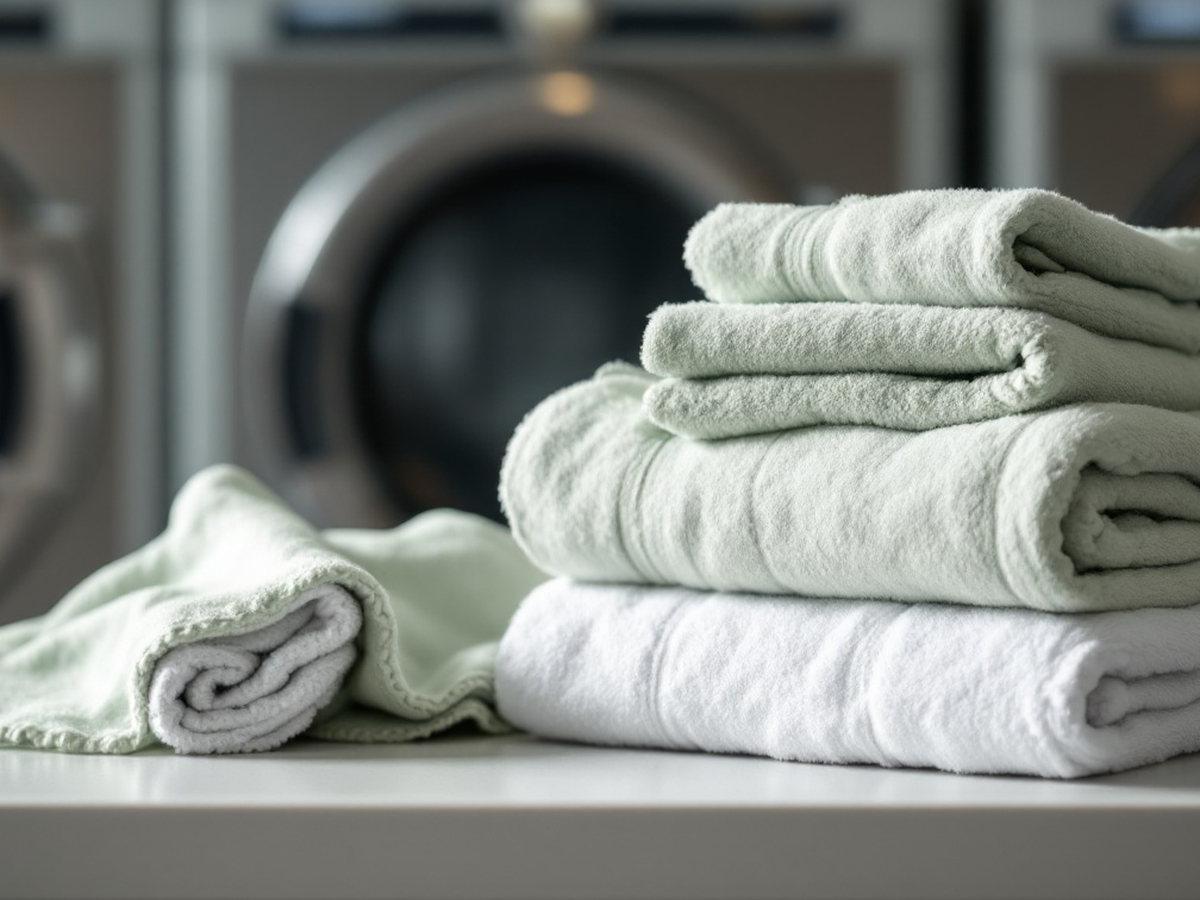
To wash towels, run them in their own load on the Towels or Normal cycle, in warm or hot water, the warmest the care label allows (American Cleaning Institute; Whirlpool). Measure the detergent, skip or limit fabric softener, which lowers absorbency (Igarashi and Nakamura, 2021; Whirlpool), and dry them completely right after the wash (Whirlpool).
Wash bath towels after 3 to 5 uses and hang them to dry between uses (American Cleaning Institute).
Key takeaways
- Wash bath towels after 3 to 5 uses or weekly, whichever comes first.
- Use warm or hot water, the warmest the care label allows, on the Towels or Normal cycle.
- Measure the detergent and skip or limit fabric softener, which lowers absorbency.
- Musty towels: soak stubborn ones in oxygen bleach per its label, rewash hot, then dry them completely at once.
What is the best way to wash towels in the washing machine?
Wash towels in a towel-only load, warm or hot, on a Towels or Normal cycle with measured detergent, then dry them right away (Whirlpool):
- Check the care label; our care label symbols guide decodes the icons.
- Sort by color: whites apart from brights and darks.
- Keep clothes out. Bath towels shed lint onto synthetics, corduroy and other napped fabrics (American Cleaning Institute).
- Load loosely. Overloading leaves detergent on the fabric and adds lint (Texas A&M AgriLife Extension).
- Measure the detergent for the load size and soil level (American Cleaning Institute).
- Wash warm or hot on the Towels or Normal cycle.
- Dry right away. Shake each towel, dry until no moisture is left, then fold.
How many towels can you wash at once?
Fewer than a full drum. Samsung says its Towels cycle works best with no more than a half load, about 6 pounds, because towels absorb so much water.
Some larger-capacity washers can handle more towels at once, but don't overload them (Whirlpool). More than 4,000 laundromats in the LaundroMaps directory list large-capacity machines, as of October 2026 (LaundroMaps directory data), so a self-service laundromat can take a household's bath and beach towels; find a laundromat near you.
How much detergent should you use for towels?
Use the label's dose for your load size and soil level, and HE detergent in a high-efficiency (HE) washer, where regular detergent makes too many suds and leaves residue. Some detergents marked "HE Compatible" are regular-sudsing, so read the label (American Cleaning Institute).
Some towel makers advise half the label dose for their own towels (Peacock Alley; Parachute), but too little detergent turns towels gray (Texas A&M AgriLife Extension). Start at the label dose and use a little less only if towels feel stiff, as Whirlpool suggests.
What temperature should you wash towels at, hot or cold?
Wash towels in warm or hot water, the warmest the care label allows (Whirlpool). A washer's hot setting can be cooler than the hot laundry guides mean: 120°F (50°C) on Texas A&M AgriLife Extension's care-label chart and 120-140°F (50-60°C) for the American Cleaning Institute, against 101-115°F for Whirlpool's hot cycles. For other fabrics, see our laundry water temperature guide.
Heat matters for hygiene: a 2021 review of laundry research, two of whose authors work for a disinfectant maker, notes a recommendation of 104-140°F (40-60°C) water, bleach or both for hardier gut and skin pathogens; the median US cold wash is 57.9°F (14.4°C) (Abney et al., 2021).
| Towel | Water | Cycle and notes |
|---|---|---|
| Everyday bath and hand towels | Warm or hot | Towels or Normal (Whirlpool) |
| White cotton towels | Hot | Towels or Heavy Duty (University of Kentucky Extension; Whirlpool) |
| Bright or dark towels | Warm for brights; cool or cold for darks or any that bleed or fade (Whirlpool; University of Kentucky Extension) | Their own load (Whirlpool) |
| Kitchen and dish towels | Hot, apart from other laundry (Nebraska Extension; University of Kentucky Extension) | Dry completely on high (Nebraska Extension) |
What washer setting is best for towels?
The Towels cycle if your washer has one, otherwise Normal (Whirlpool). A Towels cycle adds water and alternates the wash action (Maytag); Heavy Duty is the hot option for thick, heavily soiled towels (Whirlpool). Save Sanitize for towels that need it (Whirlpool).
Can you wash towels in cold water?
Only when the care label calls for it or the color bleeds (Texas A&M AgriLife Extension; Whirlpool). Detergents work better above 65°F (Texas A&M AgriLife Extension), and cold water needs more detergent and kills no germs without a disinfectant (NMSU Extension).
How do you keep white towels white?
Wash them in their own load in the hottest water safe for the fabric, with enough detergent: too little detergent and cool water both cause graying (American Cleaning Institute). Chlorine bleach is fine on white cotton bath and dish towels when the care label allows (NMSU Extension; UGA Extension), but not every wash, because repeated use weakens cotton (Texas A&M AgriLife Extension). Use your bleach label's dose: Clorox gives 1/3 cup for whitening in a standard washer and less in HE machines, below the 1/2 cup Whirlpool suggests. Our chlorine vs oxygen bleach comparison explains which to use.
Can you wash towels with clothes, sheets or blankets?
You can, but towels wash best on their own. Whirlpool recommends sorting towels apart from clothes and sheets so they get hotter water and dryer heat, with less chance of passing bacteria along.
- Lint. Bath towels shed lint that synthetics, corduroy and velour pick up (American Cleaning Institute).
- Blankets need different settings. Whirlpool's Bulky/Sheets cycle for sheets and blankets uses warm water and a low spin; its Heavy Duty cycle for towels uses hot water and a high spin.
If you mix, keep to items that need similar water temperatures (Texas A&M AgriLife Extension). For bedding, see how often to wash sheets.
Keep microfiber out of cotton loads: it attracts lint, so Maytag says to wash it alone in cool water on a gentle cycle, without softener or bleach, then air dry it or tumble it on low heat.
How do you keep towels soft, fluffy and absorbent?
Measure the detergent, use little or no softener and stop the dryer as soon as towels are dry (Whirlpool). Stiffness comes from soapy residue when the wash isn't hot enough, from overdrying (Whirlpool), from hard-water minerals that bind with some powder detergents (American Cleaning Institute) and lodge in fabric (WSU Extension), and from air drying, which cross-links cotton fibers, a 2016 study by softener-maker researchers found (Igarashi et al., 2016).
Should you use fabric softener on towels?
Skip it, or use it sparingly. Whirlpool says softener makes towels less absorbent, and a 2021 study by researchers at a softener maker states that any current softener significantly lowers the absorbency of cotton (Igarashi and Nakamura, 2021). The American Cleaning Institute disagrees, saying the right amount doesn't hurt how towels work.
If you use it, follow the label dose (American Cleaning Institute) and leave it out some washes to limit buildup (University of Idaho Extension). Our fabric softener vs dryer sheets vs dryer balls comparison covers the alternatives.
How should you dry towels?
Tumble dry towels on medium, the Normal setting for cottons (American Cleaning Institute), or on low to medium as Whirlpool's towel guide advises, and take them out as soon as they're dry: overdrying hardens towels (Whirlpool), and towel maker Parachute says overheating can tighten the fibers and reduce absorbency. Shake each towel first, clean the lint screen before every load, because a clogged screen slows drying and raises the fire risk (Whirlpool).
Switch to high heat when hygiene matters more than softness: musty towels, a sick person's towels and kitchen towels (Nebraska Extension). Higher dryer heat and longer drying cut microbes, the 2021 review reports (Abney et al., 2021).
Line-dried towels tend to dry hard: in a lab study, towels given an extra spin and a shake before hanging dried softer (Igarashi et al., 2016), so shake them before hanging and again when you take them down (Virginia Tech Extension).
How do you make stiff towels soft again?
- For hard water, start with a vinegar soak (method below), rinsed out before washing (American Cleaning Institute; Whirlpool).
- Rewash hot with measured detergent (Whirlpool) and an extra rinse (Whirlpool).
- Add up to 1/2 cup of baking soda to the wash (Whirlpool).
- Strip them as a last resort, as described in the smell fixes below.
To prevent a repeat in hard water, use a liquid detergent, or a nonprecipitating water softener with a powder one (American Cleaning Institute).
How do hotels keep their towels so soft and fluffy?
Laundries certified to TRSA's hospitality standard, which covers bath towels, run a fixed wash formula for each linen type, finish with a rinse to a skin-compatible pH and control drying; the standard names no softening product. At home, the closest match is a steady routine: towel-only loads, measured detergent, warm or hot water and drying that stops when towels are dry (Whirlpool).
How do you get the mildew smell out of towels?
Soak stubborn towels in oxygen bleach, rewash them hot and dry them completely right away (UGA Extension; Whirlpool). Step by step:
- Soak stubborn towels first in oxygen bleach, dosed and timed by its label. It works best in hot water or a soak (UGA Extension), and even in a cold wash it significantly reduces bacteria, though it may not eliminate them (Abney et al., 2021).
- Rewash hot, the hottest the fabric allows (Whirlpool; Cleveland Clinic).
- Dry them completely, right away (Whirlpool; CDC).
- Clean the washer at least once a month (Whirlpool); our washing machine cleaning guide shows how.
- Strip or retire. If towels still smell when wet, try laundry stripping; Cleveland Clinic says an always-stinky towel should go.
To keep the smell away:
- Hang towels spread out on a bar, not a hook (Cleveland Clinic).
- Dry damp towels before the hamper; fabric that dries slowly turns sour and musty (MU Extension).
- Move towels out of the washer right away (Whirlpool).
- Go easy on products. Stacked detergents, softeners and scent beads leave residue that makes towels more hospitable to germs (Cleveland Clinic).
For musty smells in other laundry, see why clothes smell after washing.
What causes towels to smell bad?
Bacteria and fungi that survive the wash and grow again once a towel is wet appear to be the main cause of laundry odors, a 2021 industry-funded review of laundry research concludes. It reports that cotton towels hold moisture and dry slowly, that thick bath towels are harder to clean, and that odor microbes can multiply in damp hampers and during slow air drying (Abney et al., 2021).
The washer itself is believed to be a significant source of odor microbes (Abney et al., 2021), and in an HE washer, low wash temperatures or non-HE detergent can leave soils that grow bacteria and mold (American Cleaning Institute).
Is it better to wash towels with vinegar or baking soda?
Baking soda is the one washer makers suggest adding to a towel load: up to a half cup, to soften fibers and fight musty odors (Whirlpool; Maytag). Whirlpool and Maytag advise keeping vinegar out of their washers, because its acid can damage rubber parts over time, and it can weaken detergent (Whirlpool).
How do you wash towels with vinegar?
Use it as a soak before the wash, never in the washer itself (Whirlpool; Maytag):
- Mix the soak in a plastic tub: 1 cup (240 ml) of white vinegar per 1 gallon (3.8 L) of warm water for stiff, hard-water towels (American Cleaning Institute), or 2 parts water to 1 part vinegar as an odor pretreat (Maytag).
- Test colored towels first, since vinegar can bleach some fabrics (Whirlpool; Maytag).
- Soak, then rinse the towels well before they go in the washer (American Cleaning Institute; Maytag).
- Wash as usual, warm or hot with measured detergent (Whirlpool).
Vinegar is not a disinfectant and can leave its own odor (American Cleaning Institute). More in our guides to vinegar in laundry and baking soda in laundry.
Can you use vinegar and baking soda together?
Not in the same wash: Whirlpool says the two neutralize each other and cancel their benefits.
Never mix vinegar with chlorine bleach. Bleach plus an acid such as vinegar gives off chlorine gas, and bleach plus ammonia gives off chloramine gases (Washington State Department of Health). If you breathe either, leave the area and get to fresh air, then call Poison Control at 1-800-222-1222; get medical care if you have trouble breathing.
How do you wash new towels for the first time?
Wash new towels once before use, in a load by themselves, to remove chemical coatings and cut lint (Whirlpool):
- Wash dark or bright new towels alone for the first few washes, to remove excess dye (American Cleaning Institute).
- Use warm or hot water and the normal detergent dose (Whirlpool).
- Skip fabric softener (Whirlpool).
- Dry completely and clean the lint screen; terry towels shed lint, especially when new (Peacock Alley).
Some towel makers add 1/2 cup of white vinegar to the first wash of their own towels (Parachute; Peacock Alley), but Whirlpool and Maytag advise against vinegar in their washers.
How do you make new towels absorbent?
Wash them before first use: towel makers Parachute and Peacock Alley say the first wash removes finishing agents that can reduce absorbency (Parachute names a silicone coating). After that, skip softener and avoid overheating them in the dryer (Parachute).
How often should you wash towels?
Wash bath towels after 3 to 5 uses, hanging them to dry between uses (American Cleaning Institute), and at least once a week (Cleveland Clinic), whichever comes first.
| Towel | How often to wash it |
|---|---|
| Bath towel | After 3 to 5 uses, and at least weekly (American Cleaning Institute; Cleveland Clinic) |
| Hand towel | At least once a week (Cleveland Clinic) |
| Washcloth | At least twice a week (Cleveland Clinic) |
| Kitchen or dish towel | Often, commonly daily; at once after wiping up raw meat, poultry or seafood juices (Nebraska Extension) |
| Gym towel left damp in a bag | A clean one every day (Cleveland Clinic) |
| Any towel in a humid home | Two to three times a week (Cleveland Clinic) |
| Towels of someone who is sick | More often than usual (Cleveland Clinic) |
The CDC says a sick person's laundry can go in with everyone else's at the recommended water temperature; dry it completely and wash your hands after handling it.
If towels pile up, a wash-and-fold service washes, dries and folds them for you. More than 6,700 laundromats in the LaundroMaps directory offer it, as of October 2026 (LaundroMaps directory data).
Frequently asked questions
How do I get my towels to smell like hotel towels?
The hospitality laundry standard we read names no scent or softener. At home, residue from stacked detergents, softeners and scent beads builds up on towels, so measure the detergent, wash warm or hot and dry the towels completely right away.
What type of detergent is best for washing towels?
Any standard laundry detergent, starting at its label dose and using a little less only if towels feel stiff. In a high-efficiency washer, use only HE detergent, since non-HE detergent makes too many suds and leaves residue. In hard water, a liquid detergent avoids the mineral residue some powders leave, which stiffens towels.
How do I clean microfiber cloths and towels?
Wash them on their own, never with cotton towels, because microfiber attracts lint. Use cool water, a gentle cycle and no fabric softener or bleach, then air dry them or tumble on low heat without dryer sheets.
How do you wash kitchen towels?
Wash kitchen and dish towels on hot, apart from other laundry, and dry them completely on high. Change them often, commonly daily, and put a towel that wiped up raw meat, poultry or seafood juices straight into the laundry.
How we researched this
We read 51 pages and cited 38, led by the American Cleaning Institute, nine university extension services, the CDC, peer-reviewed laundry-hygiene and towel studies (several industry-funded, as we note), and makers' instructions for their own washers, dryers, bleach and towels. Where sources disagree (softener and absorbency, dryer heat, detergent dose, vinegar in the washer), we say so and give the safer method. We did not lab-test any method; directory counts are from LaundroMaps listings. Researched October 14, 2026.
Sources
- American Cleaning Institute -- Laundry Basics
- Whirlpool -- How to Wash & Dry Towels to Keep Them Soft
- Journal of Oleo Science (Igarashi and Nakamura) -- Improvement of the Water Absorbency of Softener-treated Fabric: Addition of a New Hydrophilic Surface
- Whirlpool -- Laundry Settings: Washer and Dryer Cycles Explained
- American Cleaning Institute -- Do I need to wash this?
- American Cleaning Institute -- Laundering Problems & Solutions
- Texas A&M AgriLife Extension Service -- Laundry on Your Own
- American Cleaning Institute -- High Efficiency Washers and Detergents: Working in Harmony to Save Energy and Water
- LaundroMaps directory data -- 13,000+ US laundromat listings, October 2026
- Peacock Alley -- How to Wash & Dry Towels: Expert Guide for Long-lasting Clean Towels
- Parachute Home -- How to Wash Towels for a Clean, Fresh Smell
- Samsung -- Cycles, Settings, and Features on Your Samsung Washing Machine
- Abney et al., Applied and Environmental Microbiology (2021) -- Laundry Hygiene and Odor Control: State of the Science
- University of Kentucky Cooperative Extension Service -- Tackling Your Laundry: Let's Talk Safety and Tips for Success! (FRM-AP.016)
- Whirlpool -- Washer Cycle Guide (W11428623 Rev C)
- University of Nebraska-Lincoln Extension (UNL Food) -- How Often Should You Change Your Kitchen Towels?
- Maytag -- Washing Machine Cycles and Settings Explained
- New Mexico State University Cooperative Extension -- Getting Clothes Clean (Guide C-503)
- University of Georgia Cooperative Extension -- Products (Textiles: Care)
- American Cleaning Institute -- Ask ACI: Kitchen Towel and Bath Towel Mix Up
- Clorox -- How to Use Bleach in Laundry to Clean, Whiten and Sanitize
- Maytag -- How to Wash and Dry Microfiber Towels
- Washington State University Extension -- Home Water Softening
- Journal of Surfactants and Detergents (Igarashi et al., Kao Corporation) -- Elucidation of Softening Mechanism in Rinse Cycle Fabric Softeners. Part 1: Effect of Hydrogen Bonding
- American Cleaning Institute -- Fabric Softeners and Enhancers: A Comprehensive Guide
- University of Idaho Cooperative Extension -- Fabric Finishes
- Whirlpool -- How to Clean the Lint Screen on Your Whirlpool Dryer
- Virginia Polytechnic Institute Extension Division -- Linens (Publication 73)
- Whirlpool -- How to use vinegar in laundry
- Whirlpool -- How to Prevent Detergent from Re-depositing on Clothing
- TRSA (Textile Rental Services Association) -- Standard for Producing Hygienically Clean Reusable Textiles for Use in the Hospitality Industry
- Cleveland Clinic -- How Often Should You Wash Your Bath Towels?
- Centers for Disease Control and Prevention -- When and How to Clean and Disinfect Your Home
- University of Missouri Extension -- How to Prevent and Remove Mildew: Home Methods (GH5928)
- Maytag -- What Do Dryer Sheets Do?
- Maytag -- Should You Use Vinegar in Laundry?
- American Cleaning Institute -- Ask ACI: Cleaning with Vinegar
- Washington State Department of Health -- Dangers of Mixing Bleach with Cleaners
- Poison Control (National Capital Poison Center) -- Chlorine gas: What happens if you mix bleach and other cleaners