Fabric Softener vs. Dryer Sheets vs. Dryer Balls

LaundroMaps Team
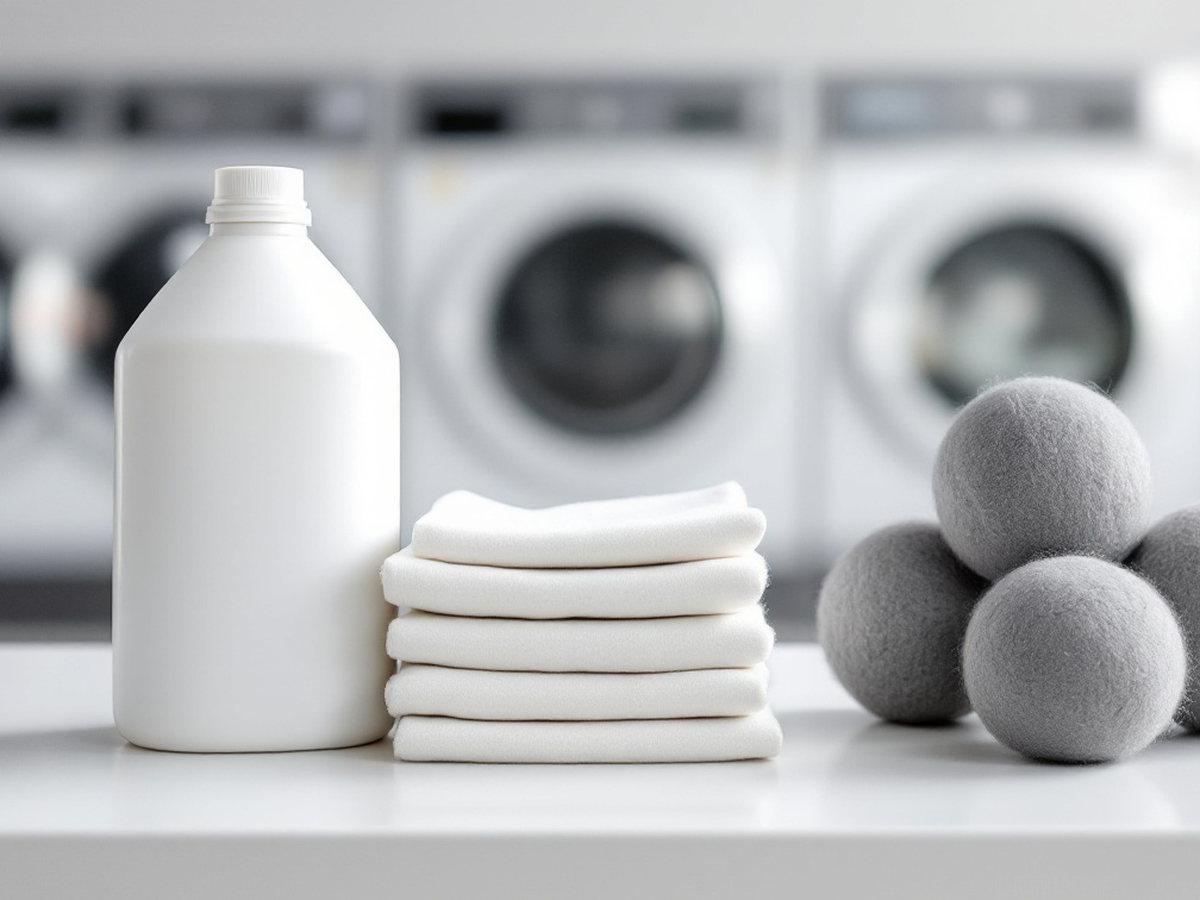
Dryer sheets release softening agents when the dryer heats up, which cuts static cling and makes fabric feel softer. Liquid fabric softener does the same job in the washer's final rinse, and wool dryer balls only separate the load and add friction. American Cleaning Institute says dryer balls give negligible benefits compared with a softener or sheet (American Cleaning Institute).
Use one product per load, not two, and skip all three on towels, athletic wear and flame-resistant clothing.
Key takeaways
- Dryer sheets and fabric softener are the same kind of product used at different stages, so one per load is enough.
- Sheets and softener can leave residue on the lint screen and on the dryer's moisture sensor bars, so clean both.
- Keep sheets and softener off flame-resistant kids' sleepwear, athletic wear and water-repellent jackets.
- Wool dryer balls work best at 3 to 6 per load and last about 1,000 cycles, but ACI rates their benefits as negligible.
- In a shared laundromat dryer, wool balls or nothing leave the least residue for the next customer.
What do dryer sheets, fabric softener and dryer balls each do?
American Cleaning Institute compares detergent to shampoo and fabric softener to conditioner: softener coats fibers and lubricates them, which reduces friction, static and wrinkles (American Cleaning Institute). Most softeners use cationic surfactants, which are positively charged molecules that cling to negatively charged fibers (American Cleaning Institute).
Dryer sheets deliver that same softening agent in the dryer. Maytag explains that sheets hold liquid softeners, fragrances and lubricants, and the dryer's heat releases them into the load (Maytag). That is why most sheets need heat to work (Maytag).
Wool dryer balls contain no chemicals at all. They tumble between garments to keep them separated, and Maytag says that can shorten drying time and reduce wrinkles and static (Maytag).
| Product | Where it goes | What it does | Main catch |
|---|---|---|---|
| Liquid fabric softener | Washer, final rinse | Softens, cuts static and wrinkles | Too much dulls towels and builds residue |
| Dryer sheet | Dryer, on top of the load | Softens, cuts static, adds scent | Residue on lint screen and sensors |
| Wool dryer balls | Dryer, loose in the load | Separates items, adds friction | Limited softening, no scent unless added |
The table summarizes the American Cleaning Institute and Maytag guides cited above (American Cleaning Institute; Maytag).
Do you need fabric softener and dryer sheets together?
No. Maytag says it is not necessary to use fabric softener and dryer sheets in the same load, because dryer sheets already contain fabric softener and give very similar benefits (Maytag).
Liquid softener goes in the final rinse. American Cleaning Institute says many washers have a softener compartment that handles the timing, and that you should dilute the product first if the label says so, to avoid spotting (American Cleaning Institute).
If you want softer clothes and the label allows it, pick the stage that suits you: the washer rinse for a whole load, or a sheet if you only have a dryer handy. Neither is required for clean clothes. American Cleaning Institute treats softener as an extra, since detergent does the cleaning (American Cleaning Institute).
For the full wash-to-dry routine, see our step-by-step guide to doing laundry.
What are the downsides of using dryer sheets?
Used as directed, sheets are safe for most cotton clothes, but they have three real downsides.
- Stains. Maytag warns that a sheet can stain clothes if the load is packed too tightly, because the sheet sticks in one spot and melts concentrated softener onto fabric (Maytag).
- Lint screen residue. Maytag says sheets can leave an oily residue and clog the lint screen faster, and recommends a deep clean about once a month (Maytag). Whirlpool says softener buildup on the screen can lengthen drying times and recommends a nylon-brush scrub every six months or sooner (Whirlpool).
- Sensor residue. Samsung says frequent sheet use can coat the moisture sensor bars so the dryer thinks the load is dry and ends cycles too soon; a soft cloth and mild soap clears it (Samsung).
The makers' cleaning intervals differ, so check your own dryer's manual. At minimum, empty the lint screen after every load (Whirlpool). More on dryer upkeep is in our dryer safety and fabric protection guide.
When should you not use dryer sheets?
Maytag lists four fabric types to keep away from sheets (Maytag):
- Athletic wear and microfiber: the coating can interfere with moisture wicking.
- Towels: softeners can reduce absorbency.
- Flame-resistant clothing: softeners can coat fibers and reduce their ability to self-extinguish, which matters for kids' sleepwear.
- Water-repellent fabric: softeners can stop windbreakers and jackets from repelling water.
On sleepwear, the U.S. Consumer Product Safety Commission requires a permanent label on children's sleepwear with instructions to protect the garment from treatments known to damage its flame resistance (the U.S. Consumer Product Safety Commission). Follow that label.
Always check the garment's care label first. Our care label symbols guide explains what each one means.
Is fabric softener bad for towels and skin?
It depends on who you ask, and on how much you use. Maytag says softeners can reduce a towel's absorbency (Maytag). American Cleaning Institute disagrees: the key is using the right amount, and it says modern softeners can be used on microfiber and athletic wear without hurting absorbency or moisture wicking (American Cleaning Institute).
The safe middle: if your towels stop absorbing, cut the softener, since both sources agree that too much product is the problem. For softer towels without it, Maytag suggests half a cup of baking soda in the wash (Maytag); our baking soda in laundry guide covers the details.
For skin, ACI says softeners are usually dermatologically tested and safe as directed, and it points sensitive-skin households to hypoallergenic or dye- and fragrance-free versions (American Cleaning Institute). Maytag notes some sheets can cause skin reactions in people with fragrance or dye allergies (Maytag).
Softener can also affect the dryer if overused. ACI says that used properly it should not harm your appliances, and it advises wiping the dryer drum periodically with a clean, damp towel (American Cleaning Institute).
Do wool dryer balls work, and how many do you need?
Sources split on this one. Maytag says wool balls keep laundry separated and help reduce drying time, wrinkles and static (Maytag). American Cleaning Institute says dryer balls may speed drying and reduce some wrinkles, but the benefits are typically negligible, and they lack a softener's fiber protection because balls add friction instead of reducing it (American Cleaning Institute). We found no independent lab test to settle it.
How many wool dryer balls per load?
Maytag says to use 3 to 4 balls for small and medium loads and 5 to 6 for large loads, spread evenly, and to cut the load size or ball count if they aren't circulating (Maytag).
How long do wool dryer balls last?
Maytag says wool dryer balls typically last about 1,000 laundry cycles. They absorb moisture over time, which gradually weakens their effect; a hot wash in a mesh bag without detergent or softener, then a high-heat dry, refreshes them roughly every 100 loads or every four to six months (Maytag).
Do not add essential oils to the balls. Maytag advises against it because it raises flammability risk, and suggests equal parts water and vinegar instead (Maytag).
What is best to use instead of dryer sheets?
Maytag lists three alternatives to sheets (Maytag):
- A damp towel tossed in halfway through the cycle, which may create a little steam that reduces static.
- Wool dryer balls, which keep laundry separated and reduce static and wrinkles.
- Silicone dryer balls, which work similarly to wool.
Maytag adds that unscented wool balls suit people with fragrance or dye allergies (Maytag). For a vinegar rinse in place of softener, see our vinegar in laundry guide.
Do dryer sheets release chemicals through the dryer vent?
a University of Washington study sampled air from two residential dryer vents during washes with no products, with fragranced detergent, and with fragranced detergent plus a fragranced dryer sheet. It found more than 25 volatile organic compounds, seven of them classed as hazardous air pollutants, including acetaldehyde and benzene, which the EPA treats as carcinogenic with no safe exposure level (a University of Washington study).
The study was small, and it tested only fragranced products. Its authors call for more research (a University of Washington study). If you want to cut exposure anyway, fragrance-free sheets or unscented wool balls are the simplest swap.
Which should you use at a laundromat?
At a self-service laundromat, you don't control the dryer's lint screen or sensor bars, and the next customer inherits whatever you leave. Wool balls or no additive leave the least residue. If you use a sheet, use one, keep the load loose, and take it out when the cycle ends, as Maytag advises (Maytag).
Liquid softener works in the washer if the machine has a softener compartment, otherwise add it at the rinse as the label directs (American Cleaning Institute). If dryer cost drives your choice, our list of laundromats with free dry is a better lever than any additive. Packing your own supplies is covered in our laundromat checklist.
Frequently asked questions
What kind of sheets can I use to make my clothes smell good?
Dryer sheets contain fragrances that heat releases into the load. Scent boosters are another option: small beads added to the washer before the clothes go in. Unscented wool dryer balls add no fragrance.
How do you make clothes smell good all day?
ACI describes scent boosters, small water-soluble beads added to the washer drum, as a way to add fragrance that can last for weeks. Dryer sheets and scented softener also add fragrance, but they bring the residue and fabric limits covered above.
Why do dryer sheets smell so good?
They contain liquid softeners, fragrances and lubricants that the dryer's heat warms and transfers into the fabric.
Do dryer sheets remove pet hair?
Maytag says a dryer sheet wiped over surfaces can collect dust and pet hair, but it does not describe sheets as a dependable pet hair remover inside the dryer.
How many dryer sheets should I use per load?
Use the amount printed on the package, usually one sheet, and avoid overloading so the sheet can tumble freely. Too much product builds up on clothes and on the dryer.
Where does fabric softener go in the washer?
Liquid softener belongs in the final rinse. Many washers have a dedicated compartment that adds it at the right time, and the label may call for diluting it first.
Are dryer sheets necessary?
No. They add softness, scent and static control, but detergent does the cleaning. Skip them if you have allergies, or for towels, athletic wear and flame-resistant clothing.
How we researched this
We read the American Cleaning Institute's fabric softener guide, three dryer-maker pages (Maytag, Samsung and Whirlpool), the U.S. Consumer Product Safety Commission's sleepwear page and the abstract of one peer-reviewed dryer-vent study, seven sources in all, on October 14, 2026. We prioritized the trade association and the makers' own instructions. We did not test the products ourselves. We found no independent lab test of wool dryer balls, so that section reports where the sources disagree, and the vent study's abstract came from the journal page, not the full paper.
Sources
- American Cleaning Institute -- Fabric Softeners and Enhancers: A Comprehensive Guide
- Maytag -- What Do Dryer Sheets Do?
- Maytag -- How to Use Wool Dryer Balls: Complete Guide & FAQs
- Whirlpool -- Cleaning the Lint Screen on a Dryer
- Samsung -- How to clean your Samsung dryer
- U.S. Consumer Product Safety Commission -- Children's Sleepwear
- Steinemann et al., Air Quality, Atmosphere & Health -- Chemical emissions from residential dryer vents during use of fragranced laundry products
Related guides
- How to clean a dryer vent and lint trap: including the softener residue on lint screens.