How to Clean a Dryer Vent and Prevent Lint Fires

LaundroMaps Team
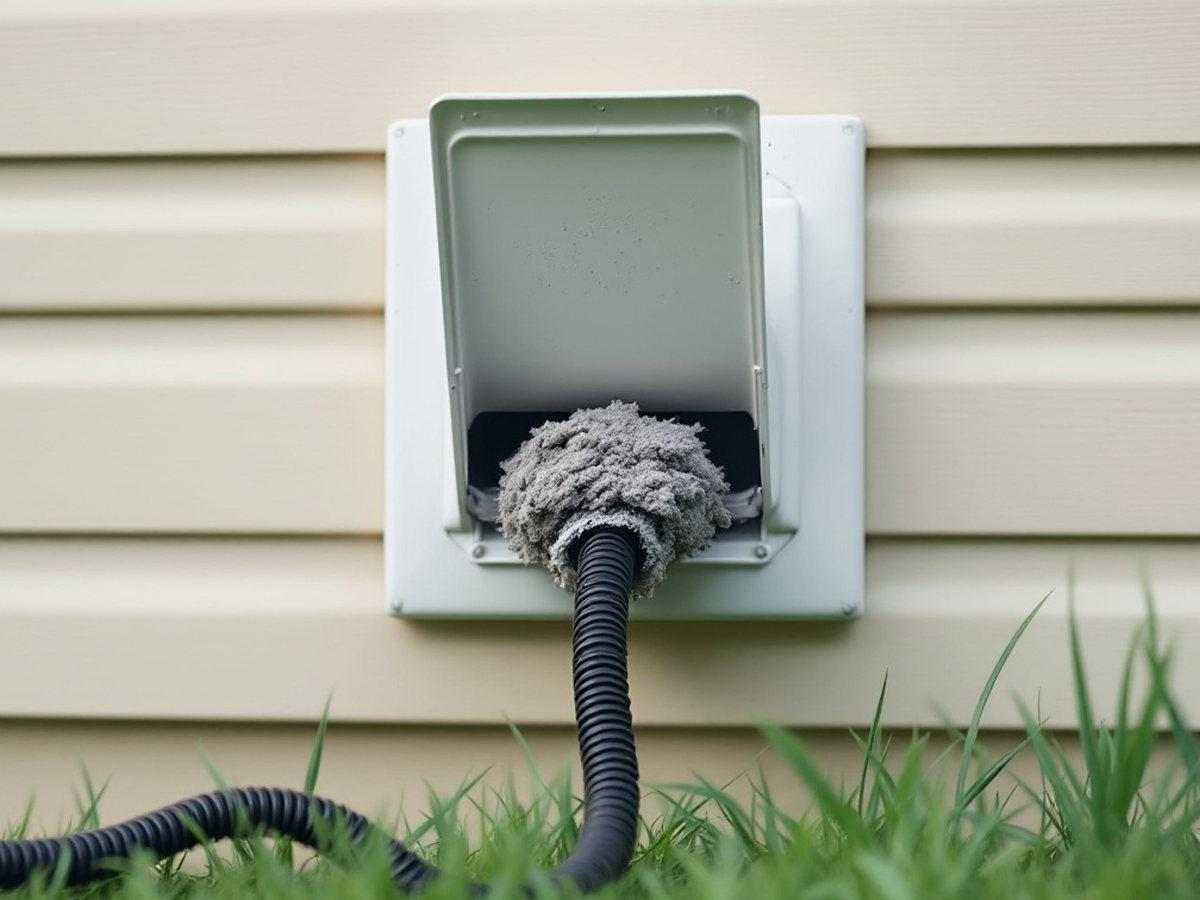
To clean a dryer vent, unplug the dryer (and shut the gas valve on a gas model), pull it about 1 foot from the wall, detach the duct, then brush and vacuum it from both ends and clear the outside vent hood (Maytag; Whirlpool). Do it at least once a year, or sooner if loads start taking longer to dry (NFPA).
It matters for safety: failure to clean was the leading factor in home clothes dryer fires from 2018 to 2020, at 31% (U.S. Fire Administration).
Key takeaways
- Clean the vent and duct at least once a year, and the lint screen before or after every load.
- Unplug the dryer and turn off the gas valve before you move it or detach anything.
- Brush and vacuum the duct from the dryer end and the outside end, then run the dryer empty for 10 to 15 minutes.
- Slow drying, extra-hot clothes or no airflow at the outside flap are signs of a clog.
- Replace plastic or foil accordion duct with rigid or semi-rigid metal duct.
How do you clean a dryer vent?
You clean a dryer vent by disconnecting the duct behind the dryer and removing the lint from the dryer outlet, the duct and the outside vent hood. These steps combine the instructions from Maytag, Whirlpool and the Department of Energy's Building America Solution Center guide. Maytag says a full inside-and-outside cleaning takes under two hours (Maytag).
What do you need to clean a dryer vent?
- A dryer vent cleaning brush or kit: a round brush on flexible rods you can add sections to (Building America Solution Center).
- A vacuum with a hose, or a shop vac, to collect the loosened lint (Building America Solution Center).
- A screwdriver for the hose clamps (Maytag).
- A helper to move the dryer, which both makers recommend (Maytag; Whirlpool).
Step-by-step
Work through the steps in this order; Whirlpool, Maytag and the Building America guide agree on it (Whirlpool; Maytag; Building America Solution Center).
- Clean the lint screen first. Roll the lint off by hand (Whirlpool).
- Find both ends of the vent. The duct leaves the back of the dryer and ends at a hood outside your home (Whirlpool), usually on a wall but sometimes on the roof (GE Appliances).
- Cut the power. Unplug the dryer. On a gas dryer, also turn off the gas valve (Maytag).
- Pull the dryer out. With a helper, move it about 1 foot from the wall (Whirlpool).
- Detach the duct. Loosen the clamp or remove the tape holding the duct to the dryer outlet (Whirlpool; Building America Solution Center).
- Clear the dryer outlet. Brush and vacuum the lint out of the opening on the back of the dryer (Maytag).
- Brush the duct. Push the brush into the wall section, rotating it and adding rods as you go, then vacuum up what it loosens (Building America Solution Center).
- Clean the outside hood. Remove the vent cover, brush and vacuum the end of the duct, and put the cover back (Maytag).
- Reconnect. Clamp the duct back on, plug the dryer in and turn the gas back on if you have it (Whirlpool).
- Push it back without crushing the duct. Keep the duct as short and straight as you can (Building America Solution Center).
- Run it empty. Run the dryer with nothing in it for 10 to 15 minutes to blow out leftover dust (Whirlpool).
Before you push the dryer back, check that the duct isn't damaged, crushed or restricted (U.S. Fire Administration). Then go outside while the dryer runs: the flap should open and you should feel exhaust air (CPSC).
How do I tell if my dryer vent is clogged?
The clearest sign is that clothes are still damp at the end of a normal cycle, or drying takes longer than it used to (CPSC). Watch for these other signs too (Maytag; U.S. Fire Administration report; Whirlpool):
- Heavy loads drag on. Jeans and towels take much longer than usual to dry (U.S. Fire Administration report).
- Clothes come out extra hot at the end of the cycle (U.S. Fire Administration report).
- A faint charred smell with no obvious source (Maytag).
- Moisture and lint collecting in the laundry room (Maytag).
- No air at the outside vent, or a flap that stays shut while the dryer runs (CPSC; Whirlpool).
- A vent warning on the dryer's display, which many Maytag models show (Maytag).
Lint isn't the only cause. Nests from birds and other small animals, or a damaged vent, can also block the exhaust (U.S. Fire Administration report). If you see these signs, stop using the dryer until the vent is clear, because a blocked vent makes the dryer overheat (CPSC).
How often do dryer vents need to be cleaned?
Clean the vent and duct at least once a year, and more often if you notice loads taking longer to dry (NFPA). The Department of Energy's Building America Solution Center guide also says to clean the duct annually. Maytag gives a longer interval, at least once every two years (Maytag); the fire-safety guidance is stricter, so use once a year.
Here is the full maintenance schedule from fire-safety agencies and dryer makers (U.S. Fire Administration; NFPA; Whirlpool; U.S. Fire Administration report):
| Part | How often | What to do |
|---|---|---|
| Lint screen | Before or after every load | Roll the lint off by hand (U.S. Fire Administration; NFPA) |
| Lint screen deep clean | About every 6 months | Check for residue and scrub it off (Whirlpool) |
| Vent duct and outside hood | At least once a year | Brush and vacuum the whole run (NFPA; Building America Solution Center) |
| Gas dryer | Once a year | Professional check of the gas line and connection (U.S. Fire Administration report) |
Clean sooner if the dryer shows clog signs (NFPA), or if the duct is long or has several bends. Long ducts with many turns let moisture condense inside, and that moisture catches lint (U.S. Fire Administration report).
Is it better to clean the dryer vent from the inside or outside?
Clean it from both ends. Cleaning from the inside lets you clear the dryer outlet and the transition hose; cleaning from outside reaches the end of the duct and the hood, where nests and debris can block it (Building America Solution Center; U.S. Fire Administration report). Maytag says you can clean from outside if you can't move the dryer, but you should still clean the inside end too (Maytag).
How to clean a dryer vent from outside
- Turn the dryer off and unplug it before you start (Maytag).
- Remove the vent cover. On a louvered hood, you can take the louvers off while you clean and refit them after (Building America Solution Center).
- Feed the brush into the duct, rotating it, and vacuum what comes loose (Building America Solution Center; Whirlpool).
- Put the cover back and check the flap swings freely (Maytag; Building America Solution Center).
While you're outside, check that the hood has a single flap or louvers and no screen. Screens trap lint and block airflow, and the residential building code bans them at the duct end (Building America Solution Center; International Residential Code). In winter, make sure snow isn't covering the flap (NFPA).
How to clean a dryer vent without moving the dryer
If the dryer is stacked or built in, do the outside steps above and brush the duct as far in as the rods reach (Maytag). You still have to clear the dryer end at some point, so plan to move the dryer, or call a service technician, at your next cleaning (Maytag).
What if the dryer vent is on the roof?
GE Appliances says roof venting is acceptable but venting through an outside wall is better (GE Appliances). If you can't safely reach the roof hood, clean what you can from the dryer end and have a service technician do the rest (Whirlpool).
Can you use a leaf blower or shop vac to clean a dryer vent?
Yes. The Department of Energy's Building America Solution Center guide lists both: an electric leaf blower to push lint out, or a brush with a shop vac or household vacuum to pull it out.
Is it safe to vacuum out a dryer vent?
Yes, with the dryer unplugged and the duct disconnected (Building America Solution Center). A vacuum on its own only reaches the first part of the duct, so use it with a brush: brush to loosen the lint, then vacuum it up from the dryer opening and the duct ends (Building America Solution Center). Maytag and Whirlpool also suggest a vacuum hose for the hard-to-reach spots behind the dryer (Maytag; Whirlpool).
Can you use a leaf blower to clean a dryer vent?
Yes, if the duct runs to an outside hood you can open. Insert the end of an electric leaf blower into the duct, make sure the outside vent is clear so lint doesn't pile up at the exit, and run the blower on its lowest setting (Building America Solution Center). Reconnect the duct and check the outside flap afterward, as with any other method (Building America Solution Center).
What about drill-powered brush kits?
Some vent cleaning kits attach to an electric drill, which spins the brush to loosen packed lint (Building America Solution Center). Follow the kit maker's instructions for direction and speed (Building America Solution Center), especially with foil or flexible duct, which kinks and crushes more easily than rigid metal (CPSC).
How do you clean a dryer lint trap?
Pull the lint screen out, roll the lint off with your fingers, and slide it back in; don't use water to get the lint off (Whirlpool). Do it before or after every load (U.S. Fire Administration; NFPA), and never run the dryer without the screen in place (U.S. Fire Administration).
About every 6 months, Whirlpool says to check the screen for residue (Whirlpool):
- Scrub both sides with a nylon brush dipped in hot water and liquid detergent (Whirlpool).
- Rinse with hot water and let the screen dry fully before you put it back (Whirlpool).
- Vacuum inside the lint trap slot with a crevice tool or dryer brush (Whirlpool).
That residue comes from fabric softener and detergent (Whirlpool). If you use liquid softener or dryer sheets, our comparison of fabric softener, dryer sheets and dryer balls covers the trade-offs.
What happens if you never clean your dryer vent?
Lint keeps building up, airflow drops, and the dryer overheats, which can start a fire (CPSC). Lint is made of small fibers from your clothes, and it is highly combustible (U.S. Fire Administration report).
The numbers from the U.S. Fire Administration report on residential dryer fires show how it plays out:
- 2,900 fires a year in homes from 2008 to 2010, causing an estimated 5 deaths, 100 injuries and $35 million in property loss (U.S. Fire Administration report).
- Failure to clean was the leading factor, at 34% of those fires (U.S. Fire Administration report). In the newer 2018-2020 data it was still the leading factor, at 31% (U.S. Fire Administration).
- Dust, fiber and lint were the first thing to ignite in 28% of them (U.S. Fire Administration report).
- Winter is worst: dryer fires peaked in January, at 11% of the year's total (U.S. Fire Administration report).
A clogged vent also makes every load take longer, since the dryer can't push out the moist air (CPSC). For the wider list of dryer habits that cause fires and damage clothes, see our dryer safety guide.
Which dryer vent duct is safest?
Rigid metal duct is safest, and the code and the safety agencies set the rules (U.S. Fire Administration report; CPSC; International Residential Code; GE Appliances):
- Replace plastic or foil accordion duct with rigid or corrugated semi-rigid metal. Flexible plastic and foil trap lint and kink or crush easily (CPSC).
- Use 4-inch smooth metal duct for the fixed duct run (International Residential Code).
- Keep the transition hose (the short piece behind the dryer) to 8 feet or less, in one piece, listed to UL 2158A, and never hidden inside a wall (International Residential Code).
- Keep the total run to 35 feet or less. Each 90-degree elbow with a tight 4-inch radius counts as 5 feet (International Residential Code).
- No screws poking into the duct more than 1/8 inch (International Residential Code).
- Vent outdoors. A gas dryer must always vent outside (GE Appliances), and the duct must not end in an attic or crawlspace (Building America Solution Center).
When should you call a professional dryer vent cleaner?
Call a pro when you can't reach the whole duct yourself: a long run, a roof vent, a duct hidden behind finished walls, or a clog your brush can't clear. Whirlpool recommends a service appointment when the duct or outside vent is hard to find or reach (Whirlpool), and NFPA says you can have a dryer lint removal service do the yearly cleaning for you (NFPA).
- Inside the dryer cabinet: lint also builds up inside the dryer itself, and CPSC says a qualified service person should clean the chassis periodically (CPSC).
- Gas dryers: have a qualified professional inspect the gas line and connection (NFPA). If you're not comfortable turning the gas off and on, leave the whole job to them.
What's the average cost to get a dryer vent cleaned?
We didn't find an independent price survey for vent cleaning. Maytag puts its own dryer service appointments at $200 to $350, depending on warranty status (Maytag); independent vent cleaners set their own prices, so ask for a quote that covers the full duct and the outside hood.
What to do while the vent is out of action
Don't run the dryer while the vent is blocked or disconnected: the exhaust has to reach the outdoors (CPSC; International Residential Code). If a load can't wait, find a laundromat near you and dry it there, or hand the whole load to a wash-and-fold service until the vent is fixed.
Frequently asked questions
What is the most effective way to clean a dryer vent?
Disconnect the duct and clean it from both ends: brush it to loosen the lint, then vacuum it out, and clear the outside hood. A leaf blower on its lowest setting also works if the duct runs to an outside hood you can open. Finish by running the dryer empty for 10 to 15 minutes.
How do you clean a dryer vent hose?
Unplug the dryer, pull it about 1 foot from the wall and loosen the clamps holding the hose. Brush through it from both ends and vacuum out the loose lint. If the hose is plastic or foil, replace it with rigid or semi-rigid metal duct rather than cleaning it.
How long does it take to clean a dryer vent?
Maytag says a full cleaning of the inside and outside vent takes under two hours. Most of that time goes into moving the dryer and brushing the duct.
Do all dryers have a vent?
No. Ventless condensing dryers recirculate air through the drum and don't need an outside vent. They still have a lint screen to clean after each load.
Can birds block a dryer vent?
Yes. Nests from small birds and other animals can block the exhaust just like lint. Use a hood with a flap or louvers, not a screen, and check that the flap opens while the dryer runs.
How we researched this
We read the fire statistics and safety guidance from the U.S. Fire Administration report, the CPSC, and the NFPA; the duct rules in the International Residential Code; the Department of Energy's Building America Solution Center guide; and the cleaning and venting instructions Maytag, Whirlpool and GE Appliances publish for their own dryers. Where sources disagreed on frequency, we gave the stricter fire-safety guidance. We did not test any tools or methods, and local building codes can differ from the model code. Researched in October 2026.
Sources
- Maytag -- How to Clean a Dryer Vent in 8 Steps
- Whirlpool -- How to Clean a Dryer Vent from Inside & Outside
- National Fire Protection Association -- Clothes Dryer Safety Tip Sheet
- U.S. Fire Administration (FEMA) -- Appliance and Electrical Fire Safety
- Building America Solution Center (PNNL, U.S. Department of Energy) -- Clean Dryer Exhaust
- Whirlpool -- How to Clean a Dryer Lint Trap Slot
- GE Appliances -- Dryer - Installation Information for Exhaust Ducting
- U.S. Fire Administration (FEMA) -- Clothes Dryer Fire Safety (flyer)
- U.S. Consumer Product Safety Commission -- Overheated Clothes Dryers Can Cause Fires (Publication 5022)
- U.S. Fire Administration (FEMA) -- Clothes Dryer Fires in Residential Buildings (2008-2010)
- International Code Council -- 2021 International Residential Code, Section M1502 Clothes Dryer Exhaust