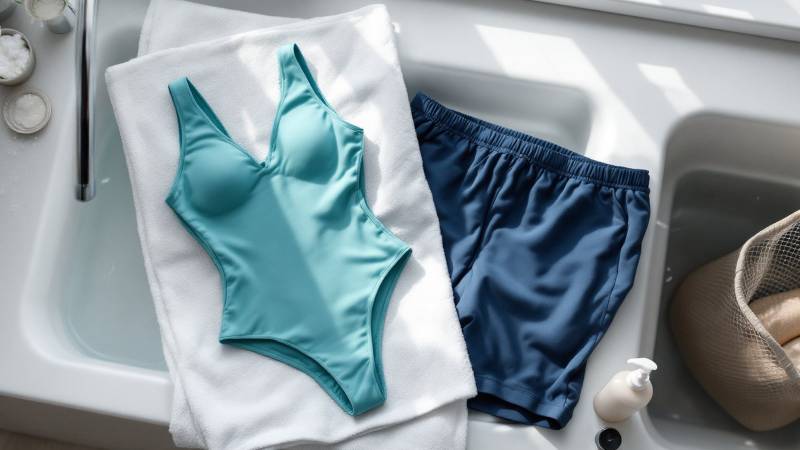
Rinse your swimsuit in cold water as soon as you leave the pool, then hand wash it with a small amount of mild detergent or swimsuit cleaner (University of Kentucky Extension). Press the water out and dry it flat in the shade, never in the dryer, because heat makes elastane, the stretch fiber in swimwear, brittle and saggy (The Conversation).
The rinse matters most. It removes chlorine, salt water, sunscreen and body oils before they keep working on the fibers (The Conversation).
Key takeaways
- Rinse in cold water right after every swim, before the suit dries.
- Wash with mild detergent after each wear, by hand if you can.
- Skip bleach and fabric softener: both degrade elastane.
- Never use the dryer. Lay the suit flat in the shade to dry.
- In one study, swimwear fabric lost 65.7% of its strength after 300 hours in chlorinated pool water.
Why does chlorine wear out swimsuits?
Chlorine attacks elastane, the fiber that makes a suit stretch and hug your body. Most swimwear is about 80% polyester or polyamide (nylon) and 20% elastane, also sold as spandex or Lycra, and the elastane is the most vulnerable part (The Conversation).
The damage adds up fast. a 2024 study in the journal Polymers soaked swimwear fabrics in chlorinated outdoor pool water: breaking force fell 12.4% after 200 hours and 65.7% after 300 hours (a 2024 study in the journal Polymers).
- Chlorine: the main cause of lost stretch and strength; polyester resists it better than nylon (The Conversation).
- Sun: UV keeps breaking down elastane and fading color, even while the suit dries (The Conversation).
- Salt water: less damaging than chlorine, but it still discolors and degrades fabric over time (The Conversation).
- Friction: suits snag easily when rubbed along the side of the pool (University of Kentucky Extension).
What is the best way to wash a swimsuit by hand?
Hand washing in cool water with a mild detergent is the safest method. University of Kentucky Extension and a textile scientist writing in The Conversation both recommend it.
- Rinse right away. Hold the suit under cold or lukewarm running water as soon as you get out. Never use hot water (The Conversation).
- Fill a sink with cool water. Add a small squirt of mild detergent or swimsuit cleaner (University of Kentucky Extension). A gentle hand-dishwashing liquid also works for hand washing delicates (American Cleaning Institute).
- Swish, don't scrub. Move the suit through the water and work the suds gently into the lining and straps. Skip long soaks: Speedo tells owners not to soak its suits (Speedo).
- Rinse until no suds remain. Use cool, clean water.
- Press the water out. Squeeze gently instead of wringing, or press the suit inside a dry towel. Then unroll it at once: a wet towel holds chlorinated water against the fabric (Speedo).
- Dry flat in the shade. Hanging a wet suit stretches it, and direct sun keeps breaking down elastane (The Conversation).
Leave out chlorine bleach, which makes elastane lose its stretch and turn yellow. Skip fabric softener too: it coats the fabric, traps odors and degrades elastane (The Conversation). Avoid strongly acidic or alkaline cleaners for the same reason (The Conversation).
The same gentle routine suits lingerie and other stretchy pieces; our guide to washing delicates covers those.
Can you put a swimsuit in the washing machine?
Sometimes, but hand washing is safer, and the sources disagree. University of Kentucky Extension says spandex activewear can go in the washer on cold with a gentle cycle, while Speedo tells owners not to machine wash its suits. Check the care label first; it overrides any general rule.
If the label allows the machine, keep the settings gentle (American Cleaning Institute; University of Kentucky Extension):
- Bag it: put the suit in a mesh laundry bag so straps and hooks don't snag.
- Cycle: delicates or gentle, which uses a gentler wash and spin.
- Water: cold.
- Detergent: a small dose of mild detergent; no bleach and no softener.
- Afterward: straight out to air dry, never into the dryer.
Can I wash my bathing suit with my regular clothes?
Not in a normal load. The American Cleaning Institute advises separating delicates from regular loads and washing them on the gentle cycle. Jeans, towels and anything with zippers add friction, which snags swimwear (University of Kentucky Extension).
At a self-service laundromat, put the suits in a mesh bag on their own small gentle, cold cycle, wash the sandy beach towels in a separate machine, and take the suits home to air dry. If you drop the towels at a wash-and-fold service, keep the suits out of the bag or ask the attendant to air dry them.
How often should bathing suits be washed?
Rinse it after every swim and wash it after each wear. The American Cleaning Institute lists bathing suits with underwear and socks as items to wash after each wear (American Cleaning Institute).
Swimwear makers set a lighter routine for chlorine-only use. Speedo says to always rinse in fresh, cold water after use and to hand wash occasionally with mild soap (Speedo). If you wore the suit for hours, sweated in it or put sunscreen on, wash it with detergent rather than rinsing alone.
| Situation | What to do |
|---|---|
| Short pool swim | Cold rinse right away, then a mild-detergent wash |
| Ocean or lake | Rinse out salt and sand, then wash |
| Sunscreen on the fabric | Wash the same day, pretreating any marks |
| Hot tub | Rinse and wash; heat is hard on elastane |
The table follows the cited guidance: rinse every time, wash after wear (American Cleaning Institute; The Conversation).
Can you put a swimsuit in the dryer?
No. Dryer heat makes elastane brittle, so the suit loses its shape and turns loose and saggy (The Conversation). Speedo also rules out tumble dryers and heaters, and University of Kentucky Extension says to avoid machine drying for spandex.
To air dry it:
- Lay it flat on a dry towel or rack; hanging wet fabric stretches it (The Conversation).
- Keep it in the shade. Direct sun fades color and breaks down elastane (Speedo; The Conversation).
- Turn it over once the top side feels dry so the lining dries too.
How do you dry a swimsuit faster?
Press it inside a dry towel to pull out most of the water, then unroll it and lay it flat in moving air, out of the sun (The Conversation). Never put it on a radiator or heater. More no-dryer options are in our guide to drying clothes fast.
How do you get chlorine smell and sunscreen out of a swimsuit?
A chlorine smell means chlorinated water is still in the fibers. Rinse the suit in cold water as soon as you can, then wash it with mild detergent; the rinse removes chlorine, salt water, sunscreen and body oils (The Conversation). Don't leave it balled up in a wet towel or bag, which holds the chlorinated water in (Speedo).
How to get sunscreen out of a swimsuit
Sunscreen stains are often yellow or orange. Iowa State University Extension explains that avobenzone, a UV filter, oxidizes and reacts with minerals in water, especially hard water, and the stain can become hard or impossible to remove (Iowa State University Extension).
- Blot off excess lotion. Don't rub, which pushes it deeper (Iowa State University Extension).
- Oily marks: work in liquid dish soap or laundry detergent (Iowa State University Extension).
- Yellow or orange marks: try lemon juice and table salt or a rust remover, which work on avobenzone (Iowa State University Extension). Test on a hidden spot first; bright colors are often less colorfast (American Cleaning Institute).
- Skip soaking and bleach, including oxygen bleach. They do little and can make it worse (Iowa State University Extension).
- Wash, air dry and check. Repeat if the mark is still there (Iowa State University Extension).
Prevention is easier: Speedo suggests applying sunscreen about 15 minutes before putting on your suit, because oils and lotion can deteriorate the fabric (Speedo). For sunscreen on other clothes, see getting makeup and sunscreen out of clothes.
How can you make a swimsuit last longer?
Get the suit wet in the shower before you swim. University of Kentucky Extension notes that a wet suit absorbs less of the highly chlorinated pool water.
- Choose chlorine-resistant fabric if you swim laps often; it lasts longer (University of Kentucky Extension). Polyester-rich blends hold up better than nylon, but no fabric is immune (The Conversation).
- Avoid rough surfaces such as pool edges and concrete, which snag the knit (University of Kentucky Extension; Speedo).
- Never leave it wet in a bag or towel, and never hang it dripping without a rinse (Speedo).
- Read the care label before the first wash. Our care label symbols guide decodes it.
Should you wash a brand new bathing suit before wearing it?
A quick hand wash is a good idea, especially for bright or dark suits. The American Cleaning Institute advises washing new, dark or brightly colored items separately the first few times, because hot pinks, bright greens and other fluorescents are often less colorfast (American Cleaning Institute).
Frequently asked questions
Should you wash swimsuits with detergent?
Yes, a small amount of mild detergent or swimsuit cleaner after each wear. Plain water rinses out chlorine and salt, but detergent removes sunscreen and body oils. Skip bleach and fabric softener, which both degrade elastane.
Can you wash swimsuits with towels at the laundromat?
Wash them separately. Towels add friction that snags swimwear, so put the suits in a mesh bag on their own small, cold, gentle cycle. If you use a wash-and-fold service, ask the attendant to air dry the suits instead of machine drying them.
How do you shrink a swimsuit?
Heat is what shrinks most fabrics, but in swimwear it damages elastane, leaving the suit brittle, loose and saggy. Hot water and the dryer usually make a stretched-out suit worse, not tighter. If a suit has lost its stretch, the elastane is worn out.
Does salt water damage swimsuits?
Less than chlorine, but yes. Salt water slowly discolors and degrades swimwear fabric, and sun exposure speeds it up. Rinse in cold fresh water after an ocean swim, just as you would after the pool.
Can you put a bathing suit in the dryer on low heat?
No. Even low heat makes elastane brittle over time, and swimsuit makers rule out tumble dryers. Press the water out with a towel and lay the suit flat in the shade instead.
How we researched this
We read a textile scientist's explainer, the University of Kentucky Extension's active wear guide, Iowa State University Extension's sunscreen stain guidance, the American Cleaning Institute's laundry basics, a peer-reviewed study on chlorine and sun damage to swimwear fabric, and one swimwear maker's care instructions for its own suits. We cited all 6. Where the sources disagree, as on machine washing, we give the gentler method first. We did not lab-test these methods. Researched October 17, 2026.
Sources
- University of Kentucky Cooperative Extension -- Selecting Active Wear (FCS2-849)
- The Conversation (Carolina Quintero Rodriguez, RMIT University) -- Do I have to rinse out my swimsuit after the pool? A textile scientist has the answer
- Potočić Matković, Salopek Čubrić and Krstović, Polymers (2024) -- The Impact of Chlorinated Water and Sun Exposure on the Durability and Performance of Swimwear Materials
- American Cleaning Institute -- Laundry Basics
- Speedo Australia -- Caring for your Swimwear
- Iowa State University Extension and Outreach -- Sunscreen Stains (AnswerLine)