How to Wash a Jersey Without Ruining the Numbers

LaundroMaps Team
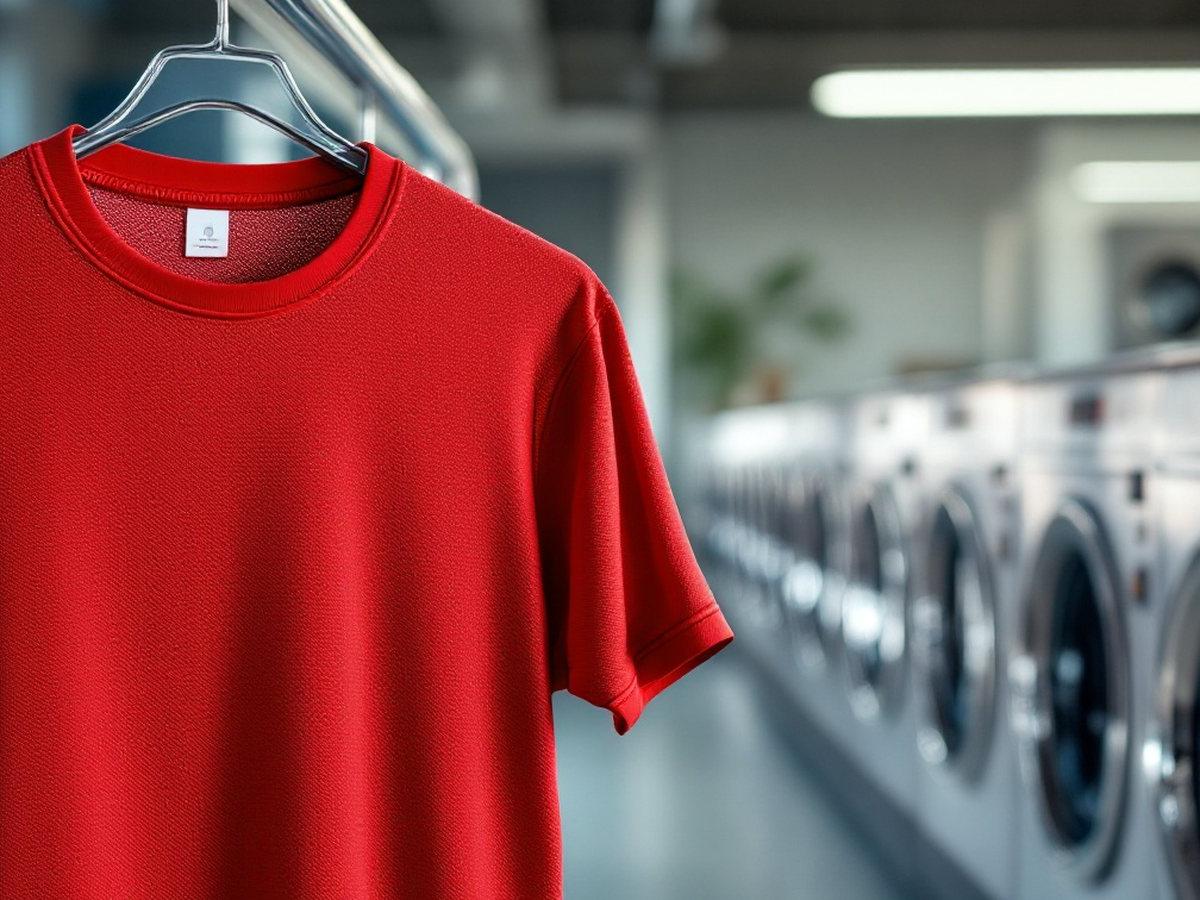
Turn the jersey inside out, wash it in cold water on the delicate or hand-wash cycle with a color-safe detergent, and hang it to dry (Whirlpool; Mitchell & Ness). Skip the dryer: heat can shrink the jersey and make heat-pressed numbers and letters peel or crack (Whirlpool).
Most game and replica jerseys are polyester with printed, heat-pressed or stitched names and numbers. The fabric survives a normal wash; the decoration is what heat, friction and harsh additives damage (Siser).
Key takeaways
- Turn the jersey inside out and wash it in cold water on a delicate or hand-wash cycle with a low spin.
- Skip fabric softener, chlorine bleach and stain-fighting additives near printed numbers.
- Hang it to dry out of direct sun; it takes about 2 to 4 hours, and the dryer can peel numbers.
- Pretreat stains first: enzyme pretreatment for grass, cold water for fresh blood, brush dry mud off.
- Wait 24 hours before the first wash of a newly heat-pressed custom jersey.
Can you wash a jersey in a washing machine?
Yes, if the care label allows machine washing, and most jersey makers' instructions do. Mitchell & Ness says its NBA and NFL jerseys can go in the washing machine or be washed by hand, as long as the water is cold.
Read the label first. The FTC requires apparel makers to say whether a garment is washed by hand or machine, and to name a water temperature if regular hot water would harm it. A label that says "Wash with like colors" means the dye may bleed (FTC).
One exception: team uniforms a school or club buys in bulk for its players may have no care label at all. The FTC exempts uniforms sold to institutional buyers, including colleges and universities, from the care-label requirement (FTC). Ask the coach or equipment manager for the maker's instructions.
How do you wash a jersey without ruining it?
Protect the decoration from heat, friction and harsh chemicals: inside out, cold water, gentle cycle, mild detergent, no dryer (Whirlpool; Mitchell & Ness; Siser). These steps work for replica, swingman and authentic jerseys.
- Treat stains first. Blot, dampen the spot with cold water, apply a stain remover or a little gentle detergent, and work it in with a soft-bristled toothbrush (Whirlpool). Keep strong stain removers off printed numbers (see below).
- Prep the jersey. Turn it inside out to protect the stitching, lettering and patches. Unbutton baseball jerseys and remove the laces on hockey jerseys so nothing tangles (Whirlpool).
- Load it with like colors, or alone. Mitchell & Ness recommends washing a jersey by itself, or only with similarly colored jerseys, so zippers and buttons on other clothes can't tear it and new dye can't run onto it.
- Pick the cycle. Cold water on the delicates or hand-wash cycle. No delicates cycle? Use a cold cycle with a low spin speed (Whirlpool). A high spin can stretch the jersey (Mitchell & Ness).
- Use a mild, color-safe detergent. Leave out fabric softener and other additives (Mitchell & Ness). Siser, a maker of the heat transfer vinyl used for names and numbers, says detergents sold to whiten or fight stains, and bleach, can damage the decoration (Siser).
- Dry it flat or on a hanger. Turn it right side out, shake it so the letters don't stick together, and hang it up (Whirlpool).
Why cold water and inside out?
Hot water can make the colors run and weakens the adhesive on screen-printed details (Mitchell & Ness). Inside out, the numbers don't rub against other clothes, zippers or buttons in the drum; that friction can scuff the vinyl or start it peeling (Siser).
Why skip fabric softener?
Softener can interfere with a sports fabric's ability to absorb sweat and wick it away (Whirlpool). For how softener, dryer sheets and dryer balls differ, see our softener comparison.
What takes stains out of jerseys?
Match the treatment to the stain, use cold water, and check that the stain is gone before the jersey dries (American Cleaning Institute). The American Cleaning Institute says most ordinary stains come out in cold water, and a dryer can make a leftover stain permanent.
| Stain | First step | If it's still there |
|---|---|---|
| Grass | Pretreat or soak in a product containing enzymes | Wash with oxygen bleach, if the label allows bleach |
| Fresh blood | Soak in cold water; hot water sets it | Rewash with a bleach that is safe for the fabric |
| Dried blood | Pretreat or soak in warm water with an enzyme product | Rewash with a bleach that is safe for the fabric |
| Mud | Let it dry, brush off what you can, pretreat with liquid detergent | Presoak in detergent or an enzyme product |
| Sweat | Prewash stain remover or a rub of bar soap | An enzyme product or oxygen bleach |
Those steps come from the American Cleaning Institute; check each one against your jersey's label and keep products off the printed numbers. For sweat or grass, Whirlpool also suggests soaking the jersey for 20 minutes in 1 cup of white vinegar per gallon of water, then rinsing before the wash. Mitchell & Ness spot-treats light stains with a 50:50 mix of vinegar and water.
Our guides to grass, mud and red clay stains and blood stains go further, including stains that have already been through the dryer.
Can I use OxiClean on a jersey?
On the fabric, usually yes, after a spot test; on the printed numbers, makers disagree, so keep it off them. OxiClean calls its powder color safe but says not all clothing is colorfast, so test it on a hidden spot first, and follow the care label for water temperature.
Jersey and vinyl makers are more cautious. Mitchell & Ness tells owners of its jerseys to avoid chemical stain removers and bleach, and Siser says stain-fighting additives can damage heat-applied decoration. The safer route: use an oxygen product only on a stained area of plain fabric, rinse it out, and wash as usual.
Is OxiClean just baking soda and peroxide?
No. OxiClean lists its key ingredients as sodium percarbonate, sodium carbonate, surfactants and a polymer. Sodium percarbonate breaks down in water into carbonate and hydrogen peroxide (a Massachusetts state chemical review). That carbonate is washing soda (sodium carbonate), not the sodium bicarbonate in baking soda.
How do you get the smell out of a jersey?
Wash it soon after you wear it, and presoak smelly jerseys before the wash (Mitchell & Ness). Polyester holds onto body odor more than cotton: in a 2014 Ghent University study, polyester shirts worn for a spinning class smelled significantly less pleasant and more intense than cotton ones, and odor-linked micrococci grew mostly on the polyester.
- Presoak. Soak in cold water with white vinegar, 1 cup per gallon, for 20 minutes, then rinse (Whirlpool).
- Skip softener. Leave fabric softener out of the wash (Whirlpool; Mitchell & Ness).
- Don't leave it damp. Gear left wet in a car, gym bag or locker turns into a breeding ground for bacteria (Whirlpool). Air it out right after the game if you can't wash it yet.
If a jersey still smells after washing, our guide to getting sweat and body odor out of clothes covers longer soaks and enzyme treatments.
How often do you wash a jersey?
After every wear you sweat in. The American Cleaning Institute says T-shirts and tank tops should be washed after each wearing, while outer clothes can go a few wears unless you sweat in them or they're visibly dirty. A fan jersey worn over another shirt falls in the second group.
Can you put a jersey in the dryer?
Not with heat. Whirlpool says machine drying can make adhesive lettering peel or crack over time and can shrink the jersey, and Mitchell & Ness says never to use a dryer on its jerseys.
- Hang it. A hanger or drying rack works; hanging dries faster than laying flat because more air reaches it (Mitchell & Ness).
- Keep it out of direct sun, especially on hot days (Mitchell & Ness).
- Expect 2 to 4 hours. Thin authentic-style performance fabric dries faster than a thicker swingman jersey (Mitchell & Ness).
- In a hurry? Tumble with no heat, if the label allows (Whirlpool).
Can you iron a jersey?
Avoid it. Mitchell & Ness says never to iron its jerseys because heat lifts the adhesives on printed parts. If you must press a custom vinyl jersey, Siser says to iron it inside out, or cover the decoration with parchment paper or a cotton cloth, on a low setting with no steam.
How do you hand wash a jersey?
Hand washing is the gentlest option for a jersey you want to keep for years. These steps follow Mitchell & Ness:
- Fill a basin or sink with cold water and mix in a small amount of mild detergent.
- Add the jersey and move it through the water by hand; don't stretch or wring it.
- Rinse in clean cold water until no detergent is left; leftover detergent can irritate skin.
- Press out water and hang the jersey to dry.
Our guide to hand washing clothes covers basins, detergent amounts and drying without stretching.
How do you wash NFL, soccer, hockey and baseball jerseys?
The method is the same for every sport: inside out, cold water, gentle cycle, hang dry (Whirlpool; Mitchell & Ness). The differences are in the hardware and the dirt.
| Jersey | What to do differently |
|---|---|
| NFL and football | Pretreat grass and mud first. Wash pads separately: shoulder pads get wiped and aired out; removable pant pads can go in a mesh bag (Whirlpool). |
| Soccer | Thin performance fabric dries fastest; never use softener on it (Whirlpool; Mitchell & Ness). |
| Hockey | Remove the laces at the neck before washing (Whirlpool). |
| Baseball | Undo every button so nothing snags (Whirlpool). |
| Basketball (NBA) | Cold water only, wash alone or with like colors (Mitchell & Ness). |
Baseball and football pants
Whirlpool suggests pretreating, a cold wash and a low-heat dry unless the tag says otherwise. For heavy grass or dirt, soak the stained areas for 30 minutes in 1 cup of water, 1 cup of vinegar and 1 tablespoon of baking soda.
New custom jerseys
If names or numbers were just heat-pressed, wait at least 24 hours before the first wash so the adhesive can set; washing too soon can make the vinyl peel or crack (Siser).
Where can you wash jerseys for a whole team?
A full team's uniforms are more than one home washer can handle in a load. At a self-service laundromat you can run several cold, gentle loads side by side and hang everything on the rolling racks. More than 6,200 laundromats in the LaundroMaps directory list self-service washing, as of October 2026 (LaundroMaps directory data).
If you'd rather drop the bags off, more than 4,400 directory listings offer commercial laundry service, as of October 2026 (LaundroMaps directory data). Pass on the same instructions: cold water, no softener, no dryer heat, and air dry. You can also find a laundromat near you and call ahead to ask whether they will hang-dry uniforms.
Frequently asked questions
Should you get jerseys dry cleaned?
Usually not. Mitchell & Ness says never to dry clean its jerseys because of the harsh chemicals, and Siser says dry-cleaning heat and solvents can damage most heat transfer vinyl. Wash in cold water instead, unless the care label says otherwise.
Should I wash a jersey by itself?
It's the safest choice. Mitchell & Ness recommends washing a jersey alone or only with similarly colored jerseys, so zippers and buttons on other clothes can't tear it and dye can't transfer, especially in the first wash.
Can I shrink my jersey in the dryer?
Makers warn that dryer heat can shrink a jersey, but the same heat can make printed numbers and letters peel or crack. If you want a smaller fit, buy the right size rather than risk the decoration.
How we researched this
We read the care instructions published by a jersey maker (Mitchell & Ness), a washer maker (Whirlpool) and a heat transfer vinyl maker (Siser), the American Cleaning Institute stain and laundry guidance, the FTC's Care Labeling Rule guidance, OxiClean's own ingredient and FAQ pages, a Massachusetts chemical review of sodium percarbonate and a peer-reviewed study on odor in polyester shirts: 10 sources in all, plus LaundroMaps directory counts. Where makers disagreed, as on oxygen stain removers near printed numbers, we gave the more cautious advice. We did not test these methods ourselves. Researched October 2026.
Sources
- Whirlpool -- How To Wash and Dry a Sports Jersey
- Mitchell & Ness -- How to Wash a Jersey
- Siser (heat transfer vinyl maker) -- How to wash, dry, iron HTV decorated garments
- Federal Trade Commission (FTC) -- Clothes Captioning: Complying with the Care Labeling Rule
- American Cleaning Institute -- Stain Removal Guide
- Commonwealth of Massachusetts (mass.gov) -- Hydrogen Peroxide, Peracetic Acid and Sodium Percarbonate (October 2010)
- OxiClean (Church & Dwight) -- Frequently Asked Questions
- OxiClean (Church & Dwight) -- About OxiClean: How Does OxiClean Work?
- Callewaert et al., Applied and Environmental Microbiology (2014) -- Microbial Odor Profile of Polyester and Cotton Clothes after a Fitness Session
- American Cleaning Institute -- Do I need to wash this?
- LaundroMaps directory data -- 13,000+ US laundromat listings, October 2026