How to Get Grass Stains, Mud and Red Clay Out of Clothes

LaundroMaps Team
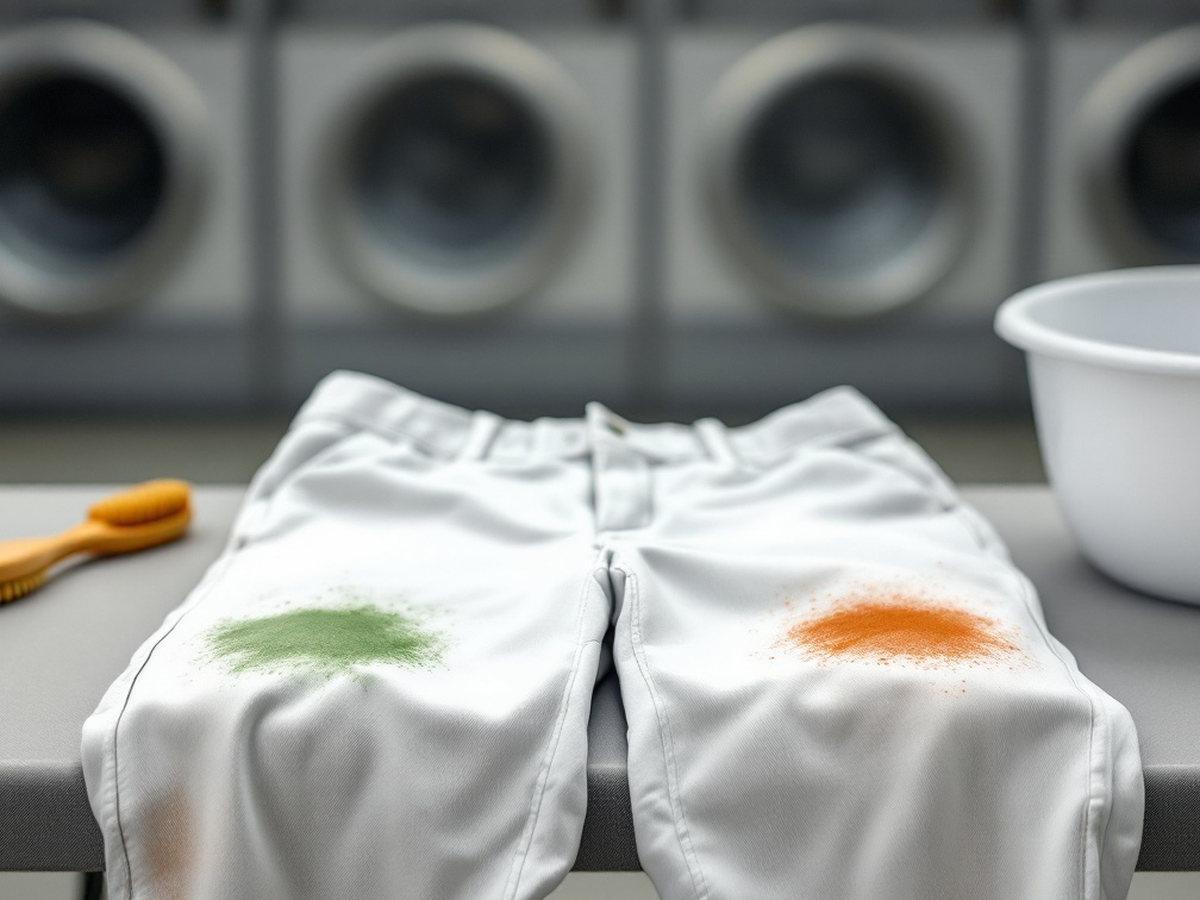
To get grass stains out, work an enzyme stain remover or enzyme detergent into the stain, soak it in cool water under 100°F, then wash (Iowa State University Extension). For mud, let it dry, brush off what you can, pretreat with detergent and wash (American Cleaning Institute). Check the spot before the dryer: heat sets these stains (NMSU Extension).
Red clay from a baseball infield is different. Its color comes from iron oxide, so chlorine bleach can make it permanent (Iowa State University Extension).
Key takeaways
- Grass: enzyme pretreat, then a cool soak under 100°F before washing.
- Mud: let it dry, brush it off, then pretreat with liquid detergent or a detergent paste.
- Red clay: no chlorine bleach. Pretreat, soak up to 1 hour, scrub, wash on a heavy-soil cycle.
- Never put a stained item in the dryer; air-dry until the stain is gone.
- Never mix chlorine bleach with vinegar, rubbing alcohol or a rust remover.
How do you get grass stains out of clothes?
Use an enzyme product and cool water. Iowa State University Extension classes grass as a protein stain that is also a dye stain, because the green comes from chlorophyll. Enzymes break down the protein part (Iowa State University Extension).
- Check the label. Washable items can be treated at home; test any remover on an inside seam or hem first (NMSU Extension).
- Pretreat both sides. Apply a prewash stain remover to the front and back of the stain and wait at least 2 minutes (University of Georgia Extension). An enzyme stain remover or enzyme detergent works best on grass (American Cleaning Institute).
- Soak cool. Soak in cold to lukewarm water, under 100°F. Hot water, an iron or a dryer cooks the protein into the fibers (Iowa State University Extension).
- Wash. Launder with an enzyme detergent (Iowa State University Extension). If color remains, wash again with chlorine bleach if the fabric allows it, or oxygen bleach (a peroxide-based, color-safe bleach) (American Cleaning Institute).
- Inspect before drying. If any green is left, repeat the steps instead of drying (American Cleaning Institute).
How do you get grass stains out of jeans?
Denim follows the same steps: enzyme pretreat, cool soak, then wash (Iowa State University Extension). Dark denim can lose dye to hydrogen peroxide or bleach, so test the spot first; extension guides say to pretest every cleaning agent on dyed fabric (University of Georgia Extension). Our guide to washing jeans without fading covers the regular wash.
How do you get grass stains out of white clothes?
White cotton can take chlorine bleach once the enzyme step is done, if the care label allows it (American Cleaning Institute). Athletic whites are the exception: many uniforms are polyester or spandex blends, and Iowa State University Extension lists avoiding chlorine bleach among its rules for them. Use oxygen bleach instead (Nike).
How do you get dried grass stains out of clothes?
Start again with the enzyme pretreat and a longer soak, then move to stronger agents one at a time (NMSU Extension). A dried stain is harder, not hopeless, as long as it hasn't been through the dryer (NMSU Extension).
- Soak. NMSU Extension suggests soaking an unknown or old stain in cold water for about 30 minutes, then working in liquid detergent or dish liquid for another 30 minutes and rinsing.
- Peroxide or alcohol. If the stain remains after washing, apply a few drops of hydrogen peroxide, or sponge with rubbing alcohol (University of Georgia Extension). Use the 3% peroxide sold as an antiseptic, not the stronger hair-bleaching kind (University of Georgia Extension).
- Rinse between products. Rinse thoroughly before switching to a different remover (NMSU Extension).
- Wash again and inspect before drying (American Cleaning Institute).
Fiber limits matter here. Rubbing alcohol damages acetate, triacetate, modacrylic and acrylic; on acetate, University of Georgia Extension says to dilute it with water first. Our guide to hydrogen peroxide in laundry covers colorfastness and strength in more detail.
Does grass permanently stain?
Not usually, if you treat it before heat. Heat sets protein stains, which is why NMSU Extension says not to press or machine-dry a stained garment. A grass stain that has been ironed or dried hot may not come out fully.
How do you get mud and dirt out of clothes?
Let mud dry first, then brush off as much as possible (American Cleaning Institute). Then treat what's left by how heavy it is (American Cleaning Institute):
- Light stains: pretreat with a paste of powder detergent and water, liquid laundry detergent or a liquid detergent booster, then wash.
- Heavy stains: presoak in laundry detergent or an enzyme product, then wash.
Everyday dirt responds to wetting agents, which help water carry the cleaner into the fabric. Liquid dish soap, laundry detergent and stain sprays all contain them (Iowa State University Extension). For very dirty clothes, wash in the warmest water the fabric allows (American Cleaning Institute).
Does dish soap get out grass stains?
Dish soap is better at the dirt in a grass stain than the green. Iowa State University Extension names blue liquid dish soap as a wetting agent for dirt, and recommends enzyme products for grass. Use dish soap on muddy grass stains, then follow with an enzyme pretreat.
How do you get red clay out of baseball pants?
Treat red clay as a rust stain: no chlorine bleach, then a long soak and a scrub. Infield clay is clay mixed with sand or silt and topped with brick dust; its red comes from iron oxide (Iowa State University Extension). Chlorine bleach sets iron and rust stains (University of Georgia Extension; American Cleaning Institute).
- Brush off dry clay before it gets wet (American Cleaning Institute).
- Pretreat with dish soap, detergent or a spot cleaner (Nike).
- Soak up to 1 hour in warm water no hotter than 100°F. Skip the soak for pants with spandex (Nike).
- Scrub with a spare toothbrush or scrub brush to lift the particles (Nike).
- Wash on the heavy-soil cycle with warm or hot water, no hotter than 140°F, and a medium or large load setting so there's plenty of water (Nike).
- Check, then hang dry. Repeat before drying if any color remains (Nike).
What if the orange tint won't come out?
Use a rust remover made for fabrics, then launder (American Cleaning Institute). NMSU Extension calls rust removers a harsh, last-resort step: test a seam and follow the label exactly. University of Georgia Extension also lists salt and lemon juice dried in the sun as a gentler first try.
Safety: rust removers are acids. Mixed with chlorine bleach, they release toxic chlorine gas (Washington State Department of Health; New Jersey Department of Health). Never use both on the same garment without a thorough rinse in between.
Sources differ on oxygen bleach here. Iowa State University Extension warns that red clay reacts badly to both chlorine and oxygen bleach, while University of Georgia Extension soaks rust-tinted whites in detergent and 1 cup of oxygen bleach for 10 to 15 minutes. The safer order: get the clay out first, then use oxygen bleach only to brighten.
How do you get baseball pants white again?
Use oxygen bleach, not chlorine, following the label (Nike). Most sports uniforms are polyester or a cotton-polyester blend, and polyester shrinks with heat (Iowa State University Extension). Iowa State University Extension gives five rules for uniforms:
- Treat stains as soon as possible after the game.
- Avoid chlorine bleach.
- Wash alone or with like colors.
- Wash inside out to reduce peeling of letters and numbers.
- Air dry.
Nike adds a few details for its own baseball pants:
- Prep: remove belts and pads, and close zippers and snaps.
- Detergent: one made for athletic uniforms, which is lower in alkalinity; high-alkaline detergents can yellow whites.
- No fabric softener on its moisture-wicking fabrics.
- Drying: a wood or plastic hanger, or the dryer's lowest or air-only setting if you must.
- Storage: cool, dry and out of light; light can turn white nylon yellow.
This table puts the uniform stains side by side (Iowa State University Extension; American Cleaning Institute):
| Stain | Type | First step | Avoid |
|---|---|---|---|
| Grass | Protein and dye | Enzyme pretreat, cool soak | Hot water, dryer |
| Mud and dirt | Protein and soil | Brush off dry, detergent pretreat | Treating it wet |
| Red clay | Dye (iron oxide) | Detergent pretreat, soak, scrub | Chlorine bleach |
| Sweat and blood | Protein | Enzyme presoak in cool water | Hot water, dryer |
More on keeping whites bright is in our guide to washing white clothes.
Will vinegar remove grass stains?
Vinegar is a helper, not the main treatment. The extension and industry guides for clothing lead with enzyme products for grass (American Cleaning Institute; Iowa State University Extension). University of Georgia Extension uses diluted dish detergent with a few drops of vinegar only as one step in a longer method.
How long to let vinegar sit to remove stains?
On sneakers, Nike dabs on 1 part white vinegar to 1 part water and lets it sit about 30 minutes before scrubbing. See our guide to vinegar in laundry for what it does in a wash.
What shouldn't you mix with vinegar?
Never combine vinegar with chlorine bleach: acids and bleach release chlorine gas (Washington State Department of Health). Hydrogen peroxide and vinegar together form peracetic acid, which irritates eyes, skin and lungs (New Jersey Department of Health). Bleach and rubbing alcohol form chloroform (New Jersey Department of Health). Use one product at a time and rinse between them (NMSU Extension).
How do you get grass stains out of shoes?
Hand-clean them in layers, from gentle to strong. Nike gives this order for its sneakers:
- Take out laces and insoles and wash them separately in warm water with a little detergent.
- Vinegar pretreat: dab on equal parts vinegar and water, wait about 30 minutes, then scrub with a toothbrush.
- Detergent scrub: brush with warm water and a little laundry detergent.
- Tough stains: rinse, then cover the stain with 1 tablespoon of baking soda mixed with enough hydrogen peroxide to make a paste. Wait 30 minutes and scrub with cold water.
Canvas takes all of these steps; let canvas shoes air dry, because dryer heat can damage them (Nike). Leather gets rubbing alcohol on a cotton ball or a leather cleaner. Suede needs little liquid: brush it, then a few drops of vinegar (Nike). Our suede cleaning guide covers more.
When should you hand uniforms to a laundromat or a pro?
When the volume or the stakes are high. A team's worth of uniforms after a wet game is a job for a commercial laundry service; more than 4,400 laundromats in the LaundroMaps directory list commercial laundry, as of October 2026 (LaundroMaps directory data).
- Weekly game loads: a wash-and-fold service handles the washing; point out stained spots and say no chlorine bleach.
- Set-in or dried-in stains: more than 2,100 listings offer professional stain removal, as of October 2026 (LaundroMaps directory data).
- Dry clean only: use only a dry-cleaning agent at home, or ask a dry cleaner for help (NMSU Extension).
For other stains, see our stain-by-stain guide.
Frequently asked questions
What is the best way to remove grass stains?
Work an enzyme stain remover or enzyme detergent into the stain, soak in cool water under 100°F, then wash. If any green remains, wash again with a bleach that is safe for the fabric. Check before drying, because heat sets the stain.
Does Dawn dish soap get out grass stains?
Liquid dish soap helps with the dirt in a grass stain, since it acts as a wetting agent. The green itself responds better to an enzyme product. Use dish soap first on muddy stains, then an enzyme pretreat.
Does Dawn and vinegar remove stains?
Dish soap with a few drops of vinegar is one step in an extension method for grass, not a full treatment. Rinse before you switch to any other product, and never add chlorine bleach to vinegar.
Can you get grass stains out after drying?
Sometimes. Repeat the enzyme pretreat and soak, then try a few drops of 3% hydrogen peroxide or rubbing alcohol on a colorfast fabric. A stain set by high dryer heat may not come out fully.
Can you use chlorine bleach on red clay?
No. Red clay gets its color from iron oxide, and chlorine bleach can set rust-type stains permanently. Use detergent, a soak and a scrub, then a rust remover made for fabrics if needed.
How we researched this
We read the American Cleaning Institute's stain guide, extension stain guides from Iowa State University, New Mexico State University and the University of Georgia, Nike's care instructions for its own baseball pants and shoes, and chemical-mixing warnings from the Washington State and New Jersey health departments: 9 sources in all, plus LaundroMaps directory counts, on October 16, 2026. Where they disagreed (oxygen bleach on red clay), we give the safer order. We don't lab-test stain methods, and we left out home remedies we couldn't source.
Sources
- Iowa State University Extension and Outreach -- Dealing with Sport Stains (AnswerLine)
- American Cleaning Institute -- Stain Removal Guide
- New Mexico State University Extension -- Removing Clothing Stains (Guide C-502)
- University of Georgia Extension (Textiles) -- Remove Stains From Grass, Flowers
- Nike -- How to Clean Baseball Pants
- University of Georgia Extension (Textiles) -- Remove Stains From Iron, Rust
- Washington State Department of Health -- Dangers of Mixing Bleach with Cleaners
- New Jersey Department of Health -- Hazard Alert: Mixing Bleach with Other Cleaning Products Can Be Deadly
- Nike -- How To Get Grass Stains Out of Shoes
- LaundroMaps directory data -- 13,000+ US laundromat listings, October 2026
Related guides
- How to wash a sports jersey: cold water, inside out and no dryer heat on the numbers.