How Long Does Poison Ivy Stay on Clothes? How to Wash It Out

LaundroMaps Team
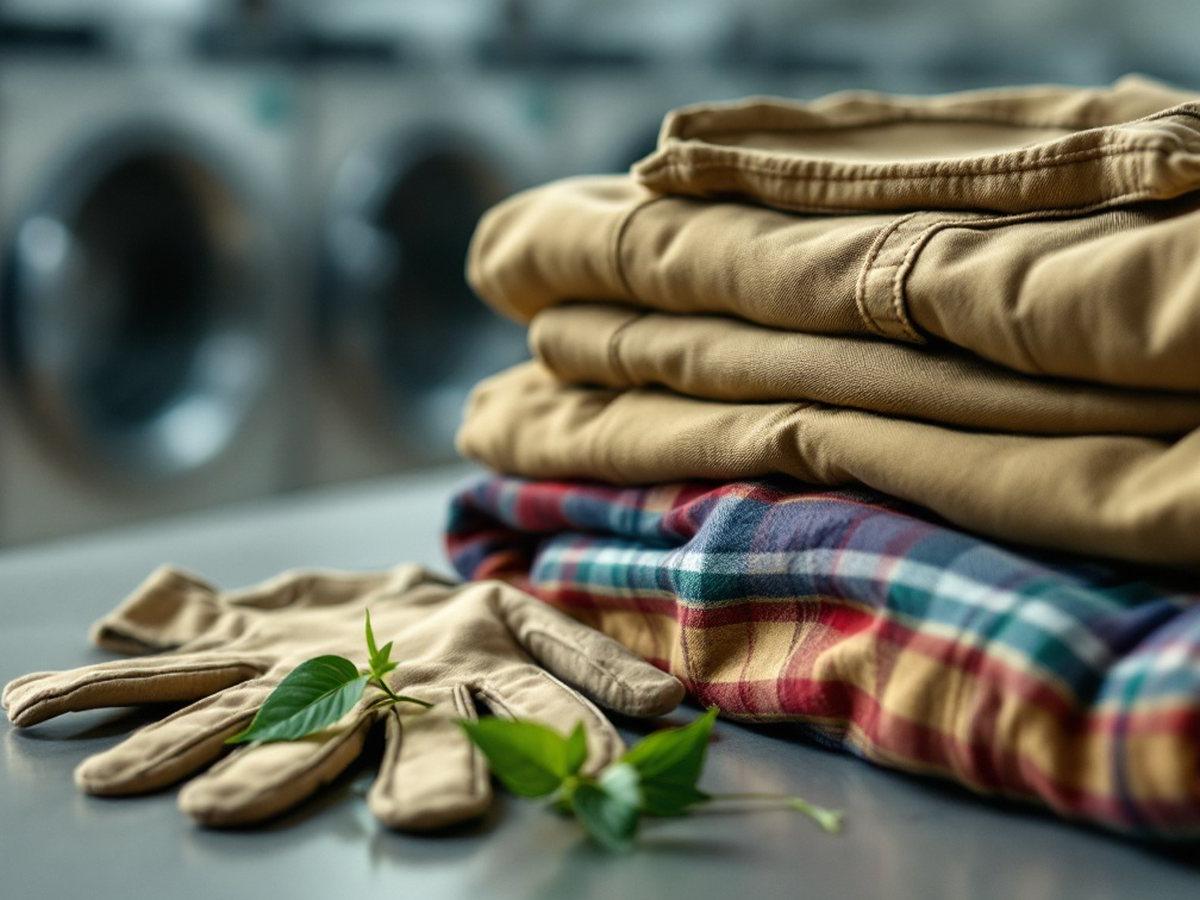
Poison ivy oil (urushiol) stays active on unwashed clothes for months, and on objects for up to 5 years (Texas A&M AgriLife Extension; CDC's NIOSH). Washing removes it: wash exposed clothing separately in hot water with detergent (CDC's NIOSH), at the hottest temperature the care label allows (American Cleaning Institute).
The same oil is in poison oak and poison sumac, so everything here applies to all three (CDC's NIOSH). The mistake to avoid is handling the clothes bare-handed before they are washed.
Key takeaways
- Urushiol can stay active on unwashed clothing for months and on tools or other objects for up to 5 years.
- Put on disposable gloves, bag the clothes, and load them straight from the bag into the washer.
- Wash them alone with detergent in the hottest water the label allows, and consider a second wash.
- Run an empty hot cycle with detergent afterward so the oil doesn't reach your next load.
- The rash itself isn't contagious; the oil on clothes, shoes, tools and pet fur is what spreads it.
How long does poison ivy oil stay on clothes?
Until it's washed off. Texas A&M AgriLife Extension says urushiol on clothing, shoes, gloves and masks can stay active for months, especially in dry climates. The FDA says the oil lingers on almost any surface, sometimes for years, until water or rubbing alcohol removes it.
On tools and other objects, CDC's NIOSH puts the limit at up to 5 years (CDC's NIOSH). The American Cleaning Institute adds that urushiol left on unwashed clothing is still active, so a shirt that sat in the hamper all season can still cause a rash.
It takes very little. An amount of urushiol smaller than a grain of salt causes a rash in 80-90% of adults (CDC's NIOSH). Dried or dead leaves and stems can also still cause a rash (Poison Control).
Can poison ivy go through clothes?
Sometimes. OSU Extension warns that the oil can seep through permeable materials, and recommends vinyl gloves and loose coveralls for handling the plants. Treat the skin under thin or wet fabric as exposed and wash it too.
How do you wash poison ivy out of clothes?
Handle the clothes as if they were the plant, then give them a hot, separate wash. These steps combine the American Cleaning Institute laundry advice with Texas A&M AgriLife Extension and CDC guidance (CDC's NIOSH):
- Glove up. Take off garden gloves with a clean cloth, then put on disposable rubber gloves before you touch the rest (American Cleaning Institute).
- Bag everything. Put the clothes, the garden gloves and the cloth in a plastic bag, then throw away the disposable gloves (Texas A&M AgriLife Extension).
- Load straight from the bag. Tip the clothes into the washer without letting them brush the outside of the machine, then discard the bag (American Cleaning Institute).
- Wash them alone. Keep this load separate from other laundry to prevent cross-contamination (Texas A&M AgriLife Extension; OSU Extension).
- Use hot water and detergent. Choose the hottest setting that's safe for the fabric, with enough water for the clothes to move freely (American Cleaning Institute).
- Wash twice if in doubt. A second wash helps make sure all the oil is gone (Texas A&M AgriLife Extension).
- Dry as usual. Dry the clothes according to their care labels (Texas A&M AgriLife Extension).
- Clean the washer. Run an empty cycle with hot water and detergent (Texas A&M AgriLife Extension).
Not every source agrees on step 4. The American Cleaning Institute says other items can go in the same load because the oil stays suspended in the water. CDC's NIOSH, OSU Extension and Poison Control all say to wash exposed clothes separately (CDC's NIOSH; OSU Extension; Poison Control), so that is the safer choice.
Not sure how hot your fabrics can go? Our guide to washing temperatures explains the care-label settings.
What laundry detergent kills poison ivy oil?
Ordinary laundry detergent does the job, by removing the oil rather than killing it. No special product is needed: the American Cleaning Institute calls for laundry detergent and the hottest safe water, and Texas A&M AgriLife Extension suggests a deep-cleaning detergent. MedlinePlus says to wash clothing and shoes with soap and hot water because the oils linger on them (MedlinePlus).
Detergent lifts the oil off the fibers so the rinse water carries it away. That is why a crowded drum works against you: the clothes need room to agitate (American Cleaning Institute).
Does bleach kill poison ivy on clothes?
None of the laundry guidance we read calls for bleach on clothes. MedlinePlus lists a dilute bleach solution only for tools and other objects, alongside rubbing alcohol (MedlinePlus). If you do add bleach for another reason, check the fabric first: see chlorine bleach vs oxygen bleach.
How do you clean shoes, gloves, bedding and the washer?
Anything that touched the plant or the clothes can carry the oil. OSU Extension says it can stay viable for long periods on gloves, clothing, tools, pets and even firewood (OSU Extension):
| Item | What to do |
|---|---|
| Shoes and boots | Wash with soap and hot water (MedlinePlus). See how to wash shoes in a washing machine. |
| Garden gloves | Wash them in the same separate load as the clothes (Texas A&M AgriLife Extension). |
| Bedding, pet collars, fabric items | Wash with soap and water, away from other laundry (OSU Extension). |
| Backpacks | Wash separately, like the clothes (Poison Control). See how to wash a backpack. |
| Tool bags, belts, straps | Wipe them down; they are easy to forget (Texas A&M AgriLife Extension). |
| Tools | Rubbing alcohol, or soap and lots of water, wearing disposable gloves (CDC's NIOSH). |
| Pets | Pet shampoo and water, wearing rubber gloves; the oil sticks to fur (FDA). |
| The washing machine | An empty hot cycle with detergent (Texas A&M AgriLife Extension), or a thorough rinse (OSU Extension). |
For the full routine on drums, gaskets and dispensers, see how to clean a washing machine.
What if the rash keeps coming back after washing?
Suspect an item that still carries oil. OSU Extension says that if a rash appears even after laundering, dry cleaning or throwing the item away may be necessary (OSU Extension). For a coat or anything labeled dry clean only, take it to a dry cleaner and say it touched poison ivy.
Is poison ivy contagious from clothes?
The rash isn't contagious, but the oil on clothes is. The FDA says poison plant rashes can't pass from person to person, while oil stuck to clothing, pets and tools can cause a new rash.
Harvard Health gives the common example: you can't catch it from a partner's rash, but you can get it from the clothes they wore near the plant. Poison Control adds that oil left on skin or clothes can reach other people and other parts of the body (Poison Control).
Blister fluid is not plant oil and cannot spread the rash (FDA; CDC's NIOSH). A rash that seems to spread usually means the oil was absorbed at different rates, was trapped under fingernails, or came from a contaminated object (FDA).
What type of soap is best for poison ivy on your skin?
Plain soap and water works. The American Academy of Dermatology recommends soap and water, rubbing alcohol, or a poison ivy wash, applied gently, then a thorough rinse with cool water and a scrub under the nails.
- Act fast. Washing within 10 to 20 minutes may still prevent a rash (American Academy of Dermatology); MedlinePlus says to try within 30 minutes (MedlinePlus).
- Dish soap counts. CDC lists dishwashing soap with lots of water (CDC's NIOSH), and Poison Control says hand dish liquids may work as well as special poison ivy soaps (Poison Control).
- Don't scrub hard. Scrubbing can rub the oil into your skin (American Academy of Dermatology).
- Rinse often. Letting wash solutions dry on the skin can spread the urushiol (CDC's NIOSH).
A rash usually starts 1-2 days after contact, sometimes up to a week, and lasts 1-2 weeks (Poison Control). The FDA says to see a doctor for a temperature over 100°F, a rash near the eyes, mouth or genitals, a rash on more than one-fourth of your skin, or trouble breathing.
Never burn the plants: smoke from burning poison ivy can cause severe breathing problems (CDC's NIOSH).
Can you wash poison ivy clothes at a laundromat?
Yes, and a big machine helps. The American Cleaning Institute says to use enough water for the clothes to agitate freely, so a large-capacity washer beats one overstuffed drum. A self-service laundromat also lets you run the contaminated load alone, as CDC advises (CDC's NIOSH).
- Arrive bagged. Bring the clothes in their plastic bag and tip them straight into the washer (American Cleaning Institute).
- Bring disposable gloves. Wear them while loading, then throw them away with the bag (American Cleaning Institute).
- Leave the machine clean. An empty hot cycle with detergent clears the drum (Texas A&M AgriLife Extension), which protects the next customer.
Dropping clothes at a wash and fold counter instead? Tell the attendant the items touched poison ivy so they can be handled with gloves and washed alone.
Frequently asked questions
Does poison ivy stay on bed sheets?
Yes, if the oil reaches them from skin, clothes or a pet. Fabric items like bedding hold the oil until they are washed with soap and water. Wash them in a separate load, the same way as contaminated clothes.
Will Dawn wash off poison ivy oil?
A grease-cutting dish soap can help remove the oil from skin. CDC lists dishwashing soap with lots of water, and Poison Control says hand dish liquids may work as well as special poison ivy soaps. Rinse well and often.
Can bleach be used to treat a poison ivy rash?
None of the health guidance we read recommends bleach on skin or a rash. MedlinePlus mentions a dilute bleach solution only for cleaning tools and other objects. For the rash, follow the skin-care steps above and see a doctor if it is severe.
What dries up poison ivy quickly?
The FDA says over-the-counter skin protectants such as zinc oxide and calamine dry the oozing and weeping of a poison ivy rash. Wet compresses or a soak in cool water can relieve the itch.
What day of poison ivy rash is peak?
MedlinePlus says the worst symptoms are often seen on days 4 to 7 after contact. The rash may last 1 to 3 weeks.
Does toothpaste or another home remedy work on poison ivy?
OSU Extension cautions that many home remedies have not been proven effective and may make the problem worse. Washing the oil off skin and clothes quickly is the step the agencies agree on.
How we researched this
We read guidance from U.S. agencies (CDC's NIOSH, the FDA and MedlinePlus), two university extension services (Texas A&M AgriLife and Oregon State), the American Academy of Dermatology, Poison Control, Harvard Health and the American Cleaning Institute, and cited 9 sources (CDC's NIOSH; Texas A&M AgriLife Extension; OSU Extension). Where they disagreed (washing exposed clothes with other laundry), we gave the safer method. We did not lab-test any method, and this post is laundry guidance, not medical advice. Researched October 2026.
Sources
- Texas A&M AgriLife Extension -- 3 Things You'll Want to Waste No Time Cleaning After a Run-In with Poison Ivy
- CDC / National Institute for Occupational Safety and Health (NIOSH) -- Poisonous Plants and Work
- American Cleaning Institute -- Ask ACI: Poison Ivy Clothes Washing
- Poison Control (National Capital Poison Center) -- Poison ivy, poison oak, and poison sumac
- U.S. Food and Drug Administration -- Outsmarting Poison Ivy and Other Poisonous Plants
- Oregon State University Extension Service (PNW 108) -- Pacific poison-oak and western poison-ivy: Identification and management
- MedlinePlus (U.S. National Library of Medicine) -- Poison ivy - oak - sumac rash
- Harvard Health Publishing -- Is poison ivy contagious?
- American Academy of Dermatology -- Poison ivy, oak, and sumac: What should I do if I touch a plant?