How to Get Nail Polish, Makeup and Sunscreen Out of Clothes

LaundroMaps Team
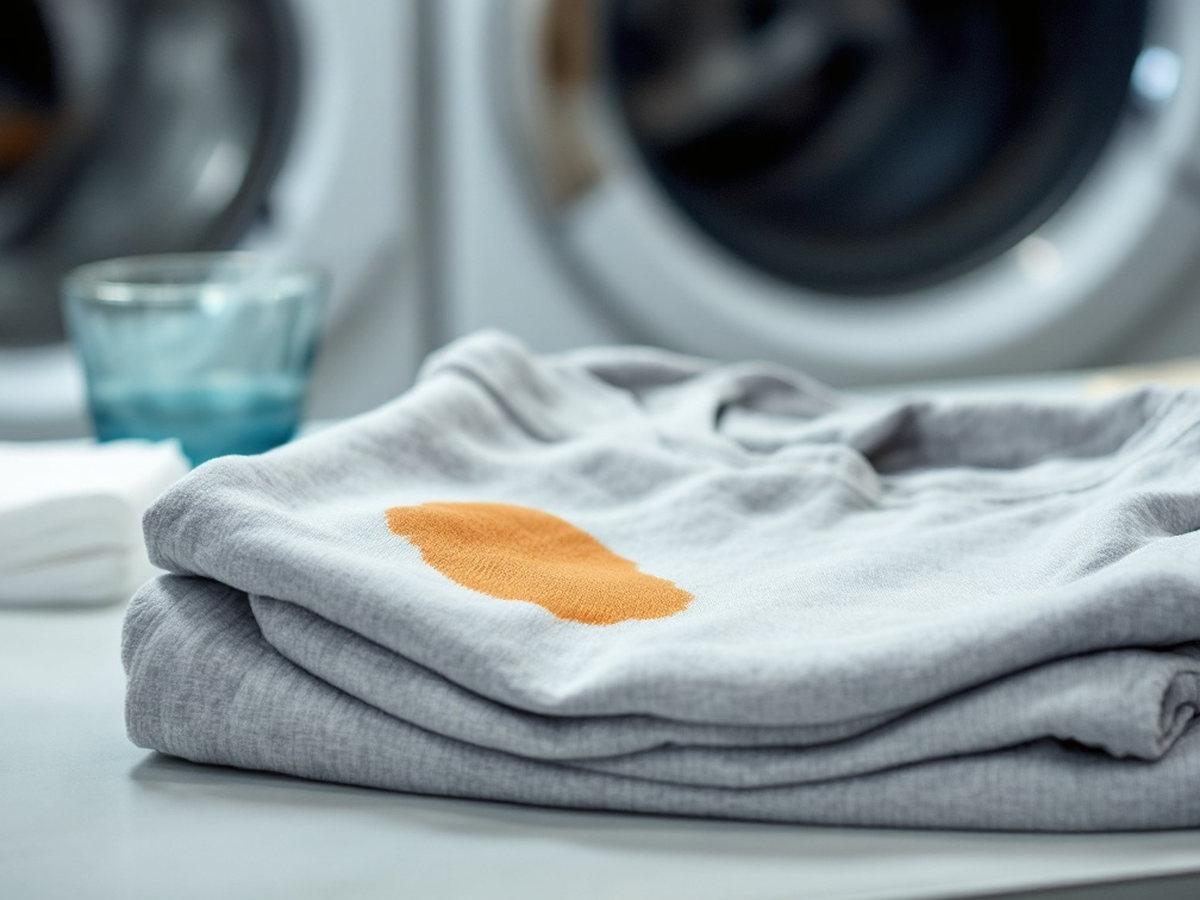
Lay the stain face down on clean paper towels and dab nail polish remover onto the back of it, swapping the towels as they pick up color, then rinse and launder (American Cleaning Institute). Never use acetone or remover on acetate, triacetate or modacrylic (University of Georgia Extension). Makeup and sunscreen need a different first step: a detergent or solvent pretreatment, depending on whether the product is water-based or oily (University of Georgia Extension).
Keep the garment out of the dryer until the mark is gone, because heat sets stains (NMSU Extension).
Key takeaways
- Treat polish from the back of the fabric, on fresh paper towels, and replace the towels often.
- Check the care label for acetate, triacetate or modacrylic before any remover touches the fabric.
- Test every product on an inside seam or hem first.
- Sort makeup into water-based (soap or detergent) and oil-based (solvent first, then detergent).
- Orange sunscreen stains come from avobenzone reacting with iron in hard water, so skip chlorine bleach on them.
- No dryer until the stain is gone, and nail polish may never fully come out.
How do you get nail polish out of clothes?
Start with the gentlest method that works, and test it on an inside seam or hem first (NMSU Extension). American Cleaning Institute and University of Georgia Extension describe the same basic method.
- Scrape or blot the excess. Don't rub, which pushes the polish deeper (NMSU Extension).
- Check the care label. Skip remover on acetate, triacetate and modacrylic (University of Georgia Extension).
- Place the stain face down on clean paper towels and apply non-oily nail polish remover to the back of the stain (American Cleaning Institute; University of Georgia Extension).
- Replace the towels frequently and repeat until the stain disappears, if it does (American Cleaning Institute).
- Rinse, then wash. Work detergent into the spot first (University of Georgia Extension).
- Check before drying. Heat sets stains, so don't press or machine-dry the garment until the mark is gone (NMSU Extension).
The American Cleaning Institute adds a caution: nail polish may be impossible to remove (American Cleaning Institute). Treat it as soon as it happens, since set-in stains are harder to remove (NMSU Extension).
Does nail polish remover ruin some fabrics?
Yes. NMSU Extension lists nail polish remover as a solvent that dissolves acetate, and tells you to test an inside seam if you are not sure of the fiber (NMSU Extension). University of Georgia Extension says to skip it on acetate, triacetate and modacrylic fabrics (University of Georgia Extension). Its upholstery notes add that acetone or lacquer thinner on acetate or triacetate turns the fabric to froth immediately (University of Georgia Extension).
The fiber content is on the care label, so read it before you open the bottle. If the label is missing or the fiber is unknown, test a hidden seam. University of Georgia Extension also says to pretest each cleaning agent to check colorfastness (University of Georgia Extension).
The same guide adds a warning from its carpet notes: fingernail polish remover is not pure acetone, and its other ingredients can make a stain worse (University of Georgia Extension). If you are treating a piece of clothing you can't afford to lose, a dry cleaner may be the safer call (see below).
What if the nail polish has dried or the stain is old?
Use the same method and expect to repeat it. The Georgia extension guide's second route is to sponge the back of the stain with acetone or amyl acetate, available at a drug store, rotating the paper towel as it absorbs the polish (University of Georgia Extension). Repeat until the stain disappears, then launder (University of Georgia Extension).
If a stain remains, the same guide says to sponge with alcohol mixed with a few drops of ammonia, then launder (University of Georgia Extension). Never mix ammonia with chlorine bleach (NMSU Extension). Ammonia also damages silk and wool, so dilute it with equal parts water and use it sparingly on those fibers (University of Georgia Extension).
Does rubbing alcohol remove nail polish?
On its own, the guides we read don't use it for nail polish. University of Georgia Extension brings alcohol in only as a follow-up, mixed with a few drops of ammonia (University of Georgia Extension). American Cleaning Institute uses rubbing alcohol at 70 or 90 percent for lipstick instead (American Cleaning Institute).
Will bleach or hydrogen peroxide remove nail polish?
They remove color rather than dissolve the polish. NMSU Extension groups hydrogen peroxide and chlorine bleach under bleaches, which remove unwanted color, and lists nail polish remover under solvents (NMSU Extension). So treat peroxide as a last step for leftover tint on a colorfast or white item, and never combine two removers without rinsing between them (NMSU Extension).
Do home remedies like vinegar, dish soap or toothpaste remove nail polish?
Not according to the extension and trade guides we read. None of them lists vinegar, dish soap, toothpaste or hairspray as a nail polish remedy for clothing, so we leave them out. The solvents they do name are non-oily nail polish remover, acetone and amyl acetate (University of Georgia Extension).
Dish soap and vinegar have a job elsewhere in this post. University of Georgia Extension uses diluted hand dishwashing detergent and a few drops of vinegar on lipstick stains, and a detergent and vinegar soak on suntan lotion (University of Georgia Extension). NMSU Extension also lists dishwashing liquid as a solvent for grease or oil (NMSU Extension).
How do you get makeup out of clothes?
Work out whether the product is water-based or oil-based first. University of Georgia Extension splits cosmetics that way for clothing (University of Georgia Extension). Foundation and mascara come in both types, so read the label.
| Stain | First treatment | Then |
|---|---|---|
| Water-based makeup | Dampen the stain and rub with bar soap, or pretreat with heavy-duty liquid detergent or a paste of granular detergent and water | Launder (University of Georgia Extension) |
| Oil-based makeup | Sponge with a commercial cleaner or waterless hand cleaner, rinse, and air dry | Apply detergent and launder; if a mark remains, add a few drops of ammonia to a light-duty liquid detergent solution (University of Georgia Extension) |
| Lipstick | Apply a commercial cleaner or prewash soil and stain remover and blot until the pigment is gone | Rinse, rub in light-duty liquid detergent until the outline is gone, then launder (University of Georgia Extension) |
The American Cleaning Institute's cosmetics entry is shorter: pretreat with a prewash stain remover, liquid laundry detergent or a paste of powder detergent and water, or rub with bar soap, then launder (American Cleaning Institute). For lipstick it also says to dab with a towel dampened with 70 or 90 percent rubbing alcohol over paper towels, and that long-lasting lipsticks need more work (American Cleaning Institute).
The spot removers University of Georgia Extension points to contain petroleum distillates or similar hydrocarbons, so ventilate the room (University of Georgia Extension). If you are not sure how to read a label, our care label guide explains the symbols.
How do you get nail glue out of clothes?
Treat it as an adhesive. American Cleaning Institute says to apply ice or cold water to harden the surface, then scrape with a dull knife (American Cleaning Institute). Next, saturate the spot with prewash stain remover or cleaning fluid, rinse, then launder (American Cleaning Institute).
This is our reading of the adhesive entry applied to nail glue; the guide doesn't name it. Test the fluid on a hidden seam first (NMSU Extension).
Why does sunscreen leave orange stains, and how do you remove them?
Tide explains that sunscreen is a combination stain: an oily part, plus an orange, rust-colored part when the sunscreen contains avobenzone and reacts with iron in hard water (Tide). How bad it looks depends on your water's mineral profile and on the fiber, and synthetics retain the stain more than natural fibers like cotton (Tide).
- Brush off the excess and rinse under cold running water (Tide).
- Pretreat with detergent worked in with a soft toothbrush, and let it sit for 5 minutes (Tide).
- Wash in the hottest water the care label allows (Tide).
- Check before drying. If a mark remains, repeat before the dryer, because drying sets the stain (Tide).
The Georgia extension guide has a stronger soak for suntan lotion: 1 quart of warm water, 1/2 teaspoon of liquid hand dishwashing detergent and 1 tablespoon of white vinegar for 15 minutes. Then rinse, wash, soak 30 minutes in a sodium perborate bleach solution, pretreat and wash again (University of Georgia Extension).
Skip chlorine bleach on orange marks. American Cleaning Institute warns that sodium hypochlorite bleach may intensify rust discoloration and recommends a fabric rust remover (American Cleaning Institute). That guidance covers rust, so applying it to rust-colored sunscreen stains is our inference, in line with Tide's description of the stain as rust-like (Tide).
To prevent it, apply sunscreen and let it dry before dressing. In hard-water areas, Tide suggests checking labels and avoiding avobenzone (Tide).
When should you take it to a professional?
If the care label says dry clean only, use only a dry-cleaning agent or ask a dry cleaner for help (NMSU Extension). Bring the garment in with the stain untouched by heat, and say what caused it. For a delicate or sentimental piece, a professional dry cleaner is the safer choice. To compare local options, browse professional stain removal services near you.
If you do your own washing at a laundromat, check the stain before the dryer, since the dryer's heat sets it (NMSU Extension). For other stains, see our stain removal guide, and for oily marks, grease and oil stains.
Frequently asked questions
Does acetone remove dye from clothes?
It can, so test first. The extension guides say to pretest every cleaning agent on an inside seam or hem to check colorfastness, and to skip acetone on acetate, triacetate and modacrylic.
Can hydrogen peroxide remove nail polish?
It is a bleach, which removes color rather than dissolving the polish. NMSU Extension lists it with bleaches and lists nail polish remover as a solvent.
Will Dawn dish soap remove nail polish?
The guides we read don't list dish soap for nail polish. They use dishwashing detergent for oily stains such as lipstick and oil-based makeup.
What can dissolve dried nail polish?
The Georgia extension guide names non-oily nail polish remover, acetone and amyl acetate, and says to repeat the sponging until the stain disappears.
Does vinegar remove nail polish?
None of the guides we read recommend vinegar for nail polish. Georgia Extension uses a little vinegar for lipstick and a vinegar soak for suntan lotion.
How we researched this
We read the American Cleaning Institute's stain guide, NMSU Extension's clothing stain guide and two University of Georgia Extension stain pages, plus Tide's explanation of sunscreen and iron in hard water, on October 14, 2026. We cited five sources and prioritized extension and trade-association guidance over product pages. We did not test these methods, and none of the guides covers gel polish, hair dye or self-tanner, so this post doesn't either.
Sources
- American Cleaning Institute -- Stain Removal Guide
- University of Georgia Extension -- Remove Stains From Fingernail Polish, Lacquer
- University of Georgia Extension -- Remove Stains From Cosmetics/Makeup/Sunscreen
- New Mexico State University Extension -- Removing Clothing Stains (Guide C-502)
- Tide (Procter & Gamble) -- How to Remove Sunscreen Stains
Related guides
- Wax, crayon and lip balm: waxy stains and dryer cleanup.