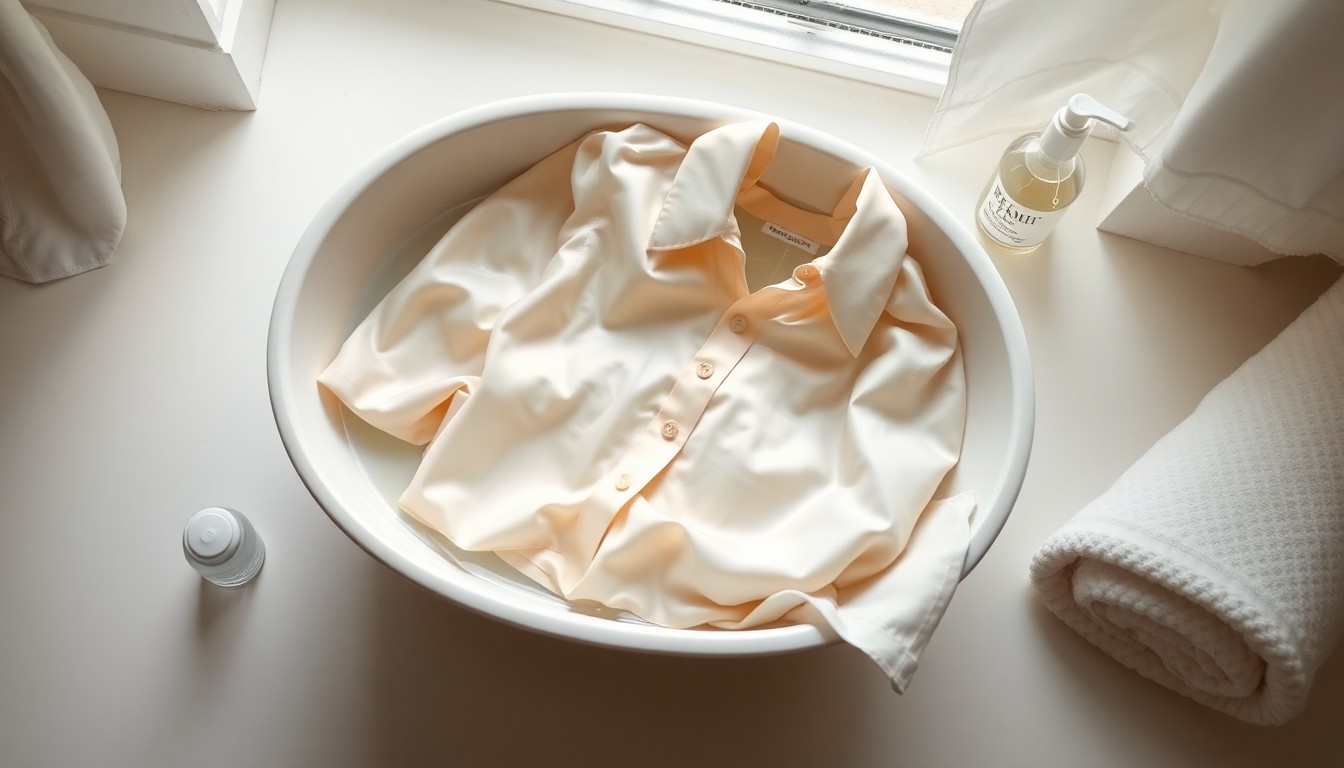
How to Get Grease and Oil Stains Out of Clothes

LaundroMaps Team

To get oil or grease out of clothes, blot or scrape off what you can, work a prewash stain remover or liquid laundry detergent into the spot, and wash in the hottest water the fabric can take (ACI). Then check the stain while the item is still wet: if any oil is left, treat it and wash again, because drying can set it for good (ACI).
Texas A&M AgriLife Extension treats vegetable oil, animal fat and motor oil as one stain group with the same method (Texas A&M AgriLife Extension). The exceptions are dry-clean-only clothes, leather and suede, which belong with a professional (Iowa State Extension), and towels soaked with cooking oil, which shouldn't go in the dryer at all (Maytag dryer manual).
Key takeaways
- Pretreat with a prewash stain remover or liquid laundry detergent, then wash in the hottest water the care label allows.
- Check the stain while the clothes are still wet, and retreat and rewash before drying, because dryer heat can set oil.
- Cornstarch or talc can soak up fresh oil first; none of the guides we read recommends baking soda for clothes.
- Use dish soap only as a pretreatment: the American Cleaning Institute says dishwashing liquid doesn't belong in a washing machine.
- Keep towels and rags soaked with cooking oil out of the dryer: washing may not remove all the oil, and the residue can heat up on its own.
Why are oil and grease stains so hard to get out?
Fats and oils are built from triglycerides, which repel water, so plain water slides past them. The enzymes in many detergents, called lipases, work by breaking those triglycerides apart (Hall-Andersen et al., 2018).
Fabric matters too. Iowa State University Extension calls polyester an "oil-loving" fiber and notes that oil stains on it often turn darker and more noticeable over time (Iowa State Extension). In a 2021 lab study, polyester absorbed more sebum, the oil from skin, than cotton did (Møllebjerg et al., 2021).
Some oil stains hide at first. The Drycleaning & Laundry Institute (DLI) says oils can dry without leaving a visible mark, then turn yellow or brown later with time or heat, as the oil oxidizes (DLI).
Two everyday habits also leave greasy marks behind: using too little detergent to hold the soil in the water until the cycle ends, and washing in water that's too cool, according to the American Cleaning Institute (ACI) (ACI).
How do you get a fresh grease or oil stain out?
Work through these steps as soon as you can. The less time a stain has to soak in, the easier it is to remove (ACI).
- Lift off the excess. Gently blot the excess oil or scrape it off, and don't rub: rubbing spreads the stain and can damage the fibers (NMSU Extension; DLI).
- Soak up a heavy spot. Sprinkle cornstarch, one of the absorbents in New Mexico State University's stain guide, or talcum powder, let it draw out the oil, then brush away the powder (NMSU Extension; UGA Extension).
- Test first. Try your pretreatment on an inside seam or hem so you know it won't change the color (NMSU Extension).
- Pretreat from the back. Work a prewash stain remover or liquid laundry detergent into the stain from the inside of the garment, so you push the oil out instead of in (ACI; Texas A&M AgriLife Extension).
- Give it time, by the label. Texas A&M says to wait 1 to 3 minutes with liquid or aerosol prewash removers, while ACI says enzyme cleaners need at least 10 to 15 minutes (Texas A&M AgriLife Extension; ACI).
- Wash hot. Use the hottest water safe for the fabric (ACI). NMSU defines that as very hot for cotton and linen, hand-hot for synthetics such as nylon, and just warm for wool (NMSU Extension).
- Check before you dry. Hold the wet garment up to the light, and if any stain is left, repeat the steps instead of drying it (ACI).
For a heavy grease stain
ACI's method for heavy grease: lay the stain face down on clean paper towels, apply a cleaning fluid to the back of the stain, and change the paper towels often as they pick up the oil. Let it dry, rinse, then wash in the hottest water safe for the fabric (ACI). Use solvent-based cleaners in a well-ventilated room (NMSU Extension).
Most other common stains need different first steps, often cold water instead of hot. Our stain-by-stain guide covers them, and our wash temperature guide explains the settings.
Will Dawn or other dish soap get oil out of clothes?
Yes, as a pretreatment. Iowa State's method for oil-based food stains such as gravy, butter and salad dressing is to rub liquid dish soap into the stain and let it sit for 10 minutes (Iowa State Extension). NMSU also lists dishwashing liquid among the products that dissolve grease and oil (NMSU Extension).
After that, Iowa State says to wash in the hottest water safe for the fabric with a laundry product that contains oxygen bleach (Iowa State Extension). For a stain you can't identify, NMSU's method leaves dishwashing liquid or liquid laundry detergent on for about 30 minutes, then rinses it out before washing (NMSU Extension).
Keep dish soap out of the washing machine itself. ACI says dishwashing liquids are made for dishes and should not be used in automatic washers; for the wash, follow the laundry detergent's label for the amount (ACI).
Can dried oil stains be removed after washing and drying?
Often, yes, although old stains rarely fade on their own. ACI's advice is to pretreat or soak the stain in a product containing enzymes, then wash it again (ACI). Some stains take several rounds (Texas A&M AgriLife Extension).
Timing matters: DLI says many stains begin to set after 1 week, and nearly half may become permanent after 3 weeks (DLI).
How to remove grease stains from clothes that have already been washed
- If a wash didn't shift the stain, let the item air-dry, then sponge the stain with a grease solvent (NMSU Extension).
- Air the garment out to clear the solvent fumes, then pretreat with a prewash remover or liquid detergent and wash hot again (NMSU Extension; ACI).
- Keep going while the stain is still lightening. A fabric-safe bleach may remove the last traces (UGA Extension).
- If the stain has already been through the dryer, treat it as an old stain: an enzyme pretreatment or soak, then another wash, repeated as needed (ACI).
On polyester with built-up soil, a pretreated spot can end up cleaner than the rest of the garment and look like a bleached patch. Texas A&M's fix is to treat the whole garment and rewash it with extra detergent (Texas A&M AgriLife Extension).
Does bleach remove oil stains from white clothes?
Not on its own. Bleach is a finishing step: University of Georgia Extension says a fabric-safe bleach may remove the final traces of a grease stain after pretreating and washing (UGA Extension). Oxygen bleach is safe on all washable fabrics, but chlorine bleach leaves yellowing on silk, wool and spandex that can't be removed (ACI; ACI).
How do you get specific oils out?
Cooking oil, olive oil and butter
For butter, ACI's steps are to pretreat with a prewash stain remover and wash in the hottest water that's safe for the fabric (ACI). Look for a detergent or stain remover with lipase, the enzyme that ACI says targets oil-based stains such as olive oil, butter and grease; enzyme ingredients end in "-ase" (ACI).
Motor oil and heavy grease
ACI says prewash stain removers work on motor oils as well as cooking oils (ACI). For automotive grease, UGA Extension adds a first step: dust the stain with talcum powder, brush it off, apply a prewash remover, then wash in the hottest safe water with heavy-duty liquid detergent (UGA Extension).
Solvent cleaners need good ventilation and are flammable, so keep them away from sparks and flames (UGA Extension). Anything treated with a solvent or soaked with a flammable liquid has to stay out of the dryer until all traces and fumes are gone (Maytag dryer manual).
Body oil on sheets and pillowcases
Body oil builds up as yellowing on sheets, collars and cuffs. ACI's fix is more detergent plus a product with enzymes, a detergent booster or bleach, and its prevention is washing often in water of at least 100°F (ACI). For ring-around-the-collar marks, pretreat with a prewash remover, liquid detergent or a paste of powder detergent and water (ACI).
WD-40
WD-40 can leave an oily mark: its US safety data sheet lists a petroleum base oil among the ingredients (WD-40 safety data sheet), so treat it like a grease stain. The maker suggests spraying the original formula on roofing-tar stains as a pretreatment before washing (WD-40 Company). The same data sheet classes the aerosol as extremely flammable (WD-40 safety data sheet), so keep anything with WD-40 on it out of the dryer until every trace is gone (Maytag dryer manual).
How do you treat oil on jeans, polyester, silk and dry-clean-only clothes?
The care label sets the limits. It has to state a water temperature whenever regular hot washing would harm the garment (FTC), so read it before you reach for "the hottest water safe for the fabric." Our care label symbols guide explains the icons.
| Fabric | What to do | Watch out for |
|---|---|---|
| Cotton and denim (jeans) | Very hot water if the label allows (NMSU Extension); ACI suggests the Heavy Duty cycle for extra-dirty items such as jeans (ACI) | Test pretreatments on an inside seam first (NMSU Extension) |
| Polyester and other synthetics | Hand-hot water (NMSU Extension); prewash removers work especially well on stained polyester (ACI) | Treat it fast: oil stains on polyester darken over time (Iowa State Extension) |
| Wool | Just-warm water (NMSU Extension) | No chlorine bleach, which yellows wool for good (ACI) |
| Silk and spandex | Follow the care label | No chlorine bleach: the yellowing can't be removed (ACI) |
| Dry clean only | Don't wash it; take it to a cleaner and say what spilled (FTC; DLI) | Skip home stain products, which can make the cleaner's job harder (DLI) |
| Leather and suede | Take it to a leather and suede specialist as soon as possible (Iowa State Extension) | Don't treat spots at home: it can strip dye or damage the skin (Iowa State Extension) |
One more exception: ACI says not to use prewash stain removers on neon or fluorescent colors, which can fade or run (ACI).
Is it safe to put oil-stained clothes in the dryer?
Not if they're soaked in cooking oil. In a joint 1992 warning, the Consumer Product Safety Commission (CPSC), the U.S. Fire Administration and the International Association of Fire Chiefs said normal laundering may not remove all the oil from kitchen towels used to wipe up or drain cooking oil, and that such towels can smoke and catch fire if they're dried in a dryer or left in a warm pile (CPSC). The warning rested on early lab tests and a few confirmed fires (CPSC), but dryer makers give the same warning today (Maytag dryer manual; Speed Queen).
Maytag's dryer manual explains why: dryer heat warms the leftover oil, the oil oxidizes, oxidation makes more heat, and if that heat can't escape, the items can get hot enough to catch fire (Maytag dryer manual). A 2001 forensic study found fatty acids from oil still on cotton even after 90°C (194°F) washes (Nic Daéid et al., 2001), so a hot wash alone may not remove all of it.
- Air-dry oily linens. Kitchen towels, rags, aprons and sheets used with massage oil carry the risk (Speed Queen; Shropshire Fire and Rescue Service).
- If you must machine-dry them, wash them first in hot water with extra detergent, which Speed Queen says reduces the hazard but doesn't eliminate it (Speed Queen).
- Let the cool-down finish. Use the Cool Down cycle, don't pull the load out hot, and never pile or stack it while it's warm (Maytag dryer manual).
- Spread it out. Let laundry cool and shake it out before putting it away, and never bag warm laundry (Shropshire Fire and Rescue Service).
- Gasoline and solvents: the National Fire Protection Association says to lay clothes that touched gasoline, paint thinner or similar solvents outside to dry before washing them (NFPA). The CPSC goes further: spot clean them and line dry, without machine washing or drying (CPSC).
The rule is the same at a laundromat. Speed Queen, which makes commercial laundromat dryers, lists articles soiled with cooking oil or flammable cleaning solvents among the things not to put in its dryers, and requires those safety instructions to be posted where customers can see them (Speed Queen). Our dryer safety guide covers lint and venting.
When should you take an oil stain to a professional?
Take it to a professional when the label says dry clean only, when the fabric is leather or suede, or when your own treatments have stopped making progress. DLI says to bring the garment in as soon as possible and tell the cleaner what was spilled, even if you can't see the stain anymore (DLI).
Skip the home experiments on those garments: DLI says household cleaners and stain sticks often make stains harder for professionals to remove (DLI). A cleaner may suggest a method other than the one on the label, and you may be asked to sign a consent form for it (FTC).
As of October 2026, more than 2,100 businesses in the LaundroMaps directory list stain removal as a service (LaundroMaps directory data). Look for professional stain removal near you, or a professional dry cleaner for dry-clean-only fabrics. For a pile of oily work clothes or kitchen towels, you can find a laundromat near you and wash them on their own, away from the rest of your laundry.
Frequently asked questions
What is the best oil stain remover for clothes?
Look for a prewash stain remover or a liquid laundry detergent made for greasy and oily soils, ideally with the enzyme lipase in the ingredients. Pretreat the stain, wash in the hottest water the fabric allows, and check it before drying. Repeat if any spot is left.
How long should you let Dawn or other dish soap sit on a grease stain?
Iowa State University Extension's method is to rub liquid dish soap into an oil-based food stain and let it sit for 10 minutes before washing. Rinse it out of the fabric first so the dish soap doesn't end up in the machine.
How much Dawn should you use in a load of laundry?
None. The American Cleaning Institute says dishwashing liquids are made for dishes and should not be used in automatic washers. Use dish soap only to pretreat a spot, then wash with laundry detergent at the amount on its label.
Does baking soda get oil out of clothes?
None of the extension or industry stain guides we read recommends baking soda for oil on clothing; Iowa State mentions it only for carpet. Cornstarch and talc are the absorbents they name: sprinkle one on fresh oil, let it soak in, brush it off, then pretreat and wash.
Does WD-40 stain clothes?
It can leave an oily mark, because WD-40 contains a petroleum base oil. Treat it like a grease stain, and keep the item out of the dryer until every trace is gone, since WD-40 is flammable.
Can you put oil-stained clothes in the dryer?
Not until the stain is completely gone, because heat can set it. Never machine-dry towels or rags soaked with cooking oil: washing may not remove all the oil, and the residue can heat up and catch fire. Air-dry them instead.
How we researched this
We read 33 sources for this guide in October 2026 and cited 23 of them: the American Cleaning Institute's stain and laundry guides; extension publications from New Mexico State, Georgia, Texas A&M and Iowa State; the FTC's care-label guidance; fire-safety material from the CPSC, the National Fire Protection Association and a UK fire service; dryer makers' manuals; and two peer-reviewed study abstracts. Where sources disagreed, such as how to handle solvent-soaked clothes, we gave the more cautious advice. We didn't lab-test these methods, and no source we read gave steps specific to grease on denim, so the jeans advice follows the general cotton guidance.
Sources
- American Cleaning Institute -- Stain Removal Guide
- American Cleaning Institute -- Laundry Basics
- Texas A&M AgriLife Extension -- Quick Stain Removal Guide: Washable fabrics
- Iowa State University Extension -- Leather Care Tips
- Maytag -- Dryer Owner's Manual (safety instructions)
- Hall-Andersen et al., Chemistry and Physics of Lipids (2018) -- MALDI imaging of enzymatic degradation of glycerides by lipase on textile surface
- Iowa State University Extension -- Common Holiday Stain Removal Guide
- Møllebjerg et al., Microbiology Spectrum (2021) -- The Bacterial Life Cycle in Textiles is Governed by Fiber Hydrophobicity
- Drycleaning & Laundry Institute -- Stains
- American Cleaning Institute -- Laundering Problems & Solutions
- New Mexico State University Extension -- Removing Clothing Stains (Guide C-502)
- University of Georgia Extension -- Remove Stains From Grease (Automotive, Cooling, Vaseline)
- American Cleaning Institute -- Ask ACI: Enzymes in Cleaners
- WD-40 Company -- Safety Data Sheet: WD-40 Multi-Use Product Aerosol
- WD-40 Company -- Top 26 Most Unusual Uses for WD-40 Multi-Use Product
- U.S. Federal Trade Commission -- Clothes Captioning: Complying with the Care Labeling Rule
- U.S. Consumer Product Safety Commission -- Hidden Hazard In The Home: Cloths Heavily Soiled With Vegetable Oil Can Start Fires
- Speed Queen (Alliance Laundry Systems) -- Tumble Dryers: Installation, Operation and Safety Manual
- Nic Daéid et al., Problems of Forensic Sciences (2001) -- An investigation into the causes of laundry fires - spontaneous combustion of residual fatty acids
- Shropshire Fire and Rescue Service (UK) -- Fire Safety Advice Sheet: Self-heating of oil soaked towels
- Shropshire Fire and Rescue Service (UK) -- Tumbled Dried Towels Could Pose Fire Risk
- National Fire Protection Association -- Clothes Dryer Safety (tip sheet)
- U.S. Consumer Product Safety Commission -- Flammable Liquids Safety Alert (CPSC Publication 5140)
- LaundroMaps directory data -- 13,000+ US laundromat listings, October 2026