How to Get Wax, Crayon and Chapstick Out of Clothes

LaundroMaps Team
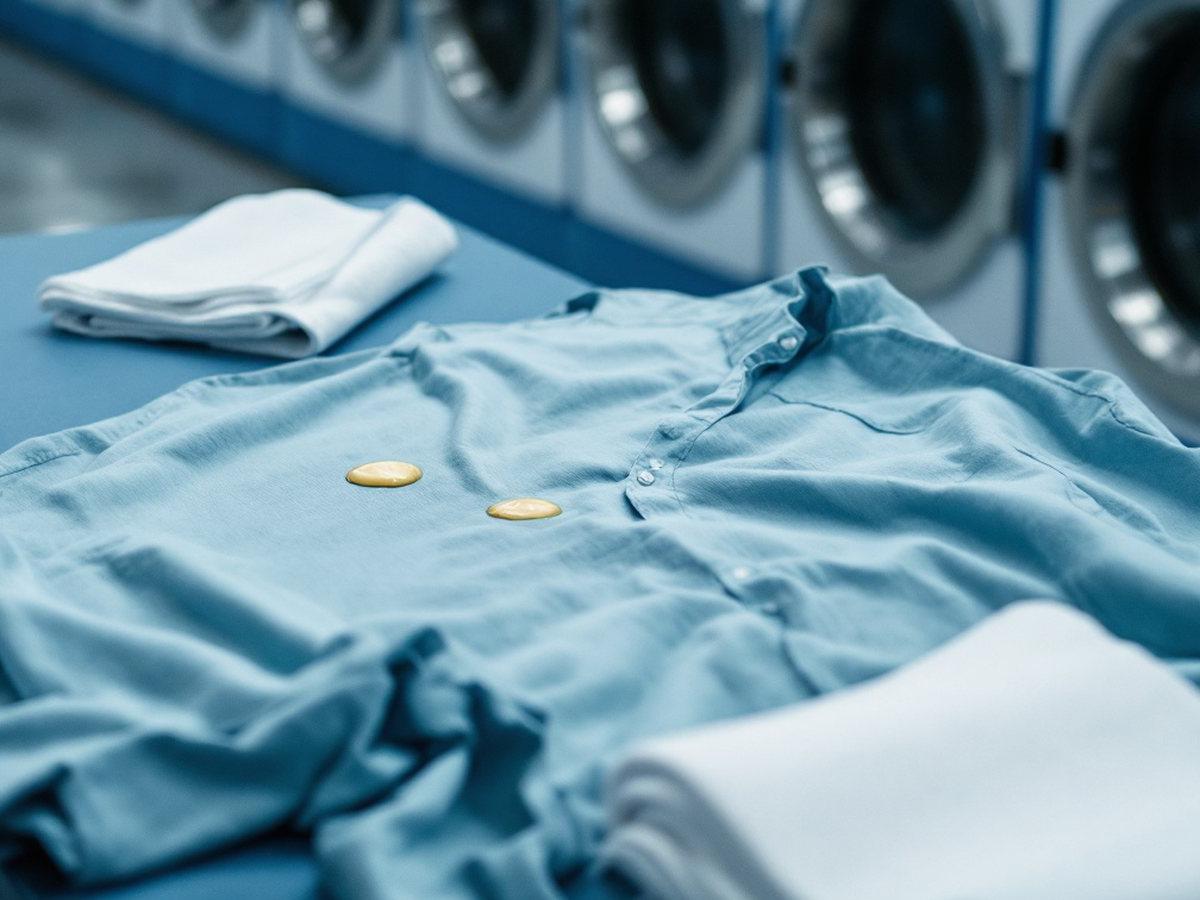
Scrape off the surface wax with a dull knife, press the stain between clean paper towels with a warm iron until they stop picking up wax, then treat what is left with a prewash stain remover and launder (American Cleaning Institute). Keep the garment out of the dryer until every trace is gone (NMSU Extension).
Crayon and lip balm follow the same logic: lift the wax, dissolve the oily or dyed residue, then wash.
Key takeaways
- Scrape first, then press the wax between clean paper towels with a warm iron, swapping towels as they soak up wax.
- For a few crayon spots, treat them like wax or rub the damp fabric with bar soap, then wash in the hottest water the fabric allows.
- For a whole load marked with crayon, one source says wash hot with 1 cup (212 g) of baking soda; another says dry-clean the load.
- Do not press or machine-dry a stained garment: heat sets the stain.
- After a melted crayon or lip balm in the dryer, spray the drum with prewash stain remover, wipe it, then run wet rags through a drying cycle.
How do you get wax out of clothes?
American Cleaning Institute and UGA Extension give nearly the same four steps for candle wax, and they work on dried, hardened wax:
- Scrape. Lift the surface wax off with a dull knife.
- Press. Put the stain between clean paper towels and press with a warm iron from the back of the fabric. Replace the towels often so they keep absorbing wax and do not transfer it back.
- Sponge. Lay the stain facedown on fresh paper towels, sponge what remains with a prewash stain remover or cleaning fluid, blot, and let it dry.
- Launder. If color remains, rewash with chlorine bleach where the fabric allows it, or with oxygen bleach.
UGA adds hot water for the wash and a cleaner or waterless hand cleaner for the sponging step (UGA Extension). Check the care label first and test any product on an inside seam (NMSU Extension).
For thick wax, the extension guide uses an ice cube in a plastic bag to harden it, but only for carpet and upholstery (UGA Extension). The clothing steps from both sources go straight to scraping.
Can you get wax out of clothes without an iron?
Yes. UGA's second method skips the iron: sponge the wax repeatedly with a commercial fabric cleaner, tamp with a spoon, and blot as long as the stain keeps lifting. Let it dry, then sponge with water and follow with diluted hand dishwashing detergent (UGA Extension).
The iron has a downside. The Smithsonian's Museum Conservation Institute says pressing wax into paper towels can dye a polyester-cotton fabric with the wax's color (Smithsonian Museum Conservation Institute). On brightly colored candle wax, the no-iron method avoids that risk.
What dissolves wax, and what removes dried candle wax?
Solvents and detergent. The Museum Conservation Institute says oil-type stains need non-aqueous "dry" chemicals in most cases (Smithsonian Museum Conservation Institute). In the ACI and UGA instructions that means the "cleaning fluid" or commercial cleaner, sold as a spot remover in hardware and grocery stores (UGA Extension). NMSU lists dry-cleaning agents, liquid dishwashing detergent and shampoo among its solvents (NMSU Extension).
Dye left behind by colored wax can be sponged with rubbing alcohol diluted with 2 parts water (UGA Extension). UGA warns that alcohol damages acetate, triacetate, modacrylic and acrylic fibers, so check the fiber content first.
How do you get crayon out of clothes?
Crayon is two problems at once: wax plus dye. UGA's guide describes it as removing a wax/grease stain as well as a dye stain (UGA Extension).
For a few spots, American Cleaning Institute says to treat the crayon the same as candle wax, or dampen it and rub with bar soap, then launder in the hottest water safe for the fabric. If color remains, it says to launder with chlorine bleach if the fabric allows it, or pretreat or soak in an enzyme product or oxygen bleach in the hottest safe water, then launder again.
UGA's version is more detailed. Lay the stain facedown on a pad of white paper towels, treat it with a prewash spot and stain remover, and wait 2 minutes. Turn it over and repeat, work in liquid dishwashing detergent, then wash in hot or warm water with heavy-duty liquid detergent (UGA Extension).
Pick the method by the mess:
| Stain | First step | Then |
|---|---|---|
| Candle wax | Scrape, then iron between paper towels (American Cleaning Institute) | Sponge with cleaning fluid, launder |
| Crayon, a few spots | Treat like wax, or rub damp fabric with bar soap (American Cleaning Institute) | Hottest safe wash |
| Crayon, whole load | Hot wash with detergent and baking soda (American Cleaning Institute), or dry-clean (UGA Extension) | Check before drying |
| Lip balm, petroleum jelly | Absorb or scrape, then pretreat (UGA Extension; UGA Extension) | Hottest safe wash |
What if crayon or Chapstick went through the dryer?
Do not dry the load again. NMSU Extension says heat sets stains, so a stained fabric should not be pressed or machine-dried (NMSU Extension). ACI says the same: keep it out of the dryer until the stain is gone (American Cleaning Institute).
For crayon on a whole load, the sources differ. ACI says to wash in hot water with laundry soap and 1 cup (212 g) of baking soda (American Cleaning Institute). UGA says to dry-clean a washer or dryer load of crayon-marked clothes, in a coin-operated dry-cleaning machine or at a commercial dry cleaner (UGA Extension).
Pick by fabric. Anything labeled Dry Clean Only should not go in a hot wash, because the FTC says that label means the item cannot be washed safely (Federal Trade Commission). Pull those pieces out and take them to a cleaner.
For melted lip balm, ACI and UGA have no dedicated entry. Balm is waxy and oily, so use the wax steps above, then the oil-based method in the lip balm section below.
How do you clean crayon or wax out of the dryer drum?
UGA's drum cleanup has three steps (UGA Extension):
- Spray the drum with a commercial prewash spot and stain remover.
- Wipe the drum with a soft cloth.
- Run a few wet rags through a drying cycle to pick up what is left.
For the washer drum, UGA runs a load of rags through a full cycle with heavy-duty liquid detergent, hot water and a full water level (UGA Extension). At a laundromat, tell the attendant instead of leaving residue for the next customer; see the laundromat etiquette guide. Check every pocket before loading, since heat sets what a pocket holds (NMSU Extension).
How do you get Chapstick, lip balm or Vaseline out of clothes?
Treat lip balm as an oily stain. For an oil-based cosmetic, UGA says to sponge with a commercial cleaner or waterless hand cleaner, rinse, let it air dry, apply detergent and launder (UGA Extension). If the balm was a solid lump, scrape it off first, as with candle wax (American Cleaning Institute).
For petroleum jelly, UGA's grease entry names Vaseline. Absorb as much as possible with talcum powder and brush it off thoroughly. Treat the spot with a prewash stain remover, then launder in the hottest water safe for the fabric with heavy-duty liquid detergent (UGA Extension). A second treatment may be needed.
If washing does not remove a grease stain, NMSU says to let the garment dry, sponge the stain with grease solvent, and air the garment to clear solvent fumes (NMSU Extension). Use solvents in a ventilated room.
For tinted balm, treat the color as lipstick: apply a commercial cleaner or prewash stain remover, blot until the pigment is gone, then work in light-duty liquid detergent and launder (UGA Extension). More oil and makeup steps are in our guides to grease and oil stains and makeup stains.
Are wax stains permanent?
Not usually, but age and heat make them harder. The Museum Conservation Institute says an older stain is harder to remove, and that a stain less than two months old can generally be treated (Smithsonian Museum Conservation Institute). Heat is the bigger risk, so skip the dryer and the iron on anything that has not been checked (NMSU Extension).
If a stain survived the dryer, repeat the sequence rather than escalating to harsh chemicals. The Museum Conservation Institute says removing a stain completely can take 5 to 7 repeats of the same treatment (Smithsonian Museum Conservation Institute). NMSU advises starting with the gentlest method and never mixing stain removers, especially ammonia and chlorine bleach (NMSU Extension).
Does candle wax come off in the wash?
Not on its own. ACI and UGA both put laundering last, after the wax has been scraped and pressed out and the residue treated (American Cleaning Institute; UGA Extension). For the full picture on other stains, see the stain-by-stain guide.
When should you take a wax or crayon stain to a pro?
Take it to a cleaner when the label says Dry Clean Only. The FTC says that label tells consumers the item cannot be washed safely (Federal Trade Commission). NMSU says dry-clean-only fabrics should get only a dry-cleaning agent, or help from a dry cleaner (NMSU Extension). Tell the cleaner what the stain is and what the fiber is.
You can also ask a dry cleaner to treat just the stain, without washing or dry-cleaning the whole garment (Smithsonian Museum Conservation Institute). Our dry cleaning and professional stain removal pages list who offers each. For a crayon-streaked load, find a laundromat near you; UGA's load advice mentions coin-operated dry-cleaning machines (UGA Extension). See the care label guide if you are unsure what a symbol means.
How do I remove candle wax from my carpet or a couch?
Nearly. For carpet, UGA says to harden the wax with an ice cube in a plastic bag, gently scrape it with a metal spatula, and press a warm (not hot) iron over folded paper towels. Sponge the final traces with a commercial dry-cleaning solvent, blot, and let it dry (UGA Extension).
Upholstery uses the same steps, but scrape with a plastic credit card edge or the blunt side of a knife (UGA Extension). UGA warns that solvent-based cleaners can destroy carpet backing and upholstery foam, so use small amounts and do not overwet (UGA Extension).
Frequently asked questions
Does Dawn dish soap remove candle wax?
Dish detergent helps with the oily leftovers but does not replace scraping and ironing. UGA's crayon steps work liquid dishwashing detergent into the stain, and its wax steps apply detergent after the cleaner step. Scrape and press the wax out first.
What is the best wax remover for fabric?
The order matters more than any product: scrape, iron between paper towels, sponge with a prewash stain remover or cleaning fluid, then launder. The cleaning fluid is the commercial cleaner or dry-cleaning agent named in the ACI and UGA guides.
How do I get dried candle wax out of clothing?
Scrape it with a dull knife first. Then press the stain between clean paper towels with a warm iron, replacing the towels as they absorb wax, and finish with a stain remover and a wash.
Can boiling water remove wax from clothes?
None of the guides read for this post uses boiling water on wax. NMSU says heat sets stains. Remove the wax with the scrape, iron and cleaner steps, then wash in the hottest water the fabric allows.
How we researched this
We read the American Cleaning Institute's stain guide, four University of Georgia Extension pages (candle wax, crayon, grease and cosmetics), New Mexico State University Extension guide C-502, the Smithsonian's Museum Conservation Institute stain page and the FTC's care label guidance. That is 8 sources, chosen for extension and agency guidance over brand pages. We do not lab-test these methods. ACI and UGA have no lip balm entry, so that section applies their oil-based stain methods. Last checked October 14, 2026.
Sources
- American Cleaning Institute -- Stain Removal Guide
- New Mexico State University Extension -- Removing Clothing Stains (Guide C-502)
- University of Georgia Extension (Textiles) -- Remove Stains From Candle Wax, Paraffin
- Smithsonian Museum Conservation Institute -- Stain Removal
- University of Georgia Extension (Textiles) -- Remove Stains From Crayon
- University of Georgia Extension (Textiles) -- Remove Stains From Cosmetics/Makeup/Sunscreen
- University of Georgia Extension (Textiles) -- Remove Stains From Grease (Automotive, Cooling, Vaseline)
- Federal Trade Commission -- Cachet of Cashmere: Complying with the Wool Products Labeling Act (Care Labels section)
Related guides
- Glue and tree sap: sticky residues that need a solvent.