How to Get Glue and Tree Sap Out of Clothes

LaundroMaps Team
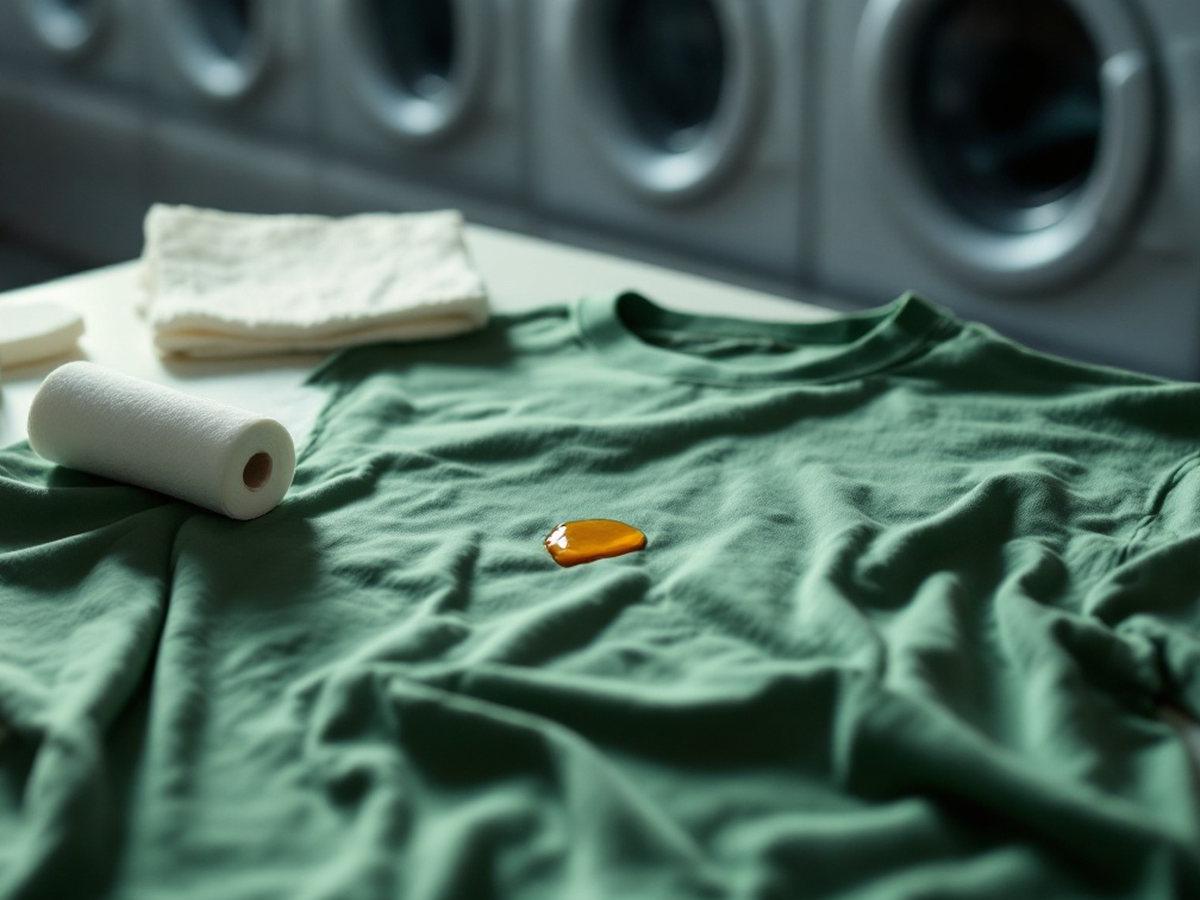
Tree sap: lay the stain face down on paper towels, sponge cleaning fluid onto the back, and wash in the hottest water the fabric allows (American Cleaning Institute). Hardened glue: chill it with ice, scrape off the surface, then treat what is left (American Cleaning Institute). Keep the garment out of the dryer until the stain is gone, because heat sets stains (NMSU Extension).
The best solvent depends on the adhesive, and acetone damages some fibers, so test every remover on an inside seam first (NMSU Extension).
Key takeaways
- Sap: sponge cleaning fluid onto the back of the stain over paper towels, then wash in the hottest water the care label allows.
- Hot glue: freeze the garment for 30 minutes, then peel the glue off. Never rub it.
- Super glue: soak in cool water and tamp first. Try acetone sparingly, after a hidden-seam test.
- Acetone dissolves acetate, triacetate and modacrylic, so keep it off those fabrics.
- No dryer until the stain is gone. Heat sets sap and glue.
Does tree sap come out of clothing, and how do you remove it?
Dissolve the sap with a solvent from the back of the fabric, then launder. American Cleaning Institute gives three steps for tar or tree sap:
- Scrape the residue off the fabric.
- Sponge cleaning fluid onto the stain while it sits face down on paper towels. Replace the towels often so the sap does not transfer back.
- Launder in the hottest water that is safe for the fabric.
No cleaning fluid? Cornell Cooperative Extension says its evergreen pitch directions were tested in a Cornell laboratory. Dampen a cloth with rubbing alcohol, vegetable shortening or petroleum jelly, then rub the spots, or blot if the fabric is very delicate. Wipe off with a paper towel and wash the remaining grease out with soap and water. If sap remains, turpentine followed by soap and water is the next step (Cornell Cooperative Extension).
What if it is pine sap?
American Cleaning Institute treats pine resin as a three-step job: sponge the area with a dry-cleaning solvent and let it air-dry, soak it for at least 30 minutes in 1 cup of liquid laundry detergent with a few drops of ammonia, then launder with liquid detergent. Never mix chlorine bleach and ammonia, because the fumes are hazardous (American Cleaning Institute).
Always test the remover on an inside seam or hem before you use it on the stain (NMSU Extension).
Are tree sap stains permanent, even after the dryer?
Not always, but time and heat make them harder to remove. NMSU Extension says set-in stains are harder to remove and that heat sets stains, so do not press a stained fabric or dry it in the dryer. Cornell adds that old stains are more difficult than fresh ones, and some staining agents will not respond to any effort (Cornell Cooperative Extension).
If sap has already been through the dryer, repeat the solvent step. Cornell says procedures may need to be repeated several times (Cornell Cooperative Extension), and ACI says to repeat the treatment if a stain remains (American Cleaning Institute).
At a laundromat, do the solvent step at the folding table, wash the item, then check the spot before you move it to a dryer. ACI says not to put it in the dryer until the stain is removed (American Cleaning Institute).
How do you get super glue out of clothes?
Start with the gentlest method. Cornell Cooperative Extension says to soak the fabric in cool water, tamp it with a brush or spoon, repeat until the glue softens and dissolves, then flush with water. NMSU Extension also advises using the gentlest removal method first (NMSU Extension).
If water alone fails, acetone is the usual next step. Loctite, which makes cyanoacrylate super glues, says to use acetone on fabric but test sparingly first.
- Soak and tamp in cool water until the glue softens (Cornell Cooperative Extension).
- Test acetone on an inside seam. Skip it if the fiber is acetate, triacetate or modacrylic (NMSU Extension; Texas A&M Extension).
- Dab sparingly until the bond starts to break, then work a pretreatment stain remover deep into the glue and let it sit (Loctite).
- Wash at a warm temperature, then check the spot before drying (Loctite; American Cleaning Institute).
The two sources differ on the first move: Cornell starts with water and Loctite with acetone. Water is the safer start, so try it first.
How do you get hot glue out of clothes?
Freeze it, then peel it. Loctite says to put the garment in the freezer for 30 minutes, then gently peel the hardened glue off. If the garment is too big for the freezer, hold a bag of ice on the spot.
If a film remains, Loctite's second method is isopropyl (rubbing) alcohol on a cotton swab. Work from the edges inward, lift the edge as the alcohol weakens the adhesive, and take care with delicate textiles (Loctite).
Do not rub the glue. Loctite warns that rubbing pushes it deeper into the fibers, so let it dry before you start (Loctite).
For leftover residue, use ACI's adhesive steps: apply ice or cold water to harden the surface, scrape with a dull knife, saturate with prewash stain remover or cleaning fluid, then rinse and launder (American Cleaning Institute). The same harden-then-scrape logic works for gum, covered in our guide to getting gum out of clothes.
What about nail glue, wood glue and other adhesives?
Match the method to the glue family. Cornell groups glues by chemistry and ACI covers adhesives in general (Cornell Cooperative Extension; American Cleaning Institute).
| Adhesive | First move |
|---|---|
| Super glue (cyanoacrylate) | Soak in cool water and tamp; acetone only after a test (Cornell Cooperative Extension; Loctite) |
| Hot glue | Freeze for 30 minutes and peel, or rubbing alcohol (Loctite) |
| Tape adhesive, gum | Rub with ice to harden, then a grease solvent (Texas A&M Extension) |
| Household cement, plastic glue, airplane glue | Sponge with dry-cleaning solvent and repeat until no more comes out (Cornell Cooperative Extension) |
| Casein glue (such as Elmer's) | Sponge with water, then mild detergent with a few drops of vinegar (Cornell Cooperative Extension) |
| Hide glue, fish glue | Blot, then keep an enzyme-product pad on the stain for 30 minutes (Cornell Cooperative Extension) |
| Epoxy | No home method; can permanently change dye (Cornell Cooperative Extension) |
Nail glue and eyelash glue vary by product. If the label lists cyanoacrylate, treat it as super glue (Loctite).
None of the guides we read names wood glue, fabric glue, Gorilla glue or E6000 separately. Start with ACI's adhesive steps and the gentlest method, and accept that some stains will not come out (American Cleaning Institute; Cornell Cooperative Extension).
Is acetone safe to use on clothes?
Not on every fabric. NMSU Extension says nail polish remover dissolves acetate, so test on an inside seam if you are unsure of the fiber. ACI says not to use it on acetate or triacetate (American Cleaning Institute), and Texas A&M Extension adds modacrylic and suggests amyl acetate where it is sold locally (Texas A&M Extension). Cornell recommends non-oily nail polish removers that contain acetone, and says not to use oil-type removers (Cornell Cooperative Extension).
How to test it
Put several drops on an inside seam and rub gently with a clean white towel. If color transfers to the towel or the fabric changes, stop and consult a professional cleaner (Cornell Cooperative Extension).
Fire and fumes
CDC's NIOSH lists acetone as a Class IB flammable liquid with a flash point below 73°F. Cornell says to use solvents in a ventilated room, away from sparks and open flame, and to wash solvent off skin or clothes at once (Cornell Cooperative Extension). So keep solvent-damp clothes away from heat, and do not mix removers, especially ammonia and chlorine bleach (NMSU Extension).
When should you take it to a professional?
Take it in when the label says dry clean only, when your hidden-seam test changes the color, or when the stain is large. NMSU Extension says dry-clean-only fabrics should get only a dry-cleaning agent, or help from a dry cleaner. Cornell notes that professional dry cleaners have skills and resources that home stain removal lacks (Cornell Cooperative Extension).
Bring the item in unwashed and tell them what the stain is and where it sits (Texas A&M Extension). Our dry cleaning and professional stain removal pages list local options. For other stains, see our stain-by-stain guide.
Frequently asked questions
Will Dawn dish soap remove sap?
None of the guides we read lists dish soap as the first treatment for sap. They use cleaning fluid, rubbing alcohol, shortening or petroleum jelly, and then soap and water to wash out the grease left behind.
Does vinegar remove tree sap?
Vinegar is not in ACI's or Cornell's sap directions. Both use solvent-type treatments, so start there.
Will Windex remove tree sap?
None of the sources we read list glass cleaner for sap. Use a tested method instead, and test it on an inside seam first.
Why is tree sap so hard to wash off?
The guides treat sap as a sticky, grease-like residue, so they dissolve it with a solvent, rubbing alcohol or a grease such as shortening before washing, rather than relying on water alone.
How do you remove sap from a sock?
Use the same steps as for any garment: scrape, sponge cleaning fluid or rubbing alcohol from the back over paper towels, then wash in the hottest water the fabric allows. Test the remover on an inside seam first.
Can you get hot glue out after washing?
Hot glue usually sits on top of the fabric. Freeze the item for 30 minutes and peel the glue off, then treat any film with rubbing alcohol or ACI's adhesive steps.
How we researched this
We read the American Cleaning Institute's stain guide, extension stain guides from Cornell, New Mexico State and Texas A&M, Loctite's instructions for its own glues, and the CDC's NIOSH acetone listing. We did not test these methods ourselves. The Texas A&M chart is an older publication, so we used it only for fabric warnings and the ice step. Sap on hair, skin, wood and cars is outside this laundry guide. Checked October 14, 2026.
Sources
- American Cleaning Institute (ACI) -- Stain Removal Guide
- New Mexico State University, Cooperative Extension -- Removing Clothing Stains (Guide C-502)
- Cornell Cooperative Extension -- Removing Stains at Home
- Texas A&M University System, Extension -- Stain Removal Chart for Washable Clothing
- Loctite (Henkel) -- Removing super glue, residue, and stains
- Loctite (Henkel) -- How to remove hot glue
- CDC, National Institute for Occupational Safety and Health -- NIOSH Pocket Guide to Chemical Hazards: Acetone