How to Remove Lint and Pilling From Clothes

LaundroMaps Team
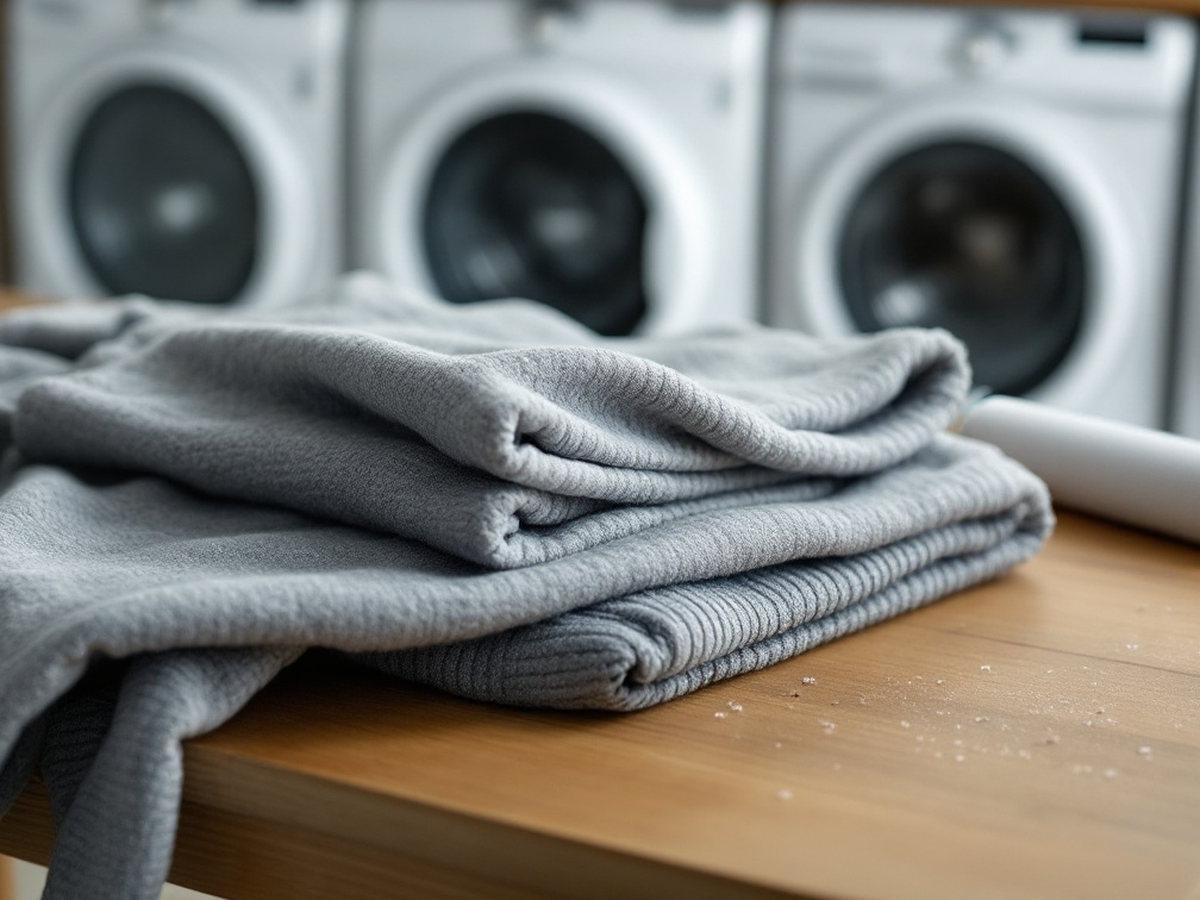
To remove lint from clothes, pat the dry garment with masking or transparent tape or a lint roller. For a load covered in lint, rewash it with fabric softener in the final rinse and dry it with a cleaned lint screen (American Cleaning Institute). Pills are different: they are fibers still attached to the fabric, so you shave or comb them off instead (Woolmark).
The mistake to avoid is washing lint-givers such as towels with lint-takers such as corduroy and synthetics. That mix causes most lint problems (American Cleaning Institute; LG).
Key takeaways
- Loose lint: pat with masking or transparent tape, or roll it off with a lint roller.
- A whole load covered in lint: rewash with fabric softener in the final rinse, then dry with a clean lint screen.
- Pills: remove a few by hand, comb them gently, or use a fabric shaver on a flat surface without pressing down.
- Prevent both: sort lint-givers from lint-takers, turn knits inside out, check pockets and don't overload the machine.
- Clean the dryer lint filter before and after every cycle; lint is a common first fuel in dryer fires.
What's the difference between lint and pilling?
Lint is loose fiber that sheds from one item and lands on another. Pills, often called lint balls or fuzz balls, are fibers that break loose from a garment's own surface, tangle into small balls and stay anchored to it (American Cleaning Institute). That difference decides the fix: lint lifts off with tape, but pills have to be cut or combed away (Woolmark).
Pilling comes from rubbing during wear. On sweaters it shows up most at the elbows, underarms, sleeves, belly and sides, where the arms brush the body of the garmentWoolmark. The American Cleaning Institute adds socks, collars and cuffs to that list.
Pills also attract lint, so a pilled sweater collects fuzz faster than a smooth one (American Cleaning Institute). Treat the pills first, then the loose lint.
How do you get lint off clothes without a lint roller?
Wrap masking tape or clear tape around your hand, sticky side out, and pat the dry garment. The American Cleaning Institute recommends exactly this hand-patting method for severe lint. It works on the same principle as a roller.
- Lay the item flat on a table or bed so the fabric doesn't bunch.
- Pat, don't rub. Rubbing can raise more fibers on knits.
- Replace the tape as soon as it stops grabbing.
- Work seams and pockets last, where lint collects.
If every item in the load came out covered, tape is slow. Rewash the load with the right amount of detergent, add fabric softener to the final rinse, and dry it (American Cleaning Institute). Detergent holds lint suspended in the water so it drains away instead of resettling (American Cleaning Institute).
How do you remove lint stuck on black clothes?
Use tape or a lint roller on dry black clothes, then fix the wash so it doesn't happen again. Dark clothes show lint from light items most, and LG's own example of a bad mix is white terrycloth towels washed with dark corduroy pants (LG).
- Wash darks away from towels, chenille and flannel, the heavy lint-givers (American Cleaning Institute; Whirlpool).
- Turn dark knits, jeans and khakis inside out so lint lands on the inside (American Cleaning Institute; Whirlpool).
- Check for white residue that isn't lint. Too much detergent leaves a residue that can look like lint (LG). Use the dose on the detergent label for the load size.
- Wash new dark items separately the first few times; new clothes and towels shed more lint in their first washes (Whirlpool).
Synthetic black clothes such as polyester can attract lint more than cotton does (UGA Extension). Static makes it worse. Our guide to getting rid of static in clothes covers that side.
Why is there lint on my clothes after washing?
Usually it's a sorting problem, but tissues in pockets, overloading, too little detergent and dirty filters cause it too. The table matches each cause to its fix, drawing on the American Cleaning Institute and washer makers' own guidance (Whirlpool; LG).
| Cause | Fix |
|---|---|
| Lint-givers (towels, sweaters, flannel) washed with lint-takers (synthetics, corduroy, velour) | Wash them in separate loads |
| Tissue or paper in a pocket | Check every pocket before loading |
| Washer or dryer overloaded | Wash and dry fewer items so the load moves freely |
| Too little detergent | Use enough to hold lint in the water until it drains |
| Too much detergent | Residue can look like lint; use the label dose |
| Clogged washer lint filter or dirty tub | Clean the filter after use; run the tub-clean cycle |
| Long, fast cycles on loosely woven towels | Pick shorter or slower cycles for linty items |
On loading, Whirlpool suggests filling a top-load washer about three-quarters full and a front-loader to about 80% (Whirlpool). LG recommends its Tub Clean cycle once a month (LG). LG also notes that a light blanket can float during fill and trap lint in its folds, so wash one blanket at a time (LG).
Very heavy shedders such as blankets, chenille bedspreads and rugs are best washed alone (American Cleaning Institute). That's easy at a self-service laundromat. More than 4,000 laundromats in the LaundroMaps directory list large-capacity machines, as of October 2026 (LaundroMaps directory data). For the full sorting system, see how to sort laundry.
Can you get lint off clothes in the dryer?
Partly. A dryer with a clean lint screen pulls some loose lint away, but the American Cleaning Institute says a linty load should be rewashed, then dried with a cleaned screen. Take synthetics out while slightly damp: overdrying builds static, and static holds lint to the fabric (American Cleaning Institute).
How to clean the lint screen
Clean the lint filter before and after each cycle, and never run a dryer without one (U.S. Fire Administration). For everyday cleaning, Whirlpool says to roll the lint off with your fingers and not to rinse the screen, because wet lint is hard to remove (Whirlpool).
Detergent and fabric softener residue can coat the mesh over time. If lint falls off while the screen is still in the dryer, it's probably clogged (Whirlpool). Scrub it with a nylon brush, hot water and liquid detergent, rinse, and dry it with a towel (Whirlpool). Both Whirlpool and the U.S. Fire Administration suggest that deep clean at least every 6 months.
Why it matters for safety
The U.S. Fire Administration estimated about 2,900 home clothes dryer fires a year in 2008 to 2010. Failure to clean was the leading cause, at 34%. Dust, fiber and lint were the first thing to ignite in 28% of those fires (U.S. Fire Administration). At a laundromat, check the screen before you load as well as after, since the filter should be clean before each cycle (U.S. Fire Administration). The vent behind the dryer matters too; see how to clean a dryer vent.
Why do clothes pill?
Clothes pill because friction breaks fibers loose on the surface, and those fibers tangle into balls. Pilling is a normal wear problem, worst wherever fabric rubs (American Cleaning Institute; Woolmark). Woolmark says more active wearers, and garments that rub on surfaces such as a desk, pill more (Woolmark).
Fiber type decides whether the balls fall off or stay. The American Cleaning Institute says pills on some synthetic and permanent-press fabrics stay attached, while natural fibers' pills tend to break off. UGA Extension lists the usual suspects (UGA Extension):
- Acrylic pills readily; static build-up helps the fuzz form balls.
- Polyester may pill and attract lint.
- Spun nylon pills.
- Acetate, by contrast, resists pilling.
Wool pills too, especially knitwear (Woolmark). Washing adds friction of its own, so overloading and rough cycles speed it up (American Cleaning Institute; Whirlpool).
How do you remove pilling from sweaters?
Use the gentlest tool that works. Woolmark gives three options for wool, from mildest to most thorough:
- By hand, when there are only a few pills. Do it after drying or just before ironing.
- With a comb, very gently and carefully.
- With a de-piller or fabric shaver, a small battery-powered tool that cuts pills off.
Sources disagree about picking. UGA Extension warns that picking fuzz balls off acrylic exposes more fiber ends and can make pilling worse. Woolmark allows hand removal on wool when there are only a few pills (Woolmark). So on synthetics, cut pills off with a shaver rather than pulling them.
How do you use a lint remover or fabric shaver?
These steps follow a fabric shaver maker's instruction booklet:
- Lay the garment on a flat surface, such as an ironing board, and pull it straight.
- Tuck in loose threads, and test on a hidden area first.
- Glide the head gently over the pilled area. Don't press down, or you can damage the fabric.
- Empty the lint collector after each use.
The same booklet says not to use a shaver on delicate, easily damaged fabrics (a fabric shaver maker's instruction booklet). For cashmere and fine wool, start with your fingers or a comb. Our cashmere guide covers washing them without damage.
How do you get lint off a beanie?
Treat a knit beanie like a small sweater. Shave or comb the pills first, then pat loose lint off with tape (Woolmark; American Cleaning Institute). Stretch it over a flat surface while you work so the shaver head stays level (a fabric shaver maker's instruction booklet).
How do you prevent pilling and lint?
You can't stop pilling completely, because it comes from normal wear (American Cleaning Institute; Woolmark). But these habits slow it down and keep lint off:
- Turn knits and wool inside out before washing (Woolmark; American Cleaning Institute).
- Sort lint-givers from lint-takers: towels and chenille away from corduroy, synthetics and permanent press (Whirlpool).
- Don't overload the washer or dryer; the load should move freely (American Cleaning Institute; Whirlpool).
- Use gentler cycles for linty or loosely woven items (Whirlpool). A mesh laundry bag also helps contain shedding items.
- Empty pockets of tissues and paper (American Cleaning Institute; LG).
- Keep the filters clean: the washer lint filter after use and the dryer screen every cycle (American Cleaning Institute; U.S. Fire Administration).
Should you use fabric softener?
It depends on the fiber. The American Cleaning Institute says fabric softener lubricates fibers and reduces static, which helps synthetics resist pilling and lint. UGA Extension says the same for acrylic (UGA Extension). Woolmark, however, says to avoid fabric softener on wool (Woolmark). Use it for synthetics and skip it for wool. For a closer look at the options, read fabric softener vs dryer sheets vs dryer balls.
If you'd rather wash a linty blanket or rug away from your clothes, find a laundromat near you and use a separate machine for it.
Frequently asked questions
What's the fastest way to remove lint from clothes?
For a few items, pat them with a lint roller or masking tape wrapped around your hand. For a whole load covered in lint, rewashing with fabric softener in the final rinse and drying with a clean lint screen is faster than taping each piece.
How do you make a lint remover at home?
Wrap masking tape or clear tape around your hand, sticky side out, and pat the dry garment. Replace the tape when it stops grabbing. It works like a roller and is the method the American Cleaning Institute gives for heavy lint.
What is the most powerful lint remover?
It depends on the problem. Tape or a lint roller lifts loose lint, while a fabric shaver cuts off pills that are still attached to the fabric. A shaver should be used on a flat surface without pressing down, and not on delicate fabrics.
What removes fuzzies from clothes?
Fuzzies that are stuck to the fabric are pills: remove them by hand if there are only a few, with a gentle comb, or with a fabric shaver. Loose fuzz on top of the fabric is lint, which comes off with tape or a roller.
What is the best fluff remover for fabric?
Match the tool to the fabric. Use a fabric shaver on sturdy knits such as acrylic or polyester, and try your fingers or a comb on wool and delicate knits. Test any shaver on a hidden area first.
What can I use instead of a lint remover?
Masking tape or clear tape patted over the dry garment does the same job as a lint roller. If the whole load is linty, rewash it with fabric softener in the final rinse instead, and take synthetics out of the dryer while slightly damp.
How we researched this
We read the American Cleaning Institute's laundering problems guide, University of Georgia Extension's fiber guide, Woolmark's pilling guidance and two U.S. Fire Administration publications. For their own products, we read Whirlpool and LG washer and dryer help pages and a fabric shaver maker's instruction booklet. We cited 9 sources plus LaundroMaps directory data, read on October 16, 2026 (American Cleaning Institute; UGA Extension; U.S. Fire Administration). We did not lab-test any method. Where sources disagree, on picking pills and on fabric softener, we say so and give the safer choice by fiber.
Sources
- American Cleaning Institute -- Laundering Problems & Solutions
- The Woolmark Company -- What is pilling?
- LG Electronics USA -- Lint on cloth after washing cycle - Top Load Washer
- Whirlpool -- Preventing Excessive Lint on a Washer Load
- University of Georgia Extension -- Understand Your Fibers
- LaundroMaps directory data -- 13,000+ US laundromat listings, October 2026
- U.S. Fire Administration -- Clothes Dryer Fire Safety
- Whirlpool -- Cleaning the Lint Screen on a Dryer
- U.S. Fire Administration -- Clothes Dryer Fires in Residential Buildings (2008-2010)
- Cleaner's Supply (restora fabric shaver) -- BH-14 Fabric Shaver Instruction Booklet