How to Get Rid of Static in Clothes and Stop Static Cling

LaundroMaps Team
To get rid of static in clothes, stop the dryer before the load is bone dry, dry polyester and nylon apart from cotton, and add a little moisture back: a damp washcloth in the last 10 to 20 minutes works (Whirlpool). For clothes that are already clinging, mist them lightly with water or run a metal hanger over the fabric (Whirlpool).
Static builds when fabrics rub together in the dryer (American Cleaning Institute), and dry heat plus synthetic fibers make it worse (Whirlpool). Fabric softener and dryer sheets reduce that friction (American Cleaning Institute), but they are not the only fix.
Key takeaways
- Over-drying is the main cause you control: use a sensor or less-dry setting and take clothes out slightly damp.
- Dry polyester, nylon and acrylic in their own load; they build far more charge than cotton or wool.
- No dryer sheets: add a damp washcloth for the last 10 to 20 minutes, or use a Static Reduce option.
- While wearing: mist with water, smooth on lotion, or run a metal hanger over the fabric.
- A humidifier helps, but keep indoor humidity at 30 to 50% and never above 50%.
What causes static in clothes?
Static cling is friction: as clothes tumble, electrons move from one fabric to another, leaving some items positive and some negative, and the opposite charges pull together when the dryer stops (Whirlpool). American Cleaning Institute puts it simply: clothes rubbing together in a dryer generate static electricity.
Three things make it worse:
- Synthetic fibers. UGA Extension lists nylon, acrylic, acetate and modacrylic as fibers that build up static, and polyester as one that accumulates it and attracts lint.
- Over-drying. Running the dryer past dry strips the last moisture from fabric, which makes cling more likely (Whirlpool).
- Dry air. Cold, dry winter air and the hot, dry drum both let charge build instead of drain away (Whirlpool).
Fiber matters more than most people expect. In a 2021 Boise State University friction study of 16 fabric pairings, cotton and wool built the least charge and polyester the most, even when polyester was rubbed against cotton or wool.
Why are my clothes suddenly full of static?
A sudden change usually means the air got drier (heating season), you started drying a load longer or hotter, or the load now holds more synthetics such as fleece, athletic wear or a polyester blend (Whirlpool). Acrylic sweaters can also pill more as static builds; softener helps there (UGA Extension).
How do you stop static in the dryer?
Prevent it before it forms. These steps come from Whirlpool and its product-help guide (Whirlpool), in the order you do laundry:
- Sort by fiber. Wash and dry synthetics apart from cotton and wool. Our guide to sorting laundry covers the rest of the sort.
- Don't overload. A crowded drum means more rubbing; leave room for clothes to tumble freely.
- Use a sensor or Less Dry cycle. Moisture sensors stop the dryer when clothes are dry instead of running a fixed time.
- Take clothes out slightly damp. Synthetics dry fast; pull them first and hang them to finish.
- Add a damp washcloth for the last 10 to 20 minutes to put moisture back into the air in the drum.
- Shake out each item as it comes out, then fold or hang it right away instead of piling it in a basket.
Sensor drying is worth using for more than static. ENERGY STAR says automatic termination sensors detect when clothes are dry and prevent the wear and tear of over-drying, and that certified dryers generally use lower temperatures. If you're not sure which setting does what, see washer and dryer cycles explained.
What does a dryer's Static Reduce option do?
On Whirlpool dryers that have it, Static Reduce tumbles the dry load and adds a small amount of moisture at the end (Whirlpool). It is meant for standard-size loads; a small load may come out slightly damp (Whirlpool). Steam dryers do something similar by adding steam near the end of the cycle (Whirlpool).
What can you use instead of dryer sheets for static?
Dryer sheets work because their softening agents, mostly positively charged cationic surfactants (softening compounds that cling to fibers), coat the fabric and cut friction (American Cleaning Institute). Without them, you either add moisture or reduce rubbing. The options below are compared from Whirlpool and the American Cleaning Institute softener guide:
| Option | How it helps | Watch out for |
|---|---|---|
| Liquid fabric softener | Coats fibers in the final rinse, reducing static and friction | Not on flame-resistant items or children's sleepwear |
| Damp washcloth | Adds moisture for the last 10 to 20 minutes | Add it near the end, not for the whole cycle |
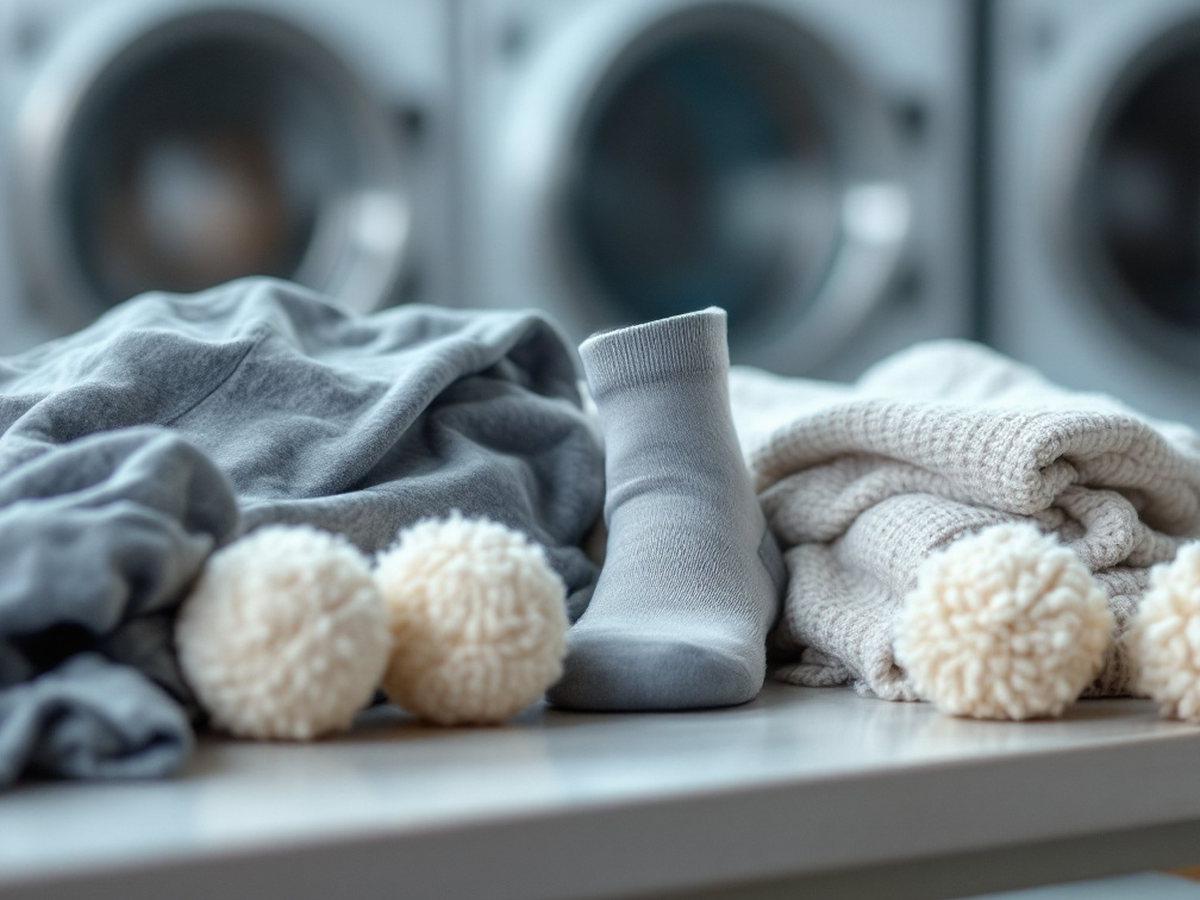
| Wool dryer balls | Absorb moisture and separate items | Sources disagree on how much they help |
| Aluminum dryer balls | Help discharge static buildup | Whirlpool's claim; no independent testing found |
| Air drying | No tumbling, and less moisture removed | Slower, and needs space |
For a side-by-side of the three common products, see fabric softener vs. dryer sheets vs. dryer balls.
Do dryer balls help with static?
The sources split. Whirlpool calls dryer balls an effective way to cut static without sheets: wool balls absorb moisture and aluminum balls help discharge static. The American Cleaning Institute, a trade group for cleaning-product makers, says dryer balls may speed drying but their benefits are typically negligible and they add friction. If you try them, pair them with the two fixes both sides agree on: drying synthetics separately and not over-drying.
Does vinegar stop static?
Whirlpool advises against adding vinegar to the washer: it is acidic and can gradually damage rubber parts. If you want to skip softener, it suggests pre-soaking in diluted vinegar and rinsing well before the wash. We cover what vinegar does and doesn't do in white vinegar in laundry.
How do you get rid of static in clothes quickly, while you're wearing them?
Drain the charge or add moisture. All of these fixes come from Whirlpool:
- Mist with water. A light spray, or a damp towel run over the clingy area, adds moisture to the fabric.
- Use lotion. Moisturizing your skin helps keep a skirt or dress from sticking to you.
- Run a metal hanger over the fabric. The metal helps discharge the built-up charge.
- Rub a dryer sheet over the static-prone areas.
- Use an anti-static spray before you dress or on the go.
- Refresh in a steam dryer, if yours has a steam refresh cycle.
Anti-static sprays are made for this job: American Cleaning Institute lists static guard spray as a fabric enhancer used to prevent static cling. Water is the quickest no-product option, but it lasts only until the fabric dries again.
How do you stop a dress clinging to tights?
Mist the inside of the skirt lightly, or smooth lotion on your legs before you dress (Whirlpool). If the dress is polyester, a cotton layer may not be enough: a 2021 Boise State University friction study found polyester still built the most charge when rubbed against cotton or wool. For the next wash, use softener on the dress or slip if the care label allows it, since softener is particularly useful against static in synthetics (American Cleaning Institute).
Can a humidifier reduce static?
Yes: dry air lets charge build, so raising indoor humidity in winter reduces cling, and Whirlpool suggests a humidifier in the laundry area. Don't overdo it. The EPA recommends keeping indoor humidity below 60%, ideally between 30% and 50%.
The EPA humidifier guide adds the care that keeps one from becoming a problem:
- Stay at or under 50%. Higher levels may encourage biological growth; a hygrometer measures it.
- Empty, dry and refill portable units daily.
- Clean every third day to limit scale and microorganisms.
- Use low-mineral water, such as distilled, so the unit doesn't release minerals into the air.
If water condenses on windows or walls, turn the humidifier down or move it (EPA).
When should you skip fabric softener and dryer sheets?
Skip softener products on children's sleepwear and anything labeled flame-resistant: the American Cleaning Institute says softeners can reduce flame retardancy. Always check the care label first.
For sensitive skin, the same guide notes hypoallergenic and dye- and fragrance-free softeners exist (American Cleaning Institute). Use the amount on the product label; too much softener can build up in the washer dispenser and on the dryer drum (American Cleaning Institute). On these loads, lean on the no-product fixes above: sorting by fiber, sensor drying and a damp cloth.
How do you avoid static when drying at a laundromat?
The same rules apply in a commercial dryer: don't overload it, and don't let the load tumble long after it is dry (Whirlpool). At a self-service laundromat, check the load before you add more time, and pull the polyester and nylon out first so they can finish on a hanger.
Splitting a load is easy when there are several dryers: put synthetics in one and cotton and towels in another (Whirlpool). More than 6,200 laundromats in the LaundroMaps directory list self-service machines, as of October 2026 (LaundroMaps directory data). Even at laundromats with free dry, a longer cycle doesn't help: extra minutes past dry are what build the charge (Whirlpool).
Frequently asked questions
What neutralizes static cling?
Moisture and softening agents do. Water mist, a damp cloth in the dryer, or a humid room helps charge drain away, and fabric softener coats fibers to cut the friction that builds it. A metal hanger run over the fabric also helps discharge it.
What is a natural static remover?
Water is the simplest: mist the fabric lightly or add a damp washcloth for the last 10 to 20 minutes of drying. Air drying and separating synthetics from cotton and wool also prevent static without any product.
Does hairspray stop static on clothes?
We found no authoritative source that tests hairspray on clothing, so we don't recommend it. Anti-static spray is made for the job, and a light mist of water works for a quick fix.
Why does polyester get so much static?
Polyester absorbs little moisture, so charge has nowhere to go. In a 2021 friction study it built the most static of the four fabrics tested, even when paired with cotton or wool.
Is it bad to take clothes out of the dryer damp?
No. For static-prone loads, slightly damp is the goal: pull synthetics first and hang them to finish drying, which also avoids the over-drying that builds static.
How we researched this
We read the American Cleaning Institute's guidance on static and fabric softeners, the University of Georgia Extension fiber guide, ENERGY STAR and two EPA pages on humidity and humidifiers, Whirlpool's instructions for its dryers, and a 2021 peer-reviewed friction study, and cited all nine, plus LaundroMaps directory counts. Where sources disagree, as on dryer balls, we say so. We did not test any method, and we left out tips we could not source, such as safety pins in the dryer. Researched October 2026.
Sources
- Whirlpool -- How to get rid of static cling on clothes
- American Cleaning Institute -- Ask ACI: Preventing Static Cling
- Whirlpool Product Help -- Reducing Static in the Dryer
- American Cleaning Institute -- Fabric Softeners and Enhancers: A Comprehensive Guide
- University of Georgia Extension -- Understand Your Fibers
- Reischl & Mijovic (Boise State University), TBIS 2021 -- Assessment of Electrostatic Potential Resulting from Friction Between Fabric Samples Made of Natural and Synthetic Fibers
- ENERGY STAR (U.S. EPA and DOE) -- Clothes Dryers
- U.S. Environmental Protection Agency -- Use and Care of Home Humidifiers
- U.S. Environmental Protection Agency -- A Brief Guide to Mold, Moisture and Your Home
- LaundroMaps directory data -- 13,000+ US laundromat listings, October 2026
Related guides
- How to remove lint and pilling from clothes: why static-prone synthetics collect lint and pills.