How to Sort Laundry: The Simple Guide to Sorting Clothes for Washing

LaundroMaps Team
Sorting laundry before washing prevents color bleeding, protects delicate fabrics, and ensures each load gets the right wash settings. It takes 5 minutes and saves you from ruined clothes. Here's how to sort laundry quickly and correctly.
Step 1: Sort by Color
This is the most important sort — it prevents dye transfer.
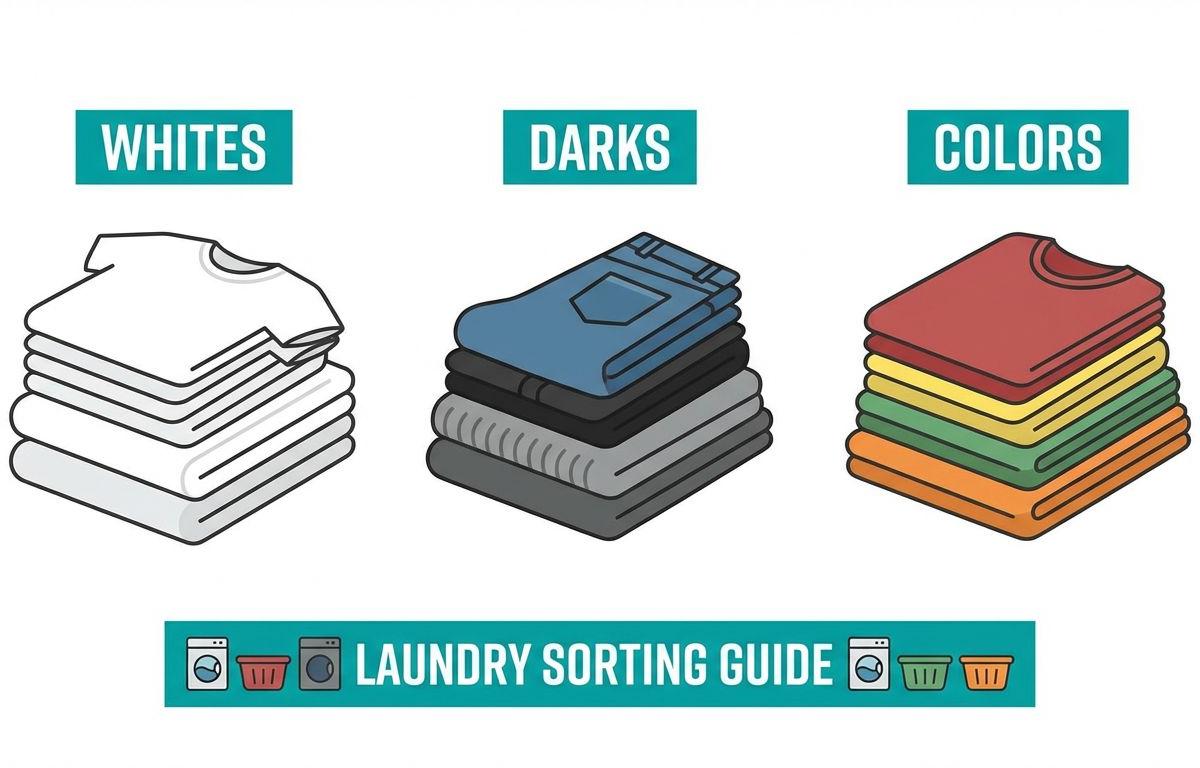
- Whites: White t-shirts, underwear, socks, towels, sheets. These get washed in hot water with bleach or brightener.
- Lights / Pastels: Light blue, pink, yellow, beige, light gray. Wash warm or cold.
- Darks: Black, navy, dark gray, dark green, brown. Wash cold to prevent fading.
- Reds / Brights: Red, orange, bright purple. These bleed the most — wash separately, especially when new. Cold water only.
Step 2: Sort by Fabric Weight
Heavy fabrics and lightweight fabrics don't wash or dry well together:
- Heavyweights: Jeans, towels, sweatshirts, jackets — normal or heavy-duty cycle
- Lightweights: T-shirts, dress shirts, blouses, underwear — normal cycle
- Delicates: Silk, lace, lingerie, anything labeled "gentle" — gentle cycle or hand wash. Use a mesh bag.
Check the care label for specific instructions. Our laundry symbols guide explains every label symbol.
Step 3: Sort by Soil Level
Heavily soiled items (grass-stained sports clothes, muddy work clothes) should be washed separately from lightly worn items. Heavy soil can transfer to cleaner clothes during the wash cycle.
Pre-treat stains before sorting into the wash pile. See our stain removal guide for specific stain types.
Quick Sorting Cheat Sheet
For most households, you need just 3 to 4 loads:
- Whites — hot water, bleach OK
- Darks — cold water, inside out
- Colors / lights — warm or cold water
- Delicates / special — cold water, gentle cycle, mesh bags
Sort at home before heading to the laundromat — it saves time and folding table space. Good sorting is part of good laundromat etiquette.