How to Wash Black, Dark and Colored Clothes Without Fading

LaundroMaps Team
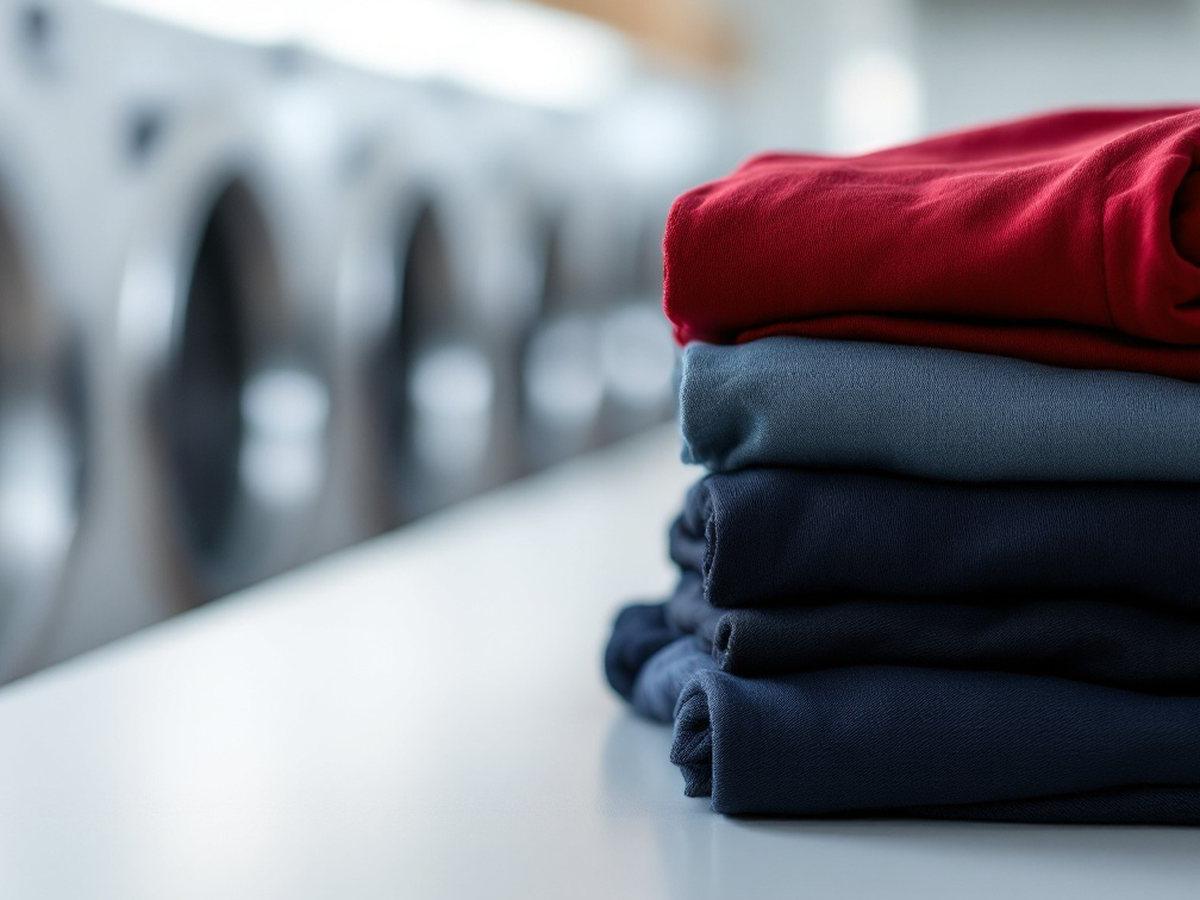
To wash black and dark clothes without fading, turn them inside out and wash them with like colors in cold water, up to 86°F, on a short or delicate cycle (the American Cleaning Institute; Whirlpool; the FTC Care Labeling Rule). Then air dry or tumble on low: hot water and dryer heat make dark clothes fade faster (the American Cleaning Institute).
Skip the vinegar or salt soak, because neither sets dye that is already in the fabric (Iowa State University Extension; University of Nebraska-Lincoln Extension). If a load has already bled, keep the stained items out of the dryer and rewash them, using oxygen bleach on colorfast items or a color remover on whites (University of Georgia Extension; K-State Research and Extension).
Key takeaways
- Wash darks inside out in cold water (up to 86°F) on the shortest, gentlest cycle the care label allows.
- Wash new dark, red and bright items on their own for the first few washes, because loose dye bleeds onto lighter clothes.
- Skip vinegar and salt: University of Nebraska tests found home dye-setting remedies did not reduce color loss.
- Air dry indoors or use low heat; dryer heat, friction and sunlight all fade dark clothes.
- If dye transfers, don't dry the stained item. Rewash it, then use oxygen bleach on colorfast items or color remover on whites.
How do you wash black clothes and keep them black?
Wash black clothes inside out, in cold water, on a short, gentle cycle, and keep them away from the dryer's high heat (the American Cleaning Institute; Maytag). Some fading is inevitable after repeated washing, but these steps slow it down (the American Cleaning Institute).
Follow these steps, based on Whirlpool, Maytag and Iowa State University Extension:
- Read the care label. It tells you the cycle, the water temperature and whether the item can be machine washed at all (Whirlpool).
- Sort by color. Wash blacks and darks apart from whites and light colors so dark dye can't tint them (Maytag).
- Turn clothes inside out. The inside takes the rubbing, so the outer face keeps its color; close zippers and hardware too (Iowa State University Extension).
- Choose cold water. Warmer water makes dark dye bleed and fade faster (Maytag).
- Pick a short, gentle cycle. Less agitation means less friction and less dye loss (Whirlpool).
- Measure the detergent. Use the amount on the label; too much leaves residue that dulls dark fabric (Maytag; the American Cleaning Institute).
- Don't overload the washer. Clothes need room to move so the water can clean them (the American Cleaning Institute; Whirlpool).
- Dry on low or hang to dry indoors. Heat and tumbling fade dark colors, and so does direct sun (Iowa State University Extension; Whirlpool).
A liquid detergent made for darks is an option, not a requirement: the American Cleaning Institute says to look for "color guard" or "for dark clothes" on the label, and Whirlpool prefers liquid over powder to avoid residue. Add detergent to the dispenser or the empty drum first, not on top of the clothes, to avoid spots (Whirlpool).
What setting do you wash black clothes on?
Use the Delicate or Gentle setting with cold water, unless the label calls for something else (Maytag). That cycle uses a gentler wash and spin than Normal (the American Cleaning Institute), which is what protects the dye. Sturdy items like black jeans can take a Normal cycle in cold water if the label allows; our guide to washing jeans without fading covers denim.
How long should I wash black clothes?
As short as still gets them clean. the American Cleaning Institute recommends a shorter wash cycle for dark clothes, and a Quick Wash cleans a small, lightly soiled load in under 30 minutes (the American Cleaning Institute). Save longer cycles for heavily soiled loads.
What temperature should you wash black clothes?
Wash black and dark clothes in cold water. Under the the FTC Care Labeling Rule, "cold" on a care label means water up to 86°F (30°C). Warm or hot water makes fibers swell and release dye (Iowa State University Extension).
Do you wash darks with hot or cold water?
Cold. Here is what each label setting means, using the FTC's definitions (the FTC Care Labeling Rule):
| Label says | Water temperature | For black and dark clothes |
|---|---|---|
| Cold | Up to 86°F (30°C) | The default for darks and brights |
| Warm | 87°F to 111°F (31°C to 44°C) | Only if the label requires it |
| Hot | 112°F to 145°F (45°C to 63°C) | Avoid; it speeds bleeding and fading |
Is cold water good for black clothes?
Yes. Cold water is the setting the American Cleaning Institute, Whirlpool and Maytag all recommend for darks, because hot water speeds fading. Hot water also washes out the fixing agent that holds dye in the fiber faster (Iowa State University Extension).
The exception is a stain. Maytag says to wash a stained dark item in the warmest water its care tag allows, after pretreating the stain.
What not to wash in cold water
Heavily soiled cottons, towels and sheets usually do better in warmer water. The Normal or Cotton cycle uses warm or hot water for everyday dirt (the American Cleaning Institute), and oxygen bleach works best in warm to hot water (the American Cleaning Institute). Wash those loads separately from your darks; our water temperature guide covers them load by load.
Why do dark and colored clothes fade or bleed?
Dark clothes lose color in three ways, and each needs a different fix (Iowa State University Extension):
- Bleeding: dye leaches into the wash water and can stain everything else in the load. It also fades the garment itself.
- Crocking: loose dye rubs off onto skin, bags, furniture or other clothes, like new jeans leaving blue streaks on a light seat.
- Fading: the gradual loss of color from wear, washing and light.
Deeply dyed dark fabrics are the most prone to color transfer. Usually the cause starts at the factory, with the wrong dye, poor rinsing or a missing dye fixer (Iowa State University Extension). In the wash, hot water, harsh detergents, agitation and overdrying all speed fading (Whirlpool).
Fiber matters too. Cotton, wool and silk fade more than polyester, nylon and acrylic, which hold dye better (Iowa State University Extension). Outside the wash, University of Nebraska-Lincoln Extension lists sunlight, lemon juice and the benzoyl peroxide in some acne products as causes of color loss.
A label that says "wash separately" or "wash dark colors separately" is a warning: expect that item to bleed (University of Nebraska-Lincoln Extension; Iowa State University Extension).
Can you wash black clothes with colored or white clothes?
Wash black clothes with other darks, not with whites. the American Cleaning Institute says to wash whites separately, pastels and medium colors together, and brights and darks by themselves. White and light-colored synthetics pick up dark dyes most easily (the American Cleaning Institute).
Are you supposed to wash black clothes with colored clothes?
Black can go in with navy, charcoal, dark green and other deep colors. That is what a care label means by "with like colors": colors of similar hue and intensity (the FTC Care Labeling Rule). Maytag adds that separating blacks from other darks gives a little more protection, if you have enough for two loads.
Keep these out of a dark load:
- New dark, red or bright items. Wash them alone the first few times (the American Cleaning Institute).
- Fluorescents. Hot pinks and bright greens are often much less colorfast, so wash them separately or test them first (the American Cleaning Institute).
- Lint shedders. Fuzzy sweatshirts, flannel and new towels shed lint that shows on dark fabric (the American Cleaning Institute).
- Delicates with heavy denim. Rough fabrics rub delicate ones and wear them faster (Whirlpool).
Can you wash black and white clothes together?
Not safely. Dark dye can seep into whites and light colors in the wash and stain them, while the darks fade (Maytag). A black-and-white striped shirt is the exception you can't sort: wash it in cold water with darks, and test a hidden spot first. Our laundry sorting guide and guide to keeping whites white cover the other piles.
How do you keep lint off black clothes?
Sort out lint shedders and wash corduroy and permanent press, which attract lint, away from them (the American Cleaning Institute). A dryer sheet helps repel lint and pet hair, and the lint trap should be cleaned after every load (the American Cleaning Institute). For lint and pills that are already there, see how to remove lint and pilling.
Does vinegar or salt keep black clothes from fading?
No. Soaking clothes in vinegar or salt to "fix" the color is a myth (Iowa State University Extension). Salt helps fiber absorb dye during dyeing, and acids set some dyes then, but neither does anything once the garment is finished (Iowa State University Extension).
Researchers at University of Nebraska-Lincoln Extension tested home remedies on red and blue dyed cotton: vinegar and water, salt and alum, and Epsom salts. None substantially reduced color loss, and some increased it (University of Nebraska-Lincoln Extension). If a soak seemed to work, it only rinsed out loose dye (Iowa State University Extension). Vinegar has other laundry uses; our vinegar in laundry guide covers when it helps and when to skip it.
What does reduce bleeding, according to Iowa State University Extension:
- A commercial dye fixative. A cationic fixative treats cotton that bleeds, once, before the first wash. It needs 140°F water and a top-loader or tub, and doesn't work on polyester or acrylic (Iowa State University Extension).
- Color catcher sheets. They trap loose dye in the water, but they are not totally reliable; washing like colors is the only sure prevention (Iowa State University Extension).
- Fabric softener. It reduces the friction that wears dark fabric (Iowa State University Extension; Whirlpool).
- Washing less. Air out lightly worn clothes and spot clean small marks instead of running a full wash (Iowa State University Extension; Maytag).
How do you make black clothes black again?
Washing can't put lost dye back. Fading is the gradual loss of dye from wear, washing and light (Iowa State University Extension), so once black has turned gray, re-dyeing is the only way to restore it (Rit).
How to make black clothes black again without dye
Check whether residue, not dye loss, is the problem. Too much detergent leaves a film on dark clothes (Maytag), and lint from towels or fleece shows up as a gray haze (the American Cleaning Institute). Rewash the item alone in cold water with the label dose of liquid detergent and no lint shedders (Whirlpool; the American Cleaning Institute). If it is still gray, the dye itself is gone.
Re-dyeing faded black clothes
A home fabric dye can restore faded black, and Rit gives these limits for its black dye kit:
- Fiber: it dyes cotton, linen, wool, silk, ramie, rayon and nylon; above 35% synthetic content, such as polyester, it needs a synthetic-fiber dye (Rit).
- Water: about 3 gallons per pound of fabric, ideally at 140°F, with 1 cup of salt for cotton, rayon, ramie or linen (Rit).
- Damage: bleach spots and sun damage take dye poorly, and Rit can't promise results there (Rit).
For bleach spots on dark clothes, see how to fix bleach stains.
How do you fix dye transfer or color bleeding?
Act before anything goes in the dryer. Check wet clothes for stains before drying, because dryer heat can set a stain permanently (the American Cleaning Institute). Dye transfer can be impossible to remove, so the sooner you start, the better your chances (K-State Research and Extension; Iowa State University Extension).
- Pull the stained items out wet and keep them out of the dryer (the American Cleaning Institute).
- Rewash in detergent and water. Loose dye that rubbed or bled is best removed with detergent and water (University of Nebraska-Lincoln Extension).
- Test for colorfastness before any bleach: mix 1 tablespoon of chlorine bleach in 1/4 cup of water, dab a hidden seam, wait 3 minutes and rinse. If the color changes, don't use chlorine bleach on that item (K-State Research and Extension).
- Soak in oxygen bleach if the item passes, then wash again. Oxygen bleach is safe for all washable fabrics and colors (the American Cleaning Institute; University of Nebraska-Lincoln Extension).
- Try an enzyme presoak if traces remain; it may help (K-State Research and Extension).
- Air dry until you are sure the stain is gone (K-State Research and Extension).
Never mix chlorine bleach with ammonia or vinegar: the fumes can cause serious injury (K-State Research and Extension).
How to get color bleed out of white clothes
Whites have more options. University of Georgia Extension and K-State Research and Extension say to use a commercial color remover on white fabric, or chlorine bleach if the fabric is safe for it. Rit says its color remover is chlorine-free and made to remove dye stains from whites washed with colored items, on cotton, linen, wool, rayon and ramie. Color remover strips dye from the whole garment, so use it only on items meant to be white (Rit).
How to fix dye transfer on colored clothes
Use oxygen bleach, never chlorine bleach, on colored items (the American Cleaning Institute), and test a hidden spot first (University of Georgia Extension). If you use an oxygen bleach powder in a cold wash, OxiClean says its product works in any water temperature but best in warm to hot, so pre-dissolve it in hot water first.
If the item is valuable or the transfer won't budge, take it to a professional stain removal service and say what bled onto it. And if a garment bled even though you followed its care label, University of Nebraska-Lincoln Extension suggests returning it to the store.
How do you wash dark clothes at a laundromat?
The same rules apply, with a few laundromat habits that protect darks. More than 6,200 listings in the LaundroMaps directory offer self-service washers, as of October 2026 (LaundroMaps directory data).
- Use two machines. Run darks and lights in separate washers at the same time instead of mixing them to save a load (the American Cleaning Institute).
- Set cold and a gentle cycle. Commercial washers name cycles differently, so pick the coldest, gentlest option (Maytag).
- Don't overfill. Mix small and large items so clothes can move freely (the American Cleaning Institute).
- Unload as soon as the cycle ends. Wet items lying together are more likely to transfer dye (Iowa State University Extension).
- Use low heat in the dryer, or take delicate darks home to hang dry (Maytag).
Find a self-service laundromat near you to run separate dark and light loads side by side. Items that need hand washing, like a dark silk blouse, belong in the sink; see how to hand wash clothes.
Frequently asked questions
Does OxiClean work in cold water?
Yes, but less well. Its maker says it works in any water temperature but best in warm to hot water, so dissolve the powder in hot water before adding it to a cold wash. Test a hidden spot first, because not all clothing is colorfast.
Can you wash jeans with black clothes?
Dark jeans can go with other darks in cold water, since their dye is similar in intensity. Keep new jeans out of the load for the first few washes, because they often bleed, and keep heavy denim away from delicate dark fabrics it can rub.
Should you dry black clothes in the dryer?
Air drying is best, because dryer heat and tumbling speed fading. If you use the dryer, choose low heat and take clothes out promptly. Dry indoors, since direct sun also fades dark fabric.
Do black clothes need a special detergent?
No. A liquid detergent made for darks may lessen fading, but the bigger factors are cold water, a short gentle cycle, washing inside out and low heat. Use the amount on the label, because too much detergent leaves residue.
How often should you wash black clothes?
Only when they are dirty. Every wash removes some dye, so air out lightly worn items and spot clean small marks between washes. Wash right away when an item is stained or sweaty.
How we researched this
We read fading and dye-transfer guidance from extension textile specialists at Iowa State, Nebraska, Kansas State and Georgia, the American Cleaning Institute and the FTC Care Labeling Rule, plus washer, stain remover and dye makers' instructions for their own products. We cited 12 of them along with LaundroMaps directory counts (Iowa State University Extension; University of Nebraska-Lincoln Extension; the American Cleaning Institute; the FTC Care Labeling Rule). Two extension guides are older publications, so we used them only where newer sources agree. We did not test these methods ourselves. Researched October 2026.
Sources
- American Cleaning Institute (ACI) -- Keep Dark Clothes from Fading
- Whirlpool -- How to Keep Black & Dark-Colored Clothes From Fading
- Federal Trade Commission (16 CFR Part 423, eCFR) -- Care Labeling Rule, Appendix A: Glossary of Standard Terms
- Iowa State University Extension and Outreach (AnswerLine) -- Preventing Color Transfer by Bleeding or Crocking
- University of Nebraska-Lincoln Extension -- NF91-44 Ineffectiveness of Home Remedy Dye Setting Treatments
- University of Georgia Cooperative Extension (Textiles) -- Remove Stains From Dye (Hair, Food Coloring, Other)
- Kansas State University Research and Extension -- C638 Spot and Stain Removal Guide for Washable Fabrics
- Maytag -- How to Wash Black Clothes with Minimal Fading
- American Cleaning Institute (ACI) -- Laundry Basics
- Rit Dye -- How to Use the Back to Black Kit
- Rit Dye -- Color Remover
- OxiClean (Church & Dwight) -- Frequently Asked Questions
- LaundroMaps directory data -- 13,000+ US laundromat listings, October 2026
Related guides
- Should you wash new clothes before wearing them? Loose dye, finishes and the first wash.