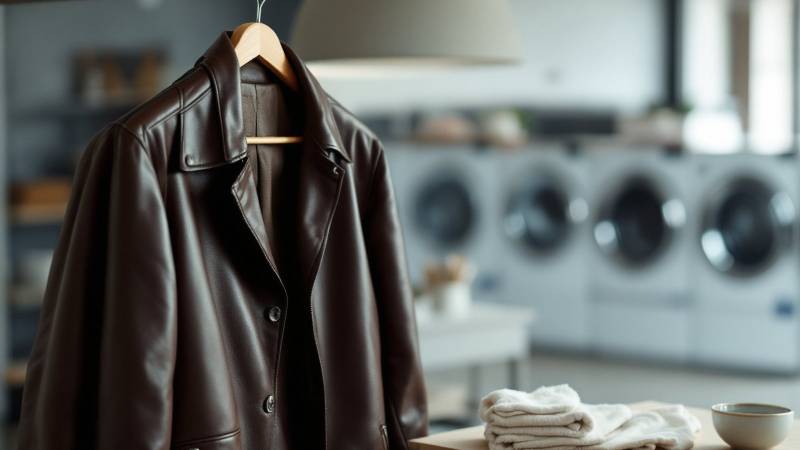
To clean a leather jacket at home, wipe smooth leather with a cloth dampened in mild soap and lukewarm water, then dry and buff it with a soft cloth (Washington State University Extension). Never soak it or dry it with heat: let a wet jacket air dry naturally (Iowa State University Extension).
Anything beyond surface dirt, such as ink, lipstick, set-in stains or an all-over clean, belongs with a leather specialist, because stain removal on leather can also remove its dye (Iowa State University Extension).
Key takeaways
- Wipe smooth leather with a damp cloth and mild soap in lukewarm water, then buff it dry with a soft cloth.
- Blot water-based spills right away and dry the jacket at room temperature, flexing it so it stays soft.
- Send ink, lipstick and old stains to a leather cleaner: home spotting can strip the dye.
- Brush mold off, wipe with water and detergent, then a 50/50 water and isopropyl alcohol mix, and condition it.
- Store it on a padded hanger in a cool, dark, ventilated closet, in a cloth bag, never plastic.
How can I clean my real leather jacket at home?
Home cleaning means surface cleaning: dust, light grime and fresh water-based spills on smooth leather. Washington State University Extension recommends wiping smooth leather with mild soap and lukewarm water, then drying and buffing it with a soft cloth.
- Check the label. Follow any care tag that came with the jacket; if it says leather clean, it means a professional who uses special leather or suede methods (the FTC Care Labeling Rule).
- Dust it. Wipe off loose dirt with a soft, dry cloth first; dust is abrasive and scuffs the surface when you rub it in (the National Park Service).
- Test a hidden spot. Try the soapy cloth inside a cuff or under the collar, since leather dyes can lift and spilled liquid can leave rings (Iowa State University Extension).
- Wipe, don't scrub. Use a cloth wrung out in mild soap and lukewarm water, a panel at a time (Washington State University Extension).
- Remove the soap. Follow with a cloth dampened in plain water, then buff dry with a soft cloth (Washington State University Extension).
- Air dry. Hang it at room temperature, away from heaters, sun and the dryer, and flex the leather as it dries so it doesn't stiffen (Washington State University Extension).
Suede is the buffed underside of the hide, so it isn't wiped: brush it with a soft brush instead (Iowa State University Extension). Our suede cleaning guide covers suede jackets and shoes.
How do you clean a leather jacket from a thrift store?
Inspect it first: white, gray or green fuzz is mold, which grows most often on heavily soiled skins (the National Park Service). If it's clean apart from dust, wipe it as above. If it smells musty, has stains or feels stiff all over, a full professional cleaning is the safer start, since home spotting can lift dye (Iowa State University Extension).
How do you get stains out of a leather jacket?
Act fast and match the method to the stain. Leather is absorbent, stains sink into the skin, and treatments that are safe on fabric can damage the hide or remove its color (Iowa State University Extension). Washington State University Extension sorts leather stains into three groups:
| Stain | What to do | Avoid |
|---|---|---|
| Water-based (rain, drinks, food) | Blot with a soft damp cloth before it dries, using a patting motion; dry at room temperature and flex the leather | Rubbing, heat |
| Oil and grease | Treat right away with a cleaning product made for leather, following its directions | Cleaning fluids, shoe creams and saddle soaps, which can leave soft garment leather sticky |
| Dye (ink, lipstick) | Take it to a professional cleaner | Home solvents and rubbing |
Perspiration around the collar and cuffs can discolor leather, and body oils can hide that color loss until the jacket is cleaned (Iowa State University Extension; Washington State University Extension). Wearing a scarf protects the collar (Iowa State University Extension).
For a stain you can't identify, or one that's already set, skip home remedies. Old, set stains can't always be removed safely, so point them out to the cleaner (Iowa State University Extension). A professional stain removal service can tell you whether it's treatable.
How do you clean mold off a leather jacket?
Mold on leather is salvageable if you clean it as soon as you notice it (University of Georgia Extension). Wear rubber gloves that reach mid-forearm, unvented goggles and an N-95 respirator (University of Georgia Extension; EPA).
- Brush off the spores with a soft-bristled brush or a clean cloth (University of Georgia Extension).
- Wipe the leather with a solution of water and a non-phosphate detergent, then wipe off the soapy residue (University of Georgia Extension).
- Wipe again with alcohol if needed: a 50/50 mix of water and isopropyl alcohol (University of Georgia Extension).
- Dry it thoroughly, then apply a leather conditioner (University of Georgia Extension).
Never mix bleach with ammonia or with acids such as vinegar (University of Georgia Extension). Mold grows on leather above 65% relative humidity (the National Park Service), so the fix is drier storage: EPA advises keeping indoor humidity below 60%, ideally 30% to 50%. For mildew on the lining or other clothes, see how to get mold out of clothes.
How do you condition and soften a leather jacket?
Conditioning puts back the lubricating oils, called fatliquors, that leather loses over its life, along with moisture (the University of Cincinnati's Leather Research Laboratory). Cleaning also strips some of the oils added in tanning, which is why professional leather cleaners use additives to restore suppleness (Iowa State University Extension).
- Test first. A product that doesn't suit the leather can cause finish peeling, cracking, color transfer and yellowing (the University of Cincinnati's Leather Research Laboratory).
- Use less, not more. Heavy dressings can darken light leather, oxidize and stiffen over time and attract dust, a lesson museums learned from their own collections (the National Park Service).
- Skip shoe products. Shoe creams and saddle soaps can make soft garment leather sticky (Washington State University Extension).
What is a good cleaner and conditioner for leather jackets?
Choose a cleaner and conditioner sold for garment leather, not shoes or saddles, and check it on a hidden spot (Washington State University Extension; the University of Cincinnati's Leather Research Laboratory). The jacket's own care tag, if it has one, comes first (Washington State University Extension).
How do you soften a leather jacket?
Stiffness usually comes from drying out or from drying it wrong. Flex the leather by hand while it dries after any wetting (Washington State University Extension), keep it out of dry heat, which dries leather out (Iowa State University Extension), and condition it lightly as above.
How do you get wrinkles out of a leather jacket?
Press it with the iron on its lowest setting, no steam, with heavy brown paper between the iron and the leather, one panel at a time and keeping the iron moving (Washington State University Extension). Many wrinkles are natural to the hide and reappear as the skins relax with age (Iowa State University Extension).
Are leather jackets supposed to be washed?
Usually not. Genuine leather needs special processing to keep its finish, feel and color (Washington State University Extension), and the leather clean label term means professional cleaning only (the FTC Care Labeling Rule). The exception is a jacket labeled washable.
Can you wash a leather jacket in the washing machine?
Only if its care label says it's washable leather. Washington State University Extension says those labels usually call for a mild detergent in lukewarm water on a gentle cycle; afterward, roll the jacket in a towel to remove water and dry it flat, away from heat and sunlight, flexing it as it dries. Never put leather in a dryer: wet leather should dry naturally (Washington State University Extension).
How do you clean a faux leather jacket?
Faux or synthetic leather is a fabric with a film coating, so the care label is the only reliable guide. Iowa State University Extension warns that some imitation leathers are fragile and won't survive dry cleaning: the coating or its adhesive can fail, leaving the fabric blistered, puckered or sticky. Unlike genuine leather, imitation leather garments fall under the FTC's care-label rule for textiles, which covers garments made primarily of fiber, yarn or fabric (the FTC Care Labeling Rule).
Are you supposed to dry clean leather jackets?
Not with ordinary dry cleaning. Leather isn't cleaned the same way as fabric: cleaners use special procedures and additives to hold color and texture, and sometimes redye it (DLI). Many cleaners send leather out to a specialist (Iowa State University Extension; DLI).
Go to a pro for an all-over clean, ink or lipstick, set-in or unknown stains, mold you can't brush off, or a heavily soiled jacket (Washington State University Extension; Iowa State University Extension). When you drop it off:
- Bring any care label or hang tag that came with it (Washington State University Extension).
- Point out every stain, visible or not, and what caused it (Washington State University Extension; Iowa State University Extension).
- Clean matching pieces together so the colors still match (Iowa State University Extension).
- Expect a consent form if cleanability is in doubt (Iowa State University Extension).
Even a good cleaning can make scars, veins, wrinkles and color differences in the hide more visible, and can cause slight shrinkage; that is the nature of leather, not poor work (DLI).
More than 4,100 laundromats in the LaundroMaps directory list dry cleaning as of October 2026 (LaundroMaps directory data). Ask a professional dry cleaner whether it handles leather in house or sends it to a specialist. If you're unsure which garments need a pro at all, see what to dry clean.
What can ruin a leather jacket?
Heat, humidity, plastic and the wrong products do most of the damage.
- Heat: radiators, hair dryers and clothes dryers stiffen and dry leather; let it dry naturally (Washington State University Extension; Iowa State University Extension).
- Humidity: hot, humid storage invites mildew (Iowa State University Extension), and mold grows above 65% relative humidity (the National Park Service).
- Plastic bags: leather needs air circulation, or it discolors and dries out (Washington State University Extension).
- Sun and light: they fade and stiffen it (Washington State University Extension).
- Dirt left on: soil becomes ingrained and age sets stains (Washington State University Extension).
- Pins and solvents: holes in leather are permanent (Washington State University Extension), and home solvents can strip dye (Iowa State University Extension).
How should you store a leather jacket?
Store it clean, on a padded hanger, in a cool, dark, ventilated closet, inside a cloth bag rather than plastic (Washington State University Extension). Take it out of the cleaner's plastic bag when you get home (DLI).
Frequently asked questions
Can I use Dawn dish soap to clean a leather jacket?
Extension guidance calls for a mild soap in lukewarm water on a damp cloth, followed by drying and buffing with a soft cloth. Test any soap on a hidden spot first, never soak the leather, and wipe off the soap residue.
Can I use baby wipes on leather?
None of the sources we read recommend baby wipes for leather. The method they give is a cloth dampened with mild soap and lukewarm water, then a soft cloth to dry and buff.
What is the lifespan of a leather jacket?
No standard lifespan exists, because care decides it. Washington State University Extension notes that the care a leather garment gets determines its wear life: keep it clean, dry it away from heat, and store it ventilated.
What kills leather jackets?
Heat, humidity above about 65%, plastic storage bags, strong sun, ingrained dirt and the wrong solvents. Each one dries, stains, fades or stiffens the leather.
How often should you clean a leather jacket?
Check it after each wearing and treat any spill right away. Don't let it get too dirty: soil becomes ingrained and stains set with age.
How we researched this
We read university extension guides on leather garments (Washington State University Extension, Iowa State University Extension) and mold cleanup (University of Georgia Extension), guidance from EPA, the National Park Service and DLI, the FTC care labeling rule, and testing notes from the University of Cincinnati's Leather Research Laboratory, and cited every one. We prioritised extension and agency guidance over brand advice and left out any tip we couldn't source, including vinegar and lining cleaning. We didn't test these methods ourselves. Researched October 2026.
Sources
- Washington State University Extension -- Care of Leather & Suede Garments (EM4335)
- Iowa State University Extension and Outreach -- Leather Care Tips (AnswerLine)
- Federal Trade Commission (16 CFR Part 423) -- Care Labeling of Textile Wearing Apparel and Certain Piece Goods
- National Park Service -- Museum Handbook Appendix S: Curatorial Care of Objects Made From Leather and Skin Products
- University of Georgia Cooperative Extension -- Removing Mold in Your Home (C1047-2)
- U.S. Environmental Protection Agency -- A Brief Guide to Mold, Moisture and Your Home
- Leather Research Laboratory, University of Cincinnati -- Leather Conditioner and Cleaner Testing
- Drycleaning & Laundry Institute International -- Simple Answers to Common Questions
- Drycleaning & Laundry Institute International -- Leather & Suede Cleaning
- LaundroMaps directory data -- 13,000+ US laundromat listings, October 2026
Related guides
- Smoke smell in clothes and leather: what works and what to skip.