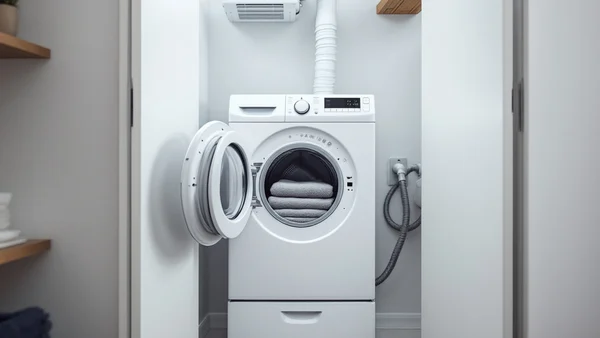
Dryer Not Heating? Common Causes and Safe Fixes

LaundroMaps Team
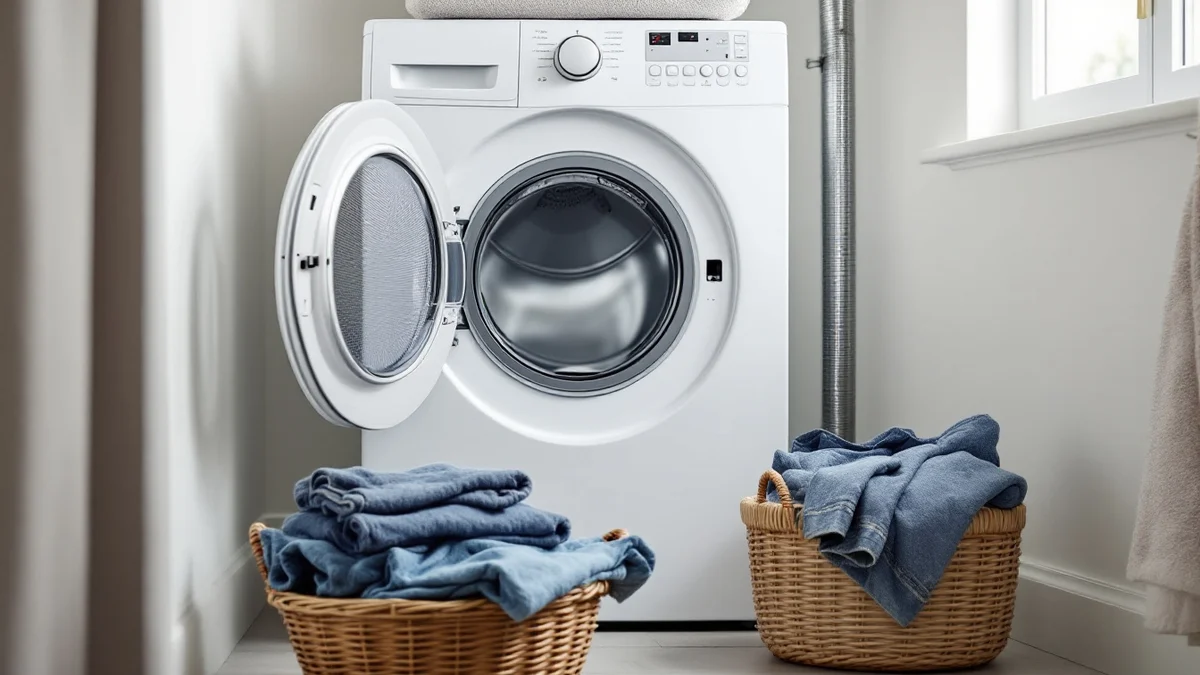
If your dryer runs but won't heat, check the cycle setting, both breakers on an electric dryer, the gas valve on a gas dryer, and the lint screen and vent (Maytag; Samsung). If those pass, the likely cause is a blown thermal fuse or a failed heating element or burner, a job for a technician (Whirlpool).
Don't keep running a dryer that heats but takes far longer than normal: that points to a blocked vent, and lint buildup is the leading factor in home dryer fires (U.S. Fire Administration).
Key takeaways
- Test for heat first: run an empty heated timed cycle for 5 minutes, then feel inside the drum.
- Electric dryers run on two breakers; if only one trips, the drum spins but the heater stays cold. Switch the breaker off for 30 seconds, then back on.
- On a gas dryer, the valve is open when its handle runs parallel to the gas pipe.
- Hot but still damp usually means a clogged lint screen or vent, an overloaded drum (fill it about 3/4 full) or clothes that came out of the washer soaking wet.
- A thermal fuse is a one-time safety device: if it blew, clear the airflow problem that caused it before the dryer is used again.
Is your dryer heating at all?
Find out before you troubleshoot, because "no heat" and "weak heat" have different causes. Maytag suggests selecting a heated timed cycle, running it empty for 5 minutes, then opening the door and feeling inside (Maytag). Samsung uses a shorter version: Time Dry with Eco Dry off, then check after 30 seconds (Samsung).
Samsung's support guide says that if there is any warmth at all, service is almost never required; heater failure usually means no heat at all (Samsung). Match what you find to the table.
| What you notice | Most likely cause | Check first |
|---|---|---|
| Drum turns, air is cold | No-heat cycle, a tripped breaker, a closed gas valve, a failed part | Cycle setting, then breakers or gas valve |
| Warm, but drying takes much longer than it used to | Restricted airflow: lint screen or vent | Lint screen, then the vent run |
| Cycle ends quickly, clothes still wet | Dirty moisture sensors or too small a load | Sensor bars inside the drum |
| Hot, clothes come out damp | Overloaded drum or soaking-wet clothes from the washer | Load size and the washer's spin |
The table follows the makers' own troubleshooting guides (Samsung; Whirlpool).
Why is my dryer running but has no heat?
A dryer that tumbles but blows cold air is usually not getting the right setting, power or fuel to its heater. Work through these checks in order; each one is in the makers' own guides (Maytag; GE Appliances; GE Appliances; Samsung).
- The cycle. Air Only or Air Fluff adds no heat at any point, and a GE dryer must be on a dry cycle, not fluff or cool down (Maytag; GE Appliances). On Samsung models, Eco Dry runs the start of the cycle without heat and switches on by itself for Normal and Time Dry (Samsung).
- The breakers (electric). Electric dryers need a 240-volt supply on a 30-amp circuit with 2 breakers: one for the motor and one for the heating element (Maytag). If only one trips, the dryer turns on and spins but won't heat (Samsung).
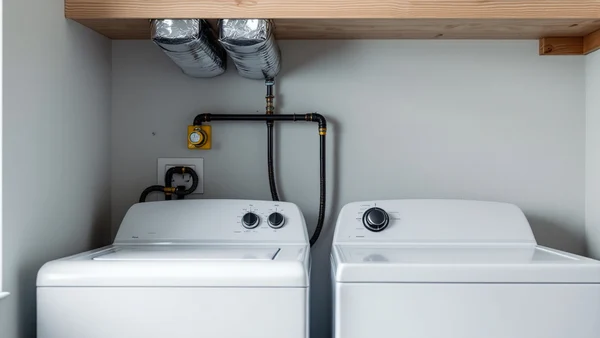
- The gas valve (gas). The drum of a gas dryer turns even when the shutoff valve is closed, but there's no heat. The valve is open when the handle is parallel to the pipe (Maytag).
- The installation. If the dryer has never heated since it was installed or moved, the setup is the likely cause, not a broken part (Samsung).
- The airflow. Clean the lint screen and make sure the front of the dryer isn't blocked (GE Appliances; Whirlpool).
Why is my electric dryer not getting hot?
Power is the usual answer. GE Appliances says an electric dryer can run on a partial 120 volts but won't heat without its full 208- or 240-volt supply, and a breaker can be partly tripped even when it doesn't look tripped (GE Appliances). GE also lists a burned, broken or loose power cord at the terminal block on the back; if you see scorched wires, both the cord and the terminal connections need replacing (GE Appliances). Unplug the dryer before you look, and leave wiring repairs to an electrician or technician.
Why is my gas dryer not heating up?
A gas dryer still needs electricity: GE Appliances says it should be on its own dedicated 120-volt outlet (GE Appliances). After that, confirm the gas line is turned on, especially on a new installation. If gas is on and the dryer runs but doesn't heat, GE's advice is to call for service (GE Appliances).
If you smell gas, stop troubleshooting. Leave the building, move at least 350 feet away, and call your gas utility or 911 from there. Don't use light switches or phones, or pull plugs, on the way out (PSE&G).
How do you reset a dryer that won't heat?
For most home dryers, the reset is the breaker. Turn it off, wait 30 seconds, and turn it back on; that confirms both circuits are on (Samsung; GE Appliances). Whirlpool suggests unplugging the dryer while you reset both breakers (Whirlpool).
Why is my dryer not drying clothes but getting hot?
If the air is hot but the load stays damp, moisture isn't leaving the drum. Whirlpool names a dirty lint screen, a crushed or blocked vent, an overloaded drum and soaking-wet clothes as the common reasons (Whirlpool).
- Lint screen: clean it after every load, and scrub it with a nylon brush, hot water and liquid detergent every 6 months (Whirlpool).
- Load size: fill the drum only about 3/4 full so hot air can circulate (Whirlpool).
- Wet clothes: if they come out of the washer dripping, run another spin cycle before drying (Whirlpool).
- Moisture sensors: on sensor cycles, two metal bars near the lint filter end the cycle when they read the load as dry. Dryer-sheet residue can fool them; wipe them with a soft cloth and a drop of dish soap (Samsung).
- Tiny loads: Samsung puts the minimum at about 4 regular bath towels, so the sensors can tell the load is still wet (Samsung).
A blocked vent can also look like a heating fault. Samsung says its dryers reduce or cut heat when they detect that heat and moisture aren't leaving, to prevent overheating and vent fires (Samsung). Samsung's vent rules: sealed joints, no plastic or foil duct, no kinks, and each 90-degree turn takes 6 feet off the maximum length (Samsung). For the cleaning itself, see how to clean a dryer vent.
Why is my Whirlpool dryer not drying my clothes?
Whirlpool's own guide starts with the lint screen and the house vent, then load size and wet clothes, before any part fails (Whirlpool). It says the vent to the outside should be cleaned every 1 to 2 years, or sooner if drying slows (Whirlpool). Maytag, a Whirlpool brand, gives the same interval (Maytag).
Why isn't my Samsung dryer heating?
Check for an error code first, then Eco Dry, which runs without heat at the start of Normal and Time Dry cycles (Samsung). Many Samsung models also have a built-in vent blockage test: with the drum cool and empty, press Adjust Time Up and Dry Level until "In" or "Ins" shows, then hold Start/Pause (Samsung). A result of "0" or "End" means the duct is clear; "CLg", "Cg", "C80" or "C90" means a clog (Samsung).
Can a clogged dryer vent cause a fire?
Yes. Lint blocks airflow, causes heat to build up and can start a fire, according to the CPSC (CPSC). The U.S. Fire Administration estimates 2,900 home clothes dryer fires a year, causing about 5 deaths, 100 injuries and $35 million in property loss; failure to clean was the leading factor, in 34 percent of them (U.S. Fire Administration). NFPA counted an average of 15,970 home fires a year involving dryers or washers in 2010-2014, and 92 percent involved dryers (NFPA).
The warning signs are the same ones that make people search for a dryer that isn't heating:
- Long drying times: jeans and towels taking much longer than they used to (U.S. Fire Administration).
- Damp clothes at the end of a normal cycle, which can mean a blocked lint screen or exhaust duct (CPSC).
- Clothes hotter than usual at the end of the cycle (U.S. Fire Administration).
- Little or no air at the outside vent while the dryer runs, or a vent flap that doesn't open (CPSC; NFPA).
NFPA's tips: clean lint out of the vent pipe once a year, or sooner if drying slows, don't overload the dryer, and turn it off when you leave home or go to bed (NFPA). CPSC recommends rigid or semi-rigid metal duct over plastic or foil accordion duct, which kinks and traps lint more easily (CPSC). Have a gas dryer's line and connection checked by a professional (NFPA); USFA says once a year (U.S. Fire Administration).
Which parts stop a dryer from heating?
Once settings, power, gas and airflow check out, the fault is usually inside the cabinet. Whirlpool names the main ones (Whirlpool):
- Thermal fuse: a safety device every dryer must carry. It trips once when the dryer gets too hot and has to be replaced before the dryer can run again.
- Heating element (electric): the coil that heats the air. If it's damaged, the dryer can't heat.
- Burner (gas): does the same job on a gas dryer.
Reaching any of these means taking the dryer apart, so Whirlpool recommends a professional once the simple checks fail (Whirlpool). A blown fuse is also a symptom: reduced airflow from lint buildup is what makes a dryer overheat (U.S. Fire Administration), so clear the vent before a new fuse goes in.
Is it worth replacing a dryer heating element?
Get a diagnosis before you decide: a cold dryer can be a fuse, an element, power or the vent, and only the first two need parts (Whirlpool; Samsung). Whirlpool notes that heating problems show up mostly in older machines (Whirlpool), so weigh the quote against the dryer's age. If you're replacing it anyway, our gas vs electric dryer guide compares running costs.
How do you know if your dryer is broken?
Your dryer probably needs a technician when it fails the heat test after every check above. The makers draw the line in similar places (Samsung; GE Appliances; Whirlpool):
- No heat at all with the vent test passed, the cycle right and both breakers on (Samsung).
- An error code on the display; on Samsung models, some codes mean service is needed and no other troubleshooting applies (Samsung).
- Gas on, dryer running, still no heat (GE Appliances).
- A burned or loose power cord at the terminal block (GE Appliances).
Use the brand's own service line or an authorized technician; parts and labor prices vary by model and area, so ask for the diagnosis fee before the visit.
What can you do with wet laundry while the dryer is down?
Take it to a laundromat and dry it there the same day. More than 4,000 laundromats in the LaundroMaps directory list large-capacity machines, as of October 2026 (LaundroMaps directory data). To find a laundromat near you, search by city or ZIP; some laundromats with free dry include the dryer with a wash.
If the repair will take a while, a wash-and-fold service hands the whole job off. For a small load at home in the meantime, see how to dry clothes fast without a dryer.
Frequently asked questions
What is the most common problem with Samsung dryers?
Samsung's own support guide points to the vent: when a dryer heats but runs long, a clogged exhaust vent is the likely cause, and it says service is very rarely needed. Eco Dry, which runs without heat at the start of common cycles, is another frequent reason a Samsung dryer seems cold.
How hard is it to fix a heating element in a Samsung dryer?
Reaching the heating element means taking the dryer apart, which is why makers such as Whirlpool recommend a professional. Run the heat test and the vent blockage test first, since a cold dryer is often a setting, breaker or vent problem rather than the element.
How much does it cost to fix a dryer heating element?
It depends on the model, the part and local labor rates, so we don't quote a figure. Ask the technician for the diagnosis fee up front, and confirm the fault is the element and not the thermal fuse, the power supply or the vent.
My Electrolux dryer isn't drying. What can I do?
The same checks apply to any brand: clean the lint screen, check the vent run for kinks and lint, fill the drum only about three quarters full, and spin out soaking-wet clothes first. If the air is cold, check the cycle, the breakers or the gas valve, then call the brand's service line.
Why is my dryer blowing air but not heating?
The blower runs on a separate circuit from the heater, so the drum can spin and blow air while the heater gets nothing. Check for a no-heat cycle, then a tripped breaker on an electric dryer or a closed gas valve on a gas dryer.
How we researched this
We read the dryer makers' own troubleshooting pages for their machines (Maytag, Whirlpool, GE Appliances and Samsung), fire-safety guidance and data from the U.S. Fire Administration, CPSC and NFPA, and a gas utility's leak instructions, and cited 10 sources plus LaundroMaps directory counts. We kept the steps to what an owner can safely check and left parts testing to technicians. We don't repair or test dryers ourselves. Researched October 2026.
Sources
- Maytag -- Dryer is Not Heating (Product Help)
- Samsung -- Clothes are not dry after using Samsung dryer
- Whirlpool -- Dryer Not Heating: Troubleshooting Guide
- U.S. Fire Administration -- Clothes Dryer Fires in Residential Buildings (2008-2010)
- GE Appliances -- Electric Dryer - Runs But Does Not Heat
- GE Appliances -- Gas Dryer - Runs But Does Not Heat
- PSE&G -- I Smell Gas/Report a Gas Leak
- U.S. Consumer Product Safety Commission -- Overheated Clothes Dryers Can Cause Fires (Publication 5022)
- National Fire Protection Association -- Home Fires Involving Clothes Dryers and Washing Machines
- National Fire Protection Association -- Clothes Dryer Safety Tip Sheet
- LaundroMaps directory data -- 13,000+ US laundromat listings, October 2026