Steamer vs. Iron: Which Is Better for Your Clothes?

LaundroMaps Team
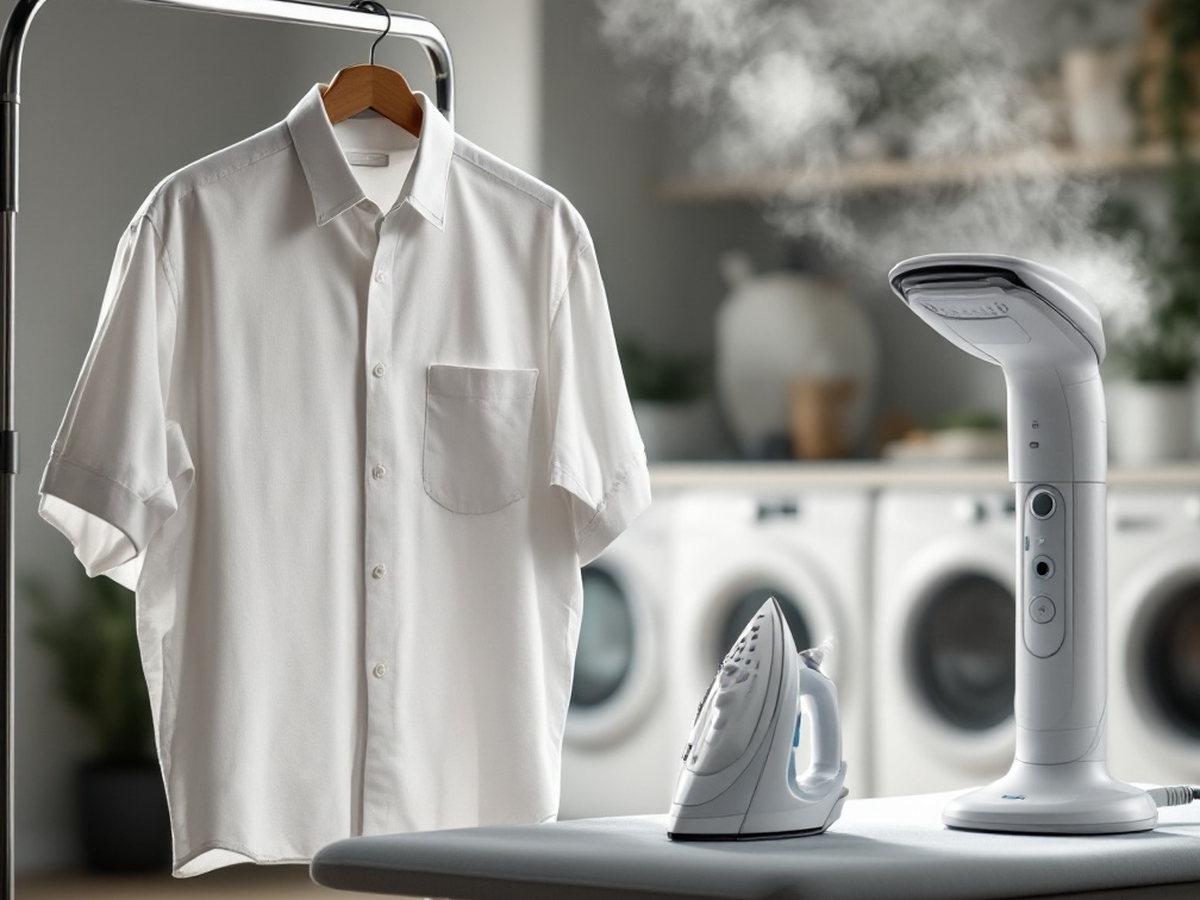
Use an iron when you want a crisp, flat finish (dress shirts, pleated trousers, sheets, cotton and linen) and a steamer for quick touch-ups on hanging knits, dresses, blouses and wool (Rowenta). The difference is pressure: pressing smooths fabric with heat, moisture and pressure (Oregon State University Extension), while a steamer works on hanging fabric and leaves a softer, drapey finish (Rowenta).
Most closets need both, or one tool plus a pressing service for the shirts that have to look sharp. The one mistake to avoid: overfilling a steamer, which can make it spit hot water (CPSC).
Key takeaways
- Iron dress shirts, pleats, sheets and table linens; steam knits, dresses, blouses and wool between wears.
- Set the iron for the most heat-sensitive fiber in a blend: cotton and linen take up to 200°C (392°F), nylon and spandex only 110°C (230°F).
- Steam from 1 to 2 inches away with slow downward strokes while you pull the hem taut.
- Fill a steamer only to its line and keep it upright: overfilled and tilted steamers can spit hot water.
- Check the care label first: a crossed-out steam symbol means no steam at all.
Is it better to steam your clothes or iron them?
Neither tool wins on every garment. Rowenta, which makes both, recommends an iron for heavyweight outerwear, pleated skirts and trousers, dress shirts, sheets, table linens and sewing projects, and a steamer for lightweight blouses, knits, dresses, skirts and travel. Extension pressing guides add the fabric detail that decides most close calls (Oregon State University Extension).
| Garment or job | Better tool | Why |
|---|---|---|
| Dress shirts, collars, cuffs | Iron | Pressure and spray starch set a crisp line (UF/IFAS Extension) |
| Pleated skirts, trouser creases | Iron | A steamer can't press a sharp fold (Rowenta) |
| Sheets, napkins, table linens | Iron | Flat items, flat finish (Rowenta) |
| Knits, blouses, dresses | Steamer | Hanging steam relaxes wrinkles without flattening (Rowenta) |
| Velvet, corduroy, other pile | Steamer | Pile needs lots of steam and very little pressure (Oregon State University Extension) |
| Wool suits and coats between wears | Steamer or steamy bathroom | Steam moisture releases wrinkles in wool (The Woolmark Company) |
| Linen | Iron for crisp, steamer for relaxed | Linen presses best damp, at high heat (Oregon State University Extension) |
Rowenta lists linen and denim on its steamer side, while Oregon State's guide treats linen like cotton that needs even more heat and moisture (Rowenta; Oregon State University Extension). Both are right: a steamer takes the worst creases out of a linen shirt, and only an iron gives it a pressed look.
How do steamers remove wrinkles?
Steam softens the fibers so gravity and a gentle pull can straighten them. Whirlpool describes steam as penetrating fabric to release wrinkles, and The Woolmark Company says the moisture alone is enough to loosen creases in wool garments hung in a steamy bathroom.
An iron's hot metal plate adds the third ingredient. Pressing uses heat, moisture and pressure together, and the pressure is what flattens fabric and sets a fold (Oregon State University Extension). That is why ironing gives a crisp finish and steaming a free-flowing one (Rowenta).
Ironing vs pressing
UF/IFAS Extension separates the two: ironing slides the iron back and forth to remove wrinkles, while pressing lifts and lowers it on one spot. Use pressing on wool, seams and anything that stretches.
Steam iron vs dry iron
A steam iron only makes steam when it is set hot enough. For a fabric that needs a lower setting than the steam range, use the iron dry over a dampened press cloth instead (Oregon State University Extension).
Steamer or iron: which suits each fabric?
Start with the care label and the fiber. Canada's care-symbol guide sets the iron limits most labels use: one dot is no hotter than 110°C (230°F), two dots 150°C (302°F) and three dots 200°C (392°F) (Canada's Office of Consumer Affairs). For a blend, use the setting for the most heat-sensitive fiber, so a polyester-cotton shirt gets the polyester setting (UF/IFAS Extension).
| Fabric | Iron | Steamer |
|---|---|---|
| Cotton | 3 dots, 200°C max; press until dry, darks on the wrong side (Canada's Office of Consumer Affairs; Oregon State University Extension) | Fine for casual cotton; won't give a crisp collar |
| Linen | 3 dots, more heat and moisture than cotton (Canada's Office of Consumer Affairs; Oregon State University Extension) | Good for a relaxed look (Rowenta) |
| Wool | 2 dots, always with steam and a press cloth; never fully dry (The Woolmark Company; Oregon State University Extension) | Good between wears; hang in a steamy room (The Woolmark Company) |
| Silk | 2 dots, light touch on the wrong side, little or no moisture (Canada's Office of Consumer Affairs; Oregon State University Extension) | Test first: moisture can leave water spots (Oregon State University Extension) |
| Polyester, rayon | 2 dots, 150°C max (Canada's Office of Consumer Affairs) | Good on hanging garments |
| Nylon, acrylic, spandex | 1 dot, 110°C max; can melt or glaze (Canada's Office of Consumer Affairs; Oregon State University Extension) | Safer than a hot soleplate |
| Velvet, corduroy | Never on the right side; lots of steam, little pressure (Oregon State University Extension) | Best choice |
Silk is the one fabric where the guidance splits. Oregon State's extension guide warns that moisture can spot it, while Rowenta says to steam delicate silk and lace from the inside without direct contact. Test a hidden seam allowance first, and take valuable silk to a professional.
What do the iron symbols on a care label mean?
An iron with dots gives the maximum heat, an iron with crossed-out steam lines underneath means do not steam, and a crossed-out iron means do not iron or press (Canada's Office of Consumer Affairs). The full chart of washing, drying and ironing symbols is in our laundry symbols guide.
How do you steam clothes properly?
Hang the garment, pull it taut and move the steam head slowly downward. These steps follow Rowenta for handheld steamers and the Jiffy Steamer manual for upright models.
- Fill to the line, not past it. Use the water your manual names; overfilling makes water spill from the nozzle and underfilling can make it spurt (Rowenta).
- Wait for the ready light. One professional upright model makes live steam from cold water within 2 minutes (Jiffy Steamer).
- Hang it on a sturdy hanger on a door, shower rod or chair back (Rowenta).
- Hold the hem and pull the fabric gently downward to tension it (Rowenta).
- Keep the head 1 to 2 inches away and move it slowly in long downward strokes (Rowenta).
- Keep an upright steamer upright. Steam with a vertical up-and-down motion; tilting it can discharge hot water (Jiffy Steamer).
- Let it dry on the hanger before you wear it, or new wrinkles form (Rowenta).
How to steam a dress shirt
Use the collar and cuff attachment if your steamer has one, then work the front panels, back and sleeves from the top down (Rowenta). A steamed shirt looks smooth but soft. For a sharp collar and placket, follow our guide to ironing a dress shirt.
Can you steam dry-clean-only clothes?
Only after a test. Rowenta advises against steaming dry-clean-only garments unless you have tried a small hidden corner first, and a label with the crossed-out steam symbol rules it out (Canada's Office of Consumer Affairs). For tailored jackets, structured dresses and anything with a stain, a professional dry cleaner is the safer choice. Our guide to what to dry clean explains which labels to take seriously.
How to steam clothes without a steamer
- Shower steam: hang the garment in a steamy bathroom; The Woolmark Company recommends this for wool after travel or wear.
- A steam dryer: a steam refresh cycle is meant for dry, lightly worn shirts, blouses and slacks; Whirlpool's cycle guide says not to add dryer sheets (Whirlpool).
- A dry iron and a damp cloth: lay a dampened press cloth over the fabric to supply the moisture (Oregon State University Extension).
What are the disadvantages of using a steamer?
A steamer trades crispness and some safety margin for speed. These are its five real drawbacks, from makers' guidance, extension guides and federal safety reports (Rowenta; Oregon State University Extension; CPSC).
- No sharp creases. Steam can't press a trouser crease, a pleat or a crisp collar; an iron is still the choice for a sharp finish (Rowenta).
- Hot-water burns. CPSC found that two travel steamer models expelled hot water when overfilled by a small amount, with 92 hot-water reports and 30 burn injuries for one model (CPSC). A December 2025 recall covered about 2,840 steamers whose tank caps could detach (CPSC).
- Water spots. Silk and crepe should get little or no moisture (Oregon State University Extension).
- Mineral scale. Hard tap water leaves deposits inside steam appliances (Rowenta).
- It doesn't clean. Steam freshens and removes wrinkles; it does not remove soil or stains.
Irons have their own trade-offs: they need a board or a flat padded surface, and too much heat can scorch, melt or glaze synthetics or leave shine on wool (UF/IFAS Extension; Oregon State University Extension). A press cloth prevents most of that (UF/IFAS Extension).
Before you buy a steamer, check the model on the CPSC recall list for clothes steamers (CPSC). Never point steam at skin, and never leave a plugged-in steamer unattended or within reach of children (Jiffy Steamer).
Does steaming clothes clean them?
It refreshes them. Whirlpool says moisture combined with heat helps reduce odor in lightly worn clothes, and The Woolmark Company recommends airing wool for an hour to clear food or smoke smells. Neither replaces a wash: sweat, stains and soil still need detergent and water.
Can you use tap water in a steam iron or steamer?
Usually yes, but your model's manual decides. Rowenta says many of its irons are built for untreated tap water, suggests a 50/50 mix of tap and distilled water for certain models in very hard-water areas, and does not recommend 100% distilled water for most modern irons. The upright Jiffy Steamer steamer takes tap or distilled water.
Rowenta's steamer guide, by contrast, suggests distilled water to prevent mineral buildup (Rowenta). The rule that covers both: use what the manual for your appliance says.
Can a steamer really replace an iron?
For some wardrobes, yes. If you wear mostly knits, dresses, blouses and casual clothes, a steamer handles the everyday wrinkles (Rowenta). If you wear dress shirts or pleated trousers, sew, or iron sheets and table linens, you still need an iron (Rowenta; Oregon State University Extension).
Is a hand-held steamer good?
A handheld steamer is good for touch-ups and travel because it is compact and needs no ironing board (Rowenta). Its small tank means more refills, and small travel models feature in recent CPSC burn warnings, so fill them only to the line (CPSC).
Is it worth having a steamer?
It is worth it if you steam several garments a week that an iron would flatten or scorch: knits, dresses, wool jackets, velvet (Rowenta; Oregon State University Extension). If most of what you own is cotton shirts and trousers, a good steam iron does more of the work.
When is a pressing service the better choice?
When the shirt has to look sharp and you don't have the time. Care labels are written for an iron by hand or a press on commercial equipment (Canada's Office of Consumer Affairs), and more than 1,300 laundromats in the LaundroMaps directory list ironing and pressing among their services, as of October 2026 (LaundroMaps directory data). Hand dress shirts and trousers to an ironing and pressing service, and dry-clean-only suits to a dry cleaner.
If you iron at home, dampen the shirt first, use spray starch to hold creases, and handle the garment as little as possible afterward (UF/IFAS Extension). For wool, press with steam through a press cloth instead of sliding the iron (The Woolmark Company; Oregon State University Extension). Our wool care guide covers washing before you press.
Frequently asked questions
Which steamer is best for home use?
Match the steamer to the job. A handheld steamer suits touch-ups and travel, while a larger upright model suits steaming many garments in one session. Whatever you choose, check the model against the CPSC recall list for clothes steamers and fill it only to the line.
What are the 5 disadvantages of steaming clothes?
Steaming can't press sharp creases, an overfilled or tilted steamer can spit hot water, moisture can spot silk and crepe, hard water leaves mineral scale, and steam freshens clothes without actually cleaning them.
Can you steam linen clothes?
Yes. A steamer takes the worst wrinkles out of linen and leaves a relaxed look. For a crisp, pressed finish, iron linen damp at the hottest setting the label allows.
Will dry cleaners steam clothes?
Dry cleaners and laundromats with a pressing service finish garments on commercial equipment, which is the pressing that care labels describe. It is the simplest route for dress shirts, suits and dry-clean-only pieces.
Is a steamer or an iron safer for delicate fabrics?
A steamer avoids the hot soleplate that can melt synthetics or shine wool, so it is usually the gentler choice. Silk is the exception to test: moisture can leave water spots, so try a hidden seam first.
How we researched this
We read extension pressing guides from Oregon State University and the University of Florida, Canada's official care-symbol guide, The Woolmark Company's wool care advice, and makers' instructions for their own steamers, irons and steam dryers (Rowenta, Jiffy Steamer, Whirlpool). Safety points come from CPSC recall and warning notices, and the pressing-service count comes from the LaundroMaps directory in October 2026. We did not test or rank any steamer or iron, and this guide names no products to buy. Researched and published October 15, 2026.
Sources
- Rowenta -- How to Use a Clothes Steamer: Rowenta's Beginner's Guide
- Oregon State University Extension -- Oregon 4-H Clothing Construction Fact Sheets: Pressing Skills (4-H 320-14)
- U.S. Consumer Product Safety Commission -- CPSC Warns Consumers to Stop Using PurSteam Elite Travel Steamers and Mighty Lil Steamers Immediately Due to Risk of Serious Burn Injury
- University of Florida IFAS Extension -- Life Skills in a Minute: Ironing versus Pressing (4H415)
- The Woolmark Company -- Caring for Wool
- Whirlpool -- What Is a Steam Dryer?
- Government of Canada, Office of Consumer Affairs -- Guide to Apparel and Textile Care Symbols
- Jiffy Steamer Company -- Jiffy Steamer Owner's Manual
- Whirlpool -- Dryer Cycle Guide
- U.S. Consumer Product Safety Commission -- Clothes Steamers: Sanven Technology Recalls VEVOR Steamers Due to Risk of Serious Injury from Burn Hazard
- Rowenta -- Distilled Water vs Tap Water in Steam Irons: What Should You Use?
- LaundroMaps directory data -- 13,000+ US laundromat listings, October 2026
Related guides
- How to get wrinkles out without an iron: dryer, shower steam, spray and fabric-by-fabric fixes.