How to Wash Wool Sweaters and Blankets Without Shrinking

LaundroMaps Team
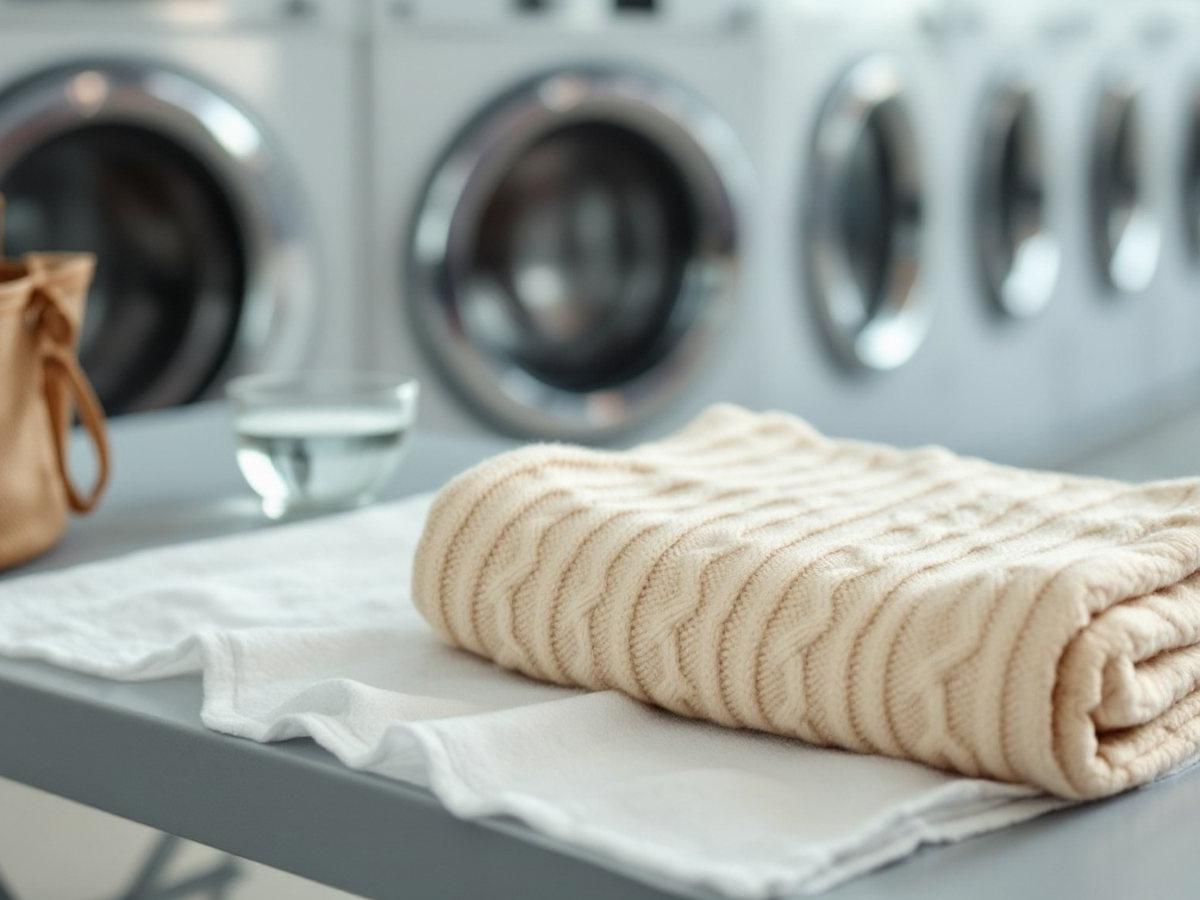
Wash wool only the way its care label allows: machine-washable wool goes on the wool cycle, or a cold delicates cycle, with a mild detergent; hand-wash wool gets lukewarm water around 30°C (86°F) and a 10-minute soak (Woolmark). Dry it flat, and never rub, wring or tumble it hot: heat plus agitation is what felts and shrinks wool (SDSU Extension).
Key takeaways
- Read the label first: only wool labeled machine washable belongs in a washer, on the wool cycle or a cold delicates cycle.
- Hand wash in lukewarm water around 30°C (86°F) with a mild detergent, soak about 10 minutes, and squeeze, never wring.
- Shrinking is felting: water, heat and agitation make the fiber scales lock together.
- Dry knits flat on a towel away from direct heat; tumble dry only if the label says so, and then on low.
- Skip enzyme ("bio") detergents and every bleach, chlorine or oxygen.
Can you wash wool in the washing machine?
Yes, if the care label says machine wash; if it says hand wash or dry clean, follow that instead (Woolmark; American Wool). Under the FTC Care Labeling Rule, a label's instructions must not cause substantial harm when you follow them, so the label is your safest guide. A tag that says "For best results, dryclean" means washing is possible but dry cleaning may keep it looking better (FTC).
For a machine-washable sweater, Woolmark and American Wool give the same basic recipe:
- Prep it. Empty pockets, close zips and buttons, and turn the garment inside out (Woolmark).
- Pick the cycle. Use the wool setting, usually gentle action at 40°C (104°F); without one, choose a cold or delicates cycle (Woolmark; American Wool).
- Keep the load small. The very-mild-wash care symbol calls for a drum no more than one-third full (American Wool).
- Use a mild detergent with no bleach, and dissolve powder before it touches the wool (American Wool; Woolmark).
- Dry flat unless the label allows tumble drying (Woolmark).
At a self-service laundromat, the washers rarely have a wool button. Choose the delicate or gentle setting with cold water, wash wool on its own, and keep it away from the dryers unless the label says tumble dry (Woolmark; Woolmark).
What do the wool care symbols mean?
American Wool lists the care symbols you will see most on wool labels and what each one asks:
| Symbol | What to do |
|---|---|
| Hand wash | Hand wash between 30°C (86°F) and 40°C (104°F); don't rub, pull or wring |
| Very mild wash | Machine wash at 30°C or 40°C on a wool or delicates cycle, drum one-third full |
| Do not wash | No washing of any kind |
| Professional dry cleaning | Dry clean only |
| Do not tumble dry | Air dry; no dryer |
| Mild drying process | Tumble dry with reduced heat and time |
| Iron at moderate temperature | Up to 150°C (300°F), under a damp pressing cloth |
For every other symbol, see our laundry symbols guide.
How do you hand wash a wool sweater?
Give it a short lukewarm soak, a gentle squeeze and a careful rinse, with no rubbing or wringing at any point (Woolmark; American Wool).
- Fill a clean sink or tub with lukewarm water, about 30°C (86°F), and dissolve a mild detergent in it first (Woolmark; American Wool).
- Submerge the sweater inside out and let it float; move it around gently (Woolmark; American Wool).
- Soak it. Woolmark says 10 minutes; American Wool says 3 to 5 minutes. Squeeze suds through it without twisting.
- Rinse twice in clean water until no suds remain (American Wool).
- Press out the water. Squeeze gently, then roll the sweater in a towel or press it between two towels (American Wool).
- Dry it flat, shaped to size, away from sun and direct heat (American Wool; Woolmark).
Should the rinse water be cold?
The sources differ. Woolmark rinses first in lukewarm water and finally in cold, while American Wool says to rinse in water the same temperature as the wash. Either works if you don't agitate; matching the temperature is the more cautious choice.
The same method works for jeans, bras and other hand-wash items; see how to hand wash clothes.
Why does wool shrink, and does 100% wool shrink when washed?
Wool shrinks by felting: each fiber is covered in overlapping scales, and that surface creates a directional friction effect that makes fibers creep and lock together during washing (a 2025 textile-chemistry study). Agitation, rubbing and warm water drive it, which is why extension guidance for washable wool is little agitation, lukewarm water and no rubbing (SDSU Extension).
So yes, untreated 100% wool can shrink in water. Pendleton warns that wool not labeled washable can shrink 3 to 6 inches in even a mild wash, with more each time, and stiffen permanently.
Machine-washable wool is different. Makers treat it to cover or remove the scales, most often with a chlorine-and-resin process (a 2025 textile-chemistry study). Pendleton pre-washes its washable shirts with a shrink-resistant finish, and Woolmark-approved machine-wash garments are tested to survive repeated washing without shrinking (Woolmark).
Can I wash 100% wool in cold water?
Yes. Cold water is the fallback when a washer has no wool cycle (Woolmark), and Pendleton washes its washable blankets cold (Pendleton). Cold alone won't protect unwashable wool, though: agitation still felts it (SDSU Extension; a 2025 textile-chemistry study).
What if it already shrank?
Felting is hard to reverse, and Pendleton calls the stiffening permanent. Our guide to unshrinking clothes covers what is worth trying.
How do you dry wool without stretching or shrinking it?
Dry wool knits flat at room temperature; hang only woven pieces like trousers and jackets (Woolmark).
- Lay it on a pale, lint-free towel or a mesh drying rack, and knead it back to its size and shape (Woolmark).
- Don't hang wet knits. The weight of the water stretches them longer and out of shape (Woolmark).
- Keep it away from heat. No radiators, direct sun or sun through a window; heat can change the color or damage the fiber (Woolmark).
- Tumble dry only if the label says so, on low or a wool setting (Woolmark).
A laundromat dryer is fine for wool only under that last rule. Everything else should go home damp and dry on a towel.
Which detergent should you use on wool?
Use a mild detergent with a near-neutral pH, such as a wool wash (Woolmark). Woolmark lists what to avoid:
- Enzyme ("bio") detergents. Enzymes called proteases break down protein, and wool is a protein fiber; the textile industry uses them on purpose to strip wool's scales (Woolmark; a 2025 textile-chemistry study).
- Heavy-duty detergents and any detergent that contains bleach (Woolmark; American Wool).
- Bleach of any kind, chlorine or oxygen (Woolmark).
- Undissolved powder. Concentrated specks can cause holes, so dissolve powder first (Woolmark).
- Lots of fabric softener. A little is fine; too much helps fibers work to the surface and pill (Woolmark).
How do you wash merino wool, wool socks, blankets and coats?
The rules above hold for every wool item; what changes is size, weave and how often it needs a wash.
Merino wool and wool socks
Merino follows the same label rules as any wool (Woolmark). For socks, Woolmark says to air them overnight and rewear; when they need washing, turn them inside out and use the wool cycle, or a cold delicates cycle, with a mild detergent. Hand-wash-only socks get lukewarm water around 30°C (86°F) and a 10-minute soak (Woolmark).
Wool blankets
Wash wool blankets sparingly; Woolmark cites guidelines of about once every three months. Between washes, shake and air the blanket outside, brush it along the grain with a soft brush, and blot spills with warm water and mild detergent (Woolmark).
- Labeled machine washable: gentle wool cycle, cold water, a wool detergent (Woolmark; Pendleton).
- Drying: hang it flat over a line, out of direct sun, and keep it out of the dryer (Woolmark; Pendleton).
- Not labeled washable: dry clean it (Pendleton).
A big blanket needs room to move gently. More than 4,000 laundromats in the LaundroMaps directory list large-capacity machines, as of October 2026 (LaundroMaps directory data).
Wool coats and jackets
Most wool coats are woven, and CCMI advises dry cleaning woven wool, cashmere and camel hair. Unless the label specifically says washable, Pendleton also says to dry clean (Pendleton). Take it to a professional dry cleaner; more than 4,100 laundromats in our directory list dry cleaning, as of October 2026 (LaundroMaps directory data). Between cleanings, brush the coat lengthwise after wearing (Woolmark).
Cashmere
CCMI gives cashmere the same care as fine wool: hand wash knits, or machine wash on a special cycle where the maker allows it, and dry clean woven pieces. Use the same mild detergent and flat drying. For lingerie, silk and lace, see how to wash delicates.
Wool rugs are a different job; see how to wash a rug at a laundromat.
Is wool ruined if it gets wet?
No. If wool gets wet, dry it at room temperature away from direct sun and heat, and it recovers (Woolmark). Wool can absorb up to 35% of its weight in moisture before it even feels wet (Woolmark), and IWTO says a wet wool fiber can stretch up to 50% and still return to shape. The damage comes from heat and agitation while wet (SDSU Extension).
That resilience is also why wool lasts: IWTO reports a wool fiber can bend more than 20,000 times without breaking, against about 3,000 for cotton.
Does wool stink when it gets wet?
Worn wool tends to smell less than synthetics. In a University of Alberta study of T-shirts worn for two days, polyester smelled worst and merino wool least, though bacteria survived longest on the merino. Another study notes wool held the most bacteria yet earned the lowest odor ratings (a textile odor study on PubMed Central). Woolmark says wool absorbs odors and releases them in the wash.
How often should you wash wool?
Less often than cotton. Woolmark calls wool naturally odor- and stain-resistant, so it needs fewer washes. To freshen a sweater between washes, lay it flat for an hour to air out cooking or smoke smells (Woolmark).
How do you get wrinkles out of wool and store it?
Hang wool in a steamy bathroom: the moisture releases most wrinkles (Woolmark). Pendleton says hanging alone usually releases wrinkles within 24 hours.
Can you steam a wool sweater?
Yes. Woolmark says to always use steam when pressing wool, on the wool setting, and not to iron it bone dry. American Wool caps the iron at 150°C (300°F) and recommends a damp pressing cloth with light pressure.
Does merino wool wrinkle easily?
No. IWTO says the fiber's coiled structure stretches up to 30% and springs back, so it resists wrinkling. Woolmark adds a 24-hour rest between wears so the fibers recover their shape.
How do you keep moths out of wool?
Clothes moth larvae feed on wool, and soiled fabric draws more damage (UC IPM). Clean wool before storing it, then pack it in an airtight bag or container (Pendleton; Woolmark).
- Fold knits, hang wovens. Knits go in drawers; wovens on shaped or padded hangers (Woolmark).
- Don't count on cedar. UC IPM calls its effect debatable; an airtight container matters more.
- Kill an infestation safely. Washing at 120°F or hotter for 20 to 30 minutes kills moths, but many woolens can't take it, so dry cleaning may be the only option (UC IPM).
Frequently asked questions
Why do some people avoid merino wool?
Mostly for the care. Merino can felt if it is washed hot or agitated, it rules out enzyme detergents and bleach, and it should dry flat rather than in a dryer. Moth larvae also feed on wool, so it needs clean, airtight storage.
What is the average lifespan of merino wool?
There is no single figure; it depends mostly on how it is washed and stored. The fiber itself is durable: a wool fiber can bend more than 20,000 times without breaking, against about 3,000 for cotton. Gentle washing and moth-proof storage are what keep a merino piece going.
Can you wash wool with regular detergent?
It is better not to. Use a mild, near-neutral detergent such as a wool wash, and avoid heavy-duty, enzyme and bleach-containing detergents, which can damage wool.
Should you turn wool inside out before washing?
Yes. Turning wool inside out before hand or machine washing helps keep its new look and feel. Empty the pockets and close zips and buttons first.
How we researched this
We read care guidance from wool and fiber trade bodies (Woolmark, American Wool, CCMI, IWTO), extension publications (SDSU Extension, UC IPM), the FTC care-label rule, one maker's instructions for its own blankets (Pendleton), and published research on felting and odor. Woolmark and IWTO are wool-industry bodies, so we used them for care steps and fiber facts and checked them against independent sources where possible. Directory counts come from LaundroMaps listings as of October 2026. We did not lab-test any method. Researched and checked October 2026.
Sources
- The Woolmark Company -- How to wash wool
- South Dakota State University Extension -- Fabrics Worth Noting: Knits
- American Wool Council -- Wool 101
- Federal Trade Commission -- Clothes Captioning: Complying with the Care Labeling Rule
- The Woolmark Company -- Caring for wool
- The Woolmark Company -- Best detergent to use when washing wool
- The Woolmark Company -- How do I dry wool?
- The Woolmark Company -- Tumble drying wool
- International Journal of Biological Macromolecules -- Effective removal of scales from wool surface through the combination of thioglycolic acid compounds and proteases for anti-felting finishing
- Pendleton Woolen Mills -- Product Care
- The Woolmark Company -- Washing Merino wool socks
- The Woolmark Company -- How to wash and dry wool blankets
- LaundroMaps directory data -- 13,000+ US laundromat listings, October 2026
- Cashmere and Camel Hair Manufacturers Institute -- Facts about cashmere, camel and wool
- The Woolmark Company -- Wool is naturally breathable (fact sheet)
- PubMed Central (NIH) -- Microbial Odor Profile of Polyester and Cotton Clothes after a Fitness Session
- International Wool Textile Organisation -- The Science of Wool Durability
- University of Alberta -- Passing the smell test (Folio)
- University of California Statewide IPM Program -- Pest Notes: Clothes Moths
Related guides
- How to wash a blanket: wool, fleece, knit and quilt care compared.
- Steamer vs. iron: steaming and pressing wool without shine.
- How to wash cashmere: hand washing, machine cycles, drying and moth-proof storage.