How to Iron a Shirt, Plus How to Wash and Starch It

LaundroMaps Team
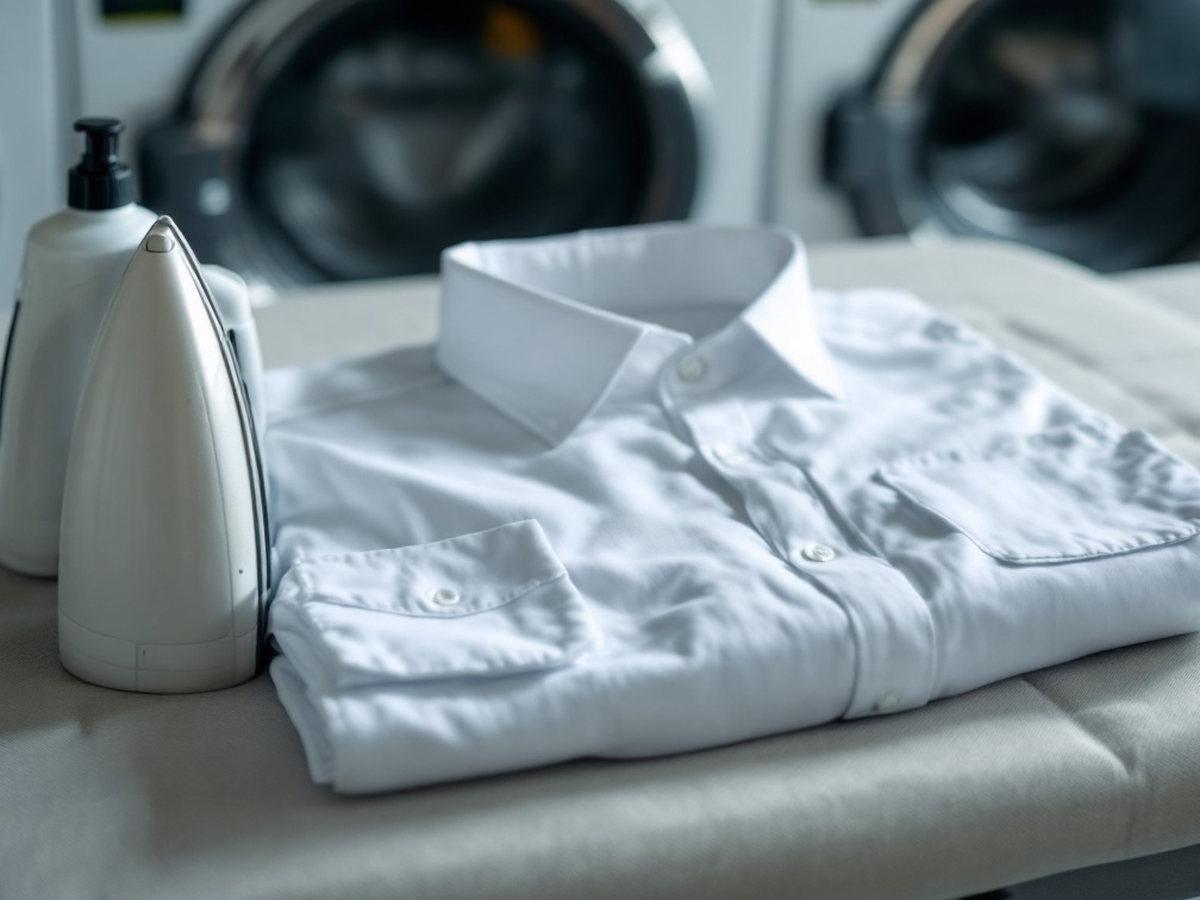
Iron a dress shirt while it is still slightly damp, in this order: collar, cuffs, yoke, back, the two front panels, then the sleeves (Eton). Set the iron no hotter than the care label's dots allow: 1 dot is 230°F, 2 dots 300°F, 3 dots 390°F (University of Tennessee Extension).
The mistake to avoid is ironing the right side of a dark cotton shirt directly, which leaves a shine; press dark cottons from the wrong side or under a press cloth (NMSU Extension).
Key takeaways
- Order matters: collar, cuffs, yoke, back, fronts, sleeves, so finished areas don't get re-wrinkled.
- Iron at or below the label's dots: 1 dot is 230°F, 2 dots 300°F, 3 dots 390°F.
- A damp shirt irons fastest; mist a dry one with clean water first.
- Starch suits cotton and cotton blends; synthetics take a sizing instead.
- Homemade spray starch: 2 to 3 teaspoons of cornstarch in 1 cup of water.
How do you iron a dress shirt step by step?
Work from the small, fiddly parts to the large flat panels, so the big areas you finish last stay smooth (Eton). You need a steam iron, an ironing board and a spray bottle of clean water.
- Prep. Start with a shirt that is damp from the wash, or mist a dry one lightly. Remove collar stays and unbutton the collar, cuffs and front (Eton).
- Collar. Iron the underside first, from the points in toward the center and down to the collar stand. Flip it and repeat on the outside (Eton).
- Cuffs. Lay each cuff open and flat, iron from the edges inward, and iron around buttons rather than over them, since buttons can leave a mark (Eton).
- Yoke. Drape the shoulder panel across the narrow end of the board and iron from the edges in, with plenty of steam from here on (Eton).
- Back. Rotate the shirt so the back lies flat on the board and iron the lower back the same way (Eton).
- Front panels. Lay each side flat and iron it, working around the buttons on the placket (Eton).
- Sleeves. Smooth each sleeve flat along its seam before the iron touches it. Let the folded edge sit just past the edge of the board to avoid a hard crease, then iron from the shoulder down to the cuff (Eton).
Ironing vs pressing: which motion should you use?
Ironing slides the iron across the cloth; pressing lowers and lifts it in place. NMSU Extension says the lower-and-lift motion avoids stretching fabric, so use it on collar points, seams and anywhere the fabric pulls out of line.
What heat setting should you use for a shirt?
Read the iron symbol on the care label first: its dots set the maximum soleplate temperature, and an iron with an X through it means do not iron (University of Tennessee Extension; American Cleaning Institute). Within that limit, the fiber decides how you iron (NMSU Extension):
| Shirt fabric | Heat | How to iron it |
|---|---|---|
| Cotton (oxford, poplin, broadcloth) | Cotton setting | Either side, with steam or dampened fabric; wrong side for dark colors |
| Linen | Highest setting | Steam or a damp press cloth, on the wrong side to prevent shine |
| Polyester | Synthetic setting | Wrong side or under a press cloth |
| Cotton-poly blend | The lowest-heat fiber's setting | Wrong side, or a press cloth on the right side |
| Rayon | Moderately warm | Press cloth, no steam directly on the fabric |
| Silk | Silk setting | Dry iron for sheer silk; light steam and a press cloth for heavier silk |
The label's dots are the ceiling: high is 390°F, medium 300°F and low 230°F (University of Tennessee Extension). Always follow the shirt's own label over a general chart.
Not sure? Test the setting on the inside hem or a seam allowance first. NMSU Extension warns that too much heat, steam or pressure can dull or flatten the fabric surface.
Watch for glued-on labels. DLI notes that some heat-sensitive labels can soften during ironing and permanently stain the shirt.
For what every other care-label symbol means, see our laundry symbols guide.
How do you wash dress shirts so they need less ironing?
Wash shirts with similar colors and fabrics, pretreat the collar and cuffs, and take them out of the dryer while they are still slightly damp (American Cleaning Institute; Eton). The American Cleaning Institute routine adapted for shirts:
- Sort. Whites with whites, pastels and medium colors together, darks by themselves (American Cleaning Institute). Keep shirts out of loads with fuzzy sweatshirts, flannels and new towels, which shed lint onto permanent press fabrics (American Cleaning Institute).
- Unbutton everything. Open the front, cuffs and collar buttons and remove collar stays before the wash.
- Pretreat the collar and cuffs. Ring around the collar comes from body oils, perspiration, colognes and skin products ground into the neckband and cuffs (DLI). A prewash stain remover or a little liquid detergent works on these body soils (American Cleaning Institute).
- Wash. Use the cycle and temperature on the care label and the detergent dose on the package; more detergent is not better (American Cleaning Institute).
- Dry gently. The permanent press dryer cycle uses medium heat followed by a cool-down, which reduces wrinkles in synthetics and blends (American Cleaning Institute).
- Hang promptly. Take shirts out while slightly damp and put them on hangers, or iron them right away; damp shirts iron fastest (Eton).
Liquid fabric softener in the rinse reduces wrinkling and makes ironing easier (American Cleaning Institute). Dilute it first; poured straight onto fabric, it can stain or spot (American Cleaning Institute).
How often should you wash a dress shirt?
Sources differ. American Cleaning Institute says a dress shirt can be worn a few times unless it is stained or sweaty, while DLI recommends laundering after each wearing to stop oil building up in the collar and cuffs. If you sweat or wear a shirt all day, wash it after one wear; perspiration left in the fabric can stain and weaken it (DLI).
How do you starch a shirt?
Starch on cotton and cotton blends gives the fabric body, helps it resist soil and makes ironing easier; on polyester and other synthetics, use a fabric finish or sizing instead (American Cleaning Institute). Spray-on starch is the practical choice for collars, cuffs and quick touch-ups (American Cleaning Institute).
- Shake the can gently and hold it upright, tilted no more than 45 degrees (Faultless).
- Spray lightly and evenly from 6 to 10 inches away, one section at a time (Faultless).
- Iron the section at the shirt's normal heat setting, in the same order as above: collar, cuffs, yoke, back, fronts, sleeves.
- Rinse the nozzle with warm water after use so it doesn't clog (Faultless).
How do you make homemade spray starch?
Oregon Metro gives a simple recipe: combine 2 to 3 teaspoons of cornstarch with 1 cup of water in a spray bottle, shake well and use it like commercial spray starch. Shake again before each use, because cornstarch settles to the bottom.
Starch is optional. Eton says its shirts need no starch, only steam and water, so skip it on shirts that already have a smooth finish.
How do you get wrinkles out of a shirt without an iron?
Use moisture, gravity and a little heat. These methods work on light wrinkles; a creased cotton shirt still needs an iron.
- Bathroom steam. Hang the shirt on a good hanger in the bathroom while you shower and let the steam relax the creases (Eton).
- Wrinkle-releasing spray. Spray in a sweeping motion until the fabric is slightly damp, tug and smooth the wrinkles out, then hang it to dry (American Cleaning Institute). Some fabrics water-spot, so check the product label first.
- A short dryer cycle. Tumble the shirt briefly on permanent press, then hang it immediately; the cycle's cool-down limits new wrinkles in synthetics and blends (American Cleaning Institute).
- Body heat. A lightly wrinkled wrinkle-resistant shirt may smooth out as you wear it (Eton).
How hot does an iron get, and how do you use it safely?
An electric iron's soleplate can pass 392°F, hot enough to cause a serious burn on brief contact (UChicago Medicine). In children, most iron burns happen at home when they pull the cord or knock the iron off the board (UChicago Medicine).
- Unplug it as soon as you finish, and keep the iron and its cord out of children's reach while it cools (UChicago Medicine).
- Never leave a plugged-in iron where a child can reach the board or the cord (UChicago Medicine).
Is it worth sending shirts to a pro instead?
If you need a crisp collar every workday, a professional shirt service is often faster than doing it yourself. DLI says professional shirt laundering uses specialized wash formulas and pressing equipment, giving cleaner collars and a crisper finish than home ironing.
Shirts wear out either way: DLI puts a typical shirt's life at 35 to 50 washes, or about two years. A puckered collar or cuff after washing usually means the interfacing inside shrank, which no laundering or ironing can fix (DLI).
Many laundromats press shirts too: more than 1,300 listings in the LaundroMaps directory report an ironing and pressing service, as of October 2026 (LaundroMaps directory data). For silk, dry-clean-only blends or a shirt with a stubborn collar stain, take it to a professional dry cleaner. Our laundromat vs. dry cleaning guide covers which items go where.
Frequently asked questions
Should you iron a shirt wet or dry?
Slightly damp is best. A shirt still damp from the wash irons faster and smoother, so if it has fully dried, mist it with clean water first. Don't iron a soaking-wet shirt; spin or hang it until it is just damp.
How do you iron a shirt collar?
Remove the collar stays, lay the collar flat, and iron the underside first, from the points in toward the center. Flip it and repeat on the outside, then fold it along its natural crease.
Can you iron a non-iron shirt?
Yes, at a medium setting if the label allows it. A lightly wrinkled wrinkle-resistant shirt often needs no ironing at all, because the creases smooth out with steam or as you wear it.
How do you iron a linen shirt?
Use the iron's highest setting with steam or a damp press cloth, and iron on the wrong side to prevent shine. Check the care label first, since some linen blends need less heat.
How do you iron a polo shirt?
Polos are knits, so use a low setting if the label allows ironing at all. A knitted pique polo often needs no more than bathroom steam on a hanger.
How we researched this
We based this guide on university extension publications from New Mexico State University and the University of Tennessee, the American Cleaning Institute, the Drycleaning & Laundry Institute, an Oregon Metro household recipe page, UChicago Medicine's burn-prevention guidance, and two makers' instructions for their own products (a shirtmaker on ironing its shirts, a starch maker on its spray). We cited 10 sources plus LaundroMaps directory counts, read on October 14, 2026. We did not test irons, starches or wrinkle sprays ourselves.
Sources
- Eton Shirts -- How to Iron a Dress Shirt, Step by Step
- University of Tennessee Agricultural Extension Service -- Care Label Symbols
- New Mexico State University Extension -- Pressing Pointers (Guide C-309)
- American Cleaning Institute -- Laundry Basics
- Drycleaning & Laundry Institute -- The Long and the Shirt of Shirts
- Drycleaning & Laundry Institute -- All About Shirts
- American Cleaning Institute -- Laundry Time Savers
- Faultless Brands -- How to Use Ironing Spray
- Oregon Metro (regional government) -- Safe cleaning recipes
- University of Chicago Medicine -- Burn injuries: How to prevent them, who's at risk and what parents need to know
- LaundroMaps directory data -- 13,000+ US laundromat listings, October 2026
Related guides
- Removing deodorant and sweat stains from shirt underarms.
- Steamer vs. iron: which tool suits each fabric, and how to steam clothes properly.
- No iron? How to get wrinkles out of clothes with a dryer, steam or a spray.