How to Shrink Clothes on Purpose: Shirts, Jeans & Hoodies

LaundroMaps Team
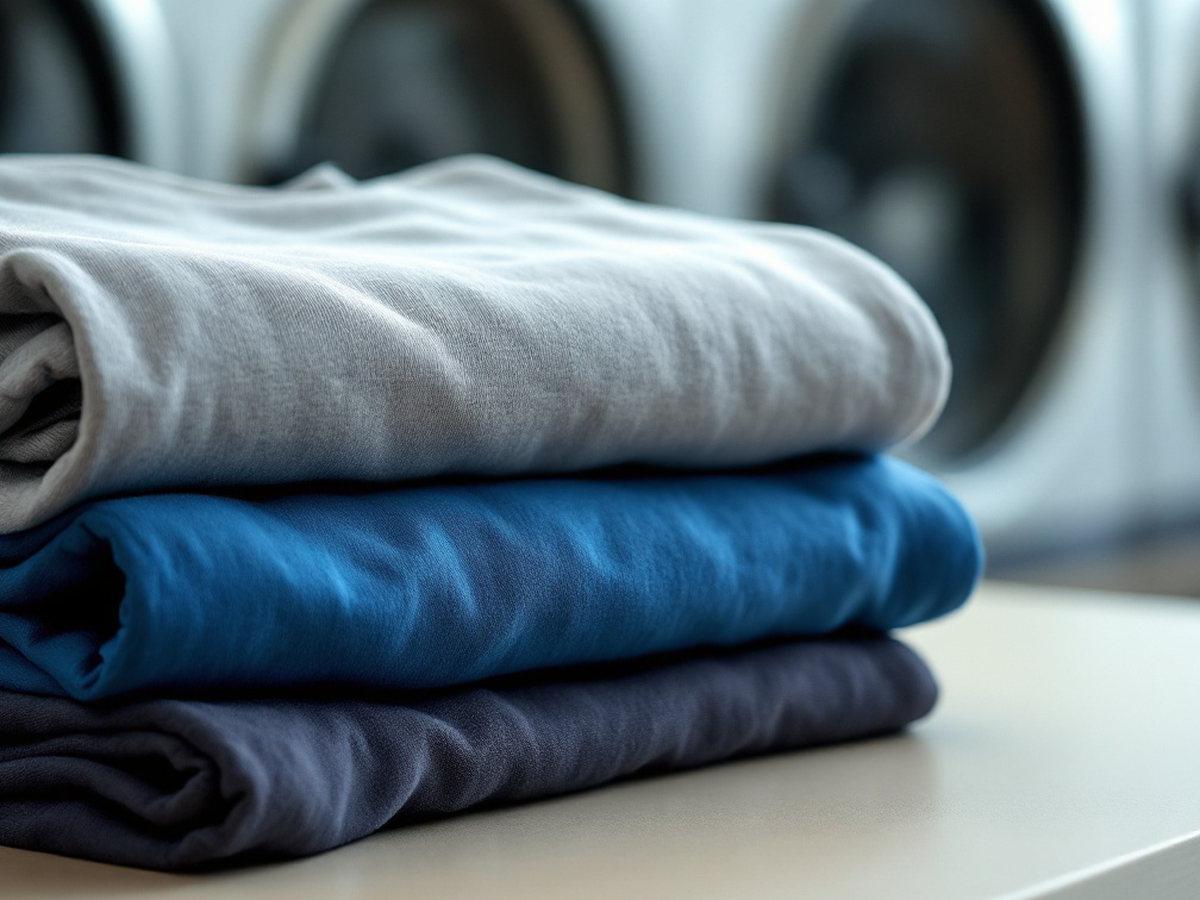
To shrink a cotton shirt, wash it, then tumble dry it until it is completely dry. In Cotton Incorporated's testing, one wash-and-dry cycle can remove about 90% of the shrinkage a cotton fabric has available (Cotton Incorporated). Polyester barely shrinks and can melt if the heat is too high, so leave it alone.
Go one cycle at a time and try the garment on between cycles, because shrinking cannot be undone on demand.
Key takeaways
- One wash and tumble dry cycle removes about 90% of a cotton fabric's available shrinkage, so repeat only if the fit is still too big.
- Dry the garment fully: in Cotton Incorporated's tests, shrinkage came mostly once the fabric fell below 20% moisture.
- Dryer temperature mattered less than expected: cotton knit dried at 100°F, 150°F and 200°F shrank by identical totals.
- Polyester and nylon are heat-set, so they hold their size and melt if the heat is too high.
- Wool can felt, rayon can shrink or stretch, and spandex is damaged by heat, so check the label before you start.
How do you shrink a cotton shirt on purpose?
Cotton fibers swell when wet and tighten as they dry, and tumbling helps the fabric loops pull in. Cotton Incorporated describes shrinkage as the fabric relaxing into its smallest stable shape, which is why a wash and a machine dry do the job. Cotton Incorporated's Lifestyle Monitor quotes the American Cleaning Institute's Nancy Bock saying cold water and air drying reduce shrinking, so do the opposite: a warm wash and a machine dry (Cotton Incorporated's Lifestyle Monitor).
- Read the label. Confirm the fabric is mostly cotton and that the garment is washable. Dry-clean-only items are not candidates.
- Wash it warm on a normal cycle. Wet the garment through with plain agitation. Wash it with similar items so it can move freely.
- Move it straight to the dryer. Use a regular heat setting and run the cycle until the garment is completely dry. Shrinkage mostly happens in the last stretch of drying.
- Try it on and compare. Measure the chest or length against a shirt that fits so you know how far you have gone.
- Repeat only if needed. A second cycle removes less than the first.
Does the dryer need to be hot?
Less than most people assume. Cotton Incorporated tumble dried a 100% cotton interlock knit at 100°F, 150°F and 200°F, and the total shrinkage was identical at all three (Cotton Incorporated). What counts is a full wash, tumbling and drying all the way down, so choose a regular setting and stay within the label's warnings.
How do you control how much it shrinks?
Timing in the dryer is your control. In Cotton Incorporated's tests the shrinking came after the moisture level dropped below 20%, and one cycle removed around 90% of what was available (Cotton Incorporated). If you want a smaller change, stop the dryer while the garment is still clearly damp, measure it, then finish it on a hanger.
How much will a 100% cotton shirt shrink?
It depends on how much shrinkage the fabric still has. In one finished 100% cotton jersey that Cotton Incorporated measured, the remaining shrinkage after five home wash-and-tumble-dry cycles was 7.3% in length and 3.5% in width (Cotton Incorporated). The same bulletin reports that a fully relaxed fabric will not shrink further, so a tee you have washed and dried many times has little left to give (Cotton Incorporated).
Construction matters too. Cotton Incorporated says woven fabrics are much more stable than knits, and knits are very sensitive to applied forces. A new, unwashed knit tee therefore shrinks the most, and woven shirts and jeans shrink less.
Can you shrink an XL shirt to a medium, or a 2XL to an XL?
Not reliably. Shrinkage is limited by the fabric's relaxed dimensions, and the example above had single-digit percentages available (Cotton Incorporated). A shirt that is a full size too big is better taken in by a tailor than shrunk, because forcing it with repeat cycles risks warping the neck, sleeves and hem.
Which fabrics will shrink, and which will not?
Shrinking works on fibers that swell and relax, mainly cotton. Synthetic fibers do not swell and deswell the way cotton does, and thermoplastic fibers can be heat-set to hold their shape, while cellulosic fibers such as cotton cannot (Cotton Incorporated). University of Georgia Extension lists the care limits of each fiber, summarized here.
| Fabric | Will it shrink on purpose? | Watch out for |
|---|---|---|
| Cotton knit (tees, hoodies) | Yes, the most | Shrinks most when new and unwashed |
| Cotton woven (jeans, button-ups) | Some | More stable than knits |
| Cotton-polyester blends | Less, and only the cotton part | Results vary by blend |
| 100% polyester or nylon | Barely | Melts if too hot |
| Wool | Yes, but it felts | Texture changes; hard to control |
| Rayon or viscose | It may shrink or stretch | Weaker when wet |
| Spandex or elastic blends | No | Damaged by heat |
For care symbols and what each one allows, see our guide to laundry care label symbols.
Will a cotton and polyester blend shrink?
Partly. The cotton share can relax, while polyester stays heat-set and holds its size (Cotton Incorporated; University of Georgia Extension). A blend therefore shrinks less than 100% cotton.
Can you shrink a shirt that is 60% cotton and 40% polyester?
Yes, a little. Use the cotton method above: a warm wash, then a full dry on a regular setting. Expect a small change, and do not raise the heat to compensate, since polyester melts if it gets too hot (University of Georgia Extension).
Will 80% cotton and 20% polyester shrink?
More than the 60/40 blend, because more of the fabric is cotton, but less than a 100% cotton tee (Cotton Incorporated). Run one cycle, try it on, then decide whether a second is worth it.
Can you shrink polyester?
Barely. University of Georgia Extension notes that polyester retains heat-set pleats and creases and melts if it gets too hot. Polyester does not swell and deswell like cotton, so washing and drying will not pull it in much (Cotton Incorporated). Turning up the heat risks melting or scorching rather than shrinking. Our fabric-by-fabric shrink guide covers polyester in more detail.
How do you shrink polyester without washing it?
There is no safe way to do it. The documented shrinking mechanism for fabric needs water, tumbling and drying (Cotton Incorporated), and extra heat only adds melt risk (University of Georgia Extension). A tailor can take in a polyester garment without any of that.
How do you shrink jeans?
Treat cotton jeans like cotton knits, with lower expectations. Woven fabric is more stable than knit, so jeans shrink less than a tee (Cotton Incorporated). Wash them warm, then tumble dry them until they are completely dry, and try them on before repeating.
Check for stretch first. Spandex is damaged by heat, and University of Georgia Extension recommends drying it at low temperature for about ten minutes, so stretch jeans are poor candidates for a long, hot dry. For the opposite goal, keeping jeans from fading or shrinking, see how to wash jeans without fading.
How do you shrink a hoodie?
A cotton hoodie is a knit, and Cotton Incorporated says knits are very sensitive to applied forces, so a hoodie that is mostly cotton can shrink noticeably. Wash it warm, then tumble dry it until it is dry, and check the fit after each cycle (Cotton Incorporated).
Check the tag for polyester first. Many hoodies are blends, and the polyester part will hold its size.
Can you shrink a sweater or other wool?
Wool can shrink, but it felts when it does. University of Georgia Extension says wool may shrink and felt when laundered unless it is blended or specially treated. That makes it the hardest fabric to control, so it is a poor choice for a deliberate shrink.
Machine-washable wool is treated so it will not shrink. The Woolmark Company says Woolmark-approved garments labeled machine wash can be washed multiple times without shrinking, and garments labeled tumble dry can be dried on low heat (The Woolmark Company). If the label says nothing about tumble drying, the safer advice is to dry it flat (The Woolmark Company).
If you try it anyway, work in small steps, because we cannot promise a felted sweater will return to its size. Our guide to how to unshrink clothes explains what you can and cannot reverse.
Can you shrink rayon, viscose or linen?
Be careful with all three. University of Georgia Extension says rayon may shrink or stretch unless treated, and loses strength when wet, so a hard wash and dry can damage it. Viscose is a form of rayon, so the same caution applies (University of Georgia Extension).
Linen is a cellulosic fiber like cotton, but the University of Georgia's table lists no shrink guidance and warns that repeated creasing weakens it (University of Georgia Extension). Read the care label, run one gentle cycle, and stop if the fabric feels thin. For a dress that is too big, a tailor is the better route.
What can go wrong, and how do you stay safe?
The main risk is the garment. The Federal Trade Commission says care labels must state how to wash and dry a garment and must warn against care procedures that would harm it, so overriding a label is your risk. Never try this on dry-clean-only items, delicates or anything with metallic or elastic trim (The Federal Trade Commission; University of Georgia Extension).
The second risk is the dryer. The U.S. Fire Administration says to clean the lint filter before and after each cycle, and warns that skipping lint and vent cleaning raises the risk of a dryer fire (The U.S. Fire Administration). At a laundromat the machines are shared, so empty the filter if the last user left lint. Dryer rules are in our dryer safety guide.
If you do not have a dryer at home, any self-service laundromat will do, and you can find a laundromat near you in our directory. Wash temperature choices are explained in what temperature to wash your clothes.
Frequently asked questions
How do I reduce the size of my shirt?
Wash it warm, then tumble dry it until it is completely dry. One cycle removes about 90% of a cotton fabric's available shrinkage. Try it on, and repeat only if it is still too big.
Can I shrink an XL to a medium?
Not reliably. Shrinkage is limited by the fabric's relaxed dimensions, and the cotton jersey Cotton Incorporated measured had single-digit percentages available. A tailor is the better route for a full size.
Will a 2XL shrink to an XL?
Not by laundering alone. A 100% cotton knit tee may shrink a few percent, and a blend or polyester shirt will shrink less. Taking it in at a tailor gives a better fit.
How to shrink a linen dress?
Check the label first. Linen is not listed with shrink guidance by University of Georgia Extension, and repeated creasing weakens it. Try one gentle cycle and stop if the fabric feels thin.
How to shrink viscose clothes?
Viscose is a form of rayon, which may shrink or stretch and loses strength when wet. A hard wash and dry can damage it, so go slowly or use a tailor.
How we researched this
We read Cotton Incorporated's technical bulletin on cotton shrinkage and its Lifestyle Monitor, the University of Georgia Extension fiber table, The Woolmark Company's wool care page, the Federal Trade Commission's care labeling guidance and the U.S. Fire Administration's dryer safety flyer, six sources in all. We gave priority to agencies, extension services and textile associations. We did not test these methods ourselves, and the source material gives no per-size percentages, so we say so rather than guess. Reviewed October 14, 2026.
Sources
- Cotton Incorporated -- A Guide to Improved Shrinkage Performance of Cotton Fabrics (Technical Bulletin ISP 1009)
- Cotton Incorporated Lifestyle Monitor -- The Endless Laundry Cycle
- University of Georgia Extension -- Understand Your Fibers
- The Woolmark Company -- Tumble drying wool
- Federal Trade Commission -- Clothes Captioning: Complying with the Care Labeling Rule
- U.S. Fire Administration -- Clothes Dryer Fire Safety