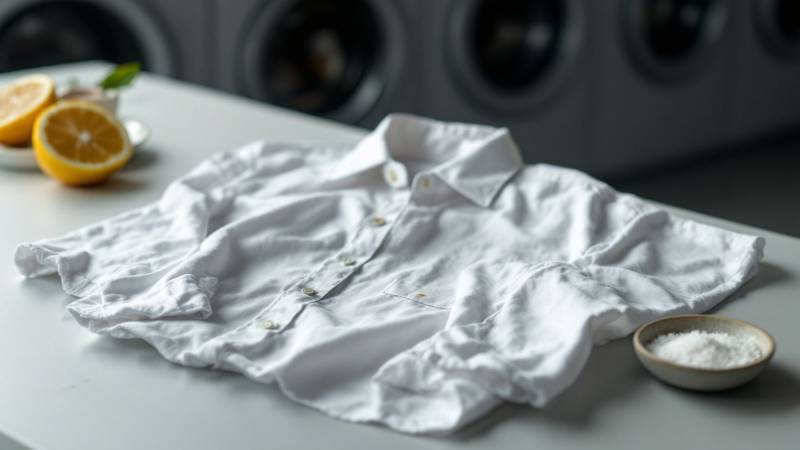
To get rust out of clothes, treat the spot with an acid: sprinkle it with salt, squeeze lemon juice over it, let it dry, rinse and repeat, or use a rust remover made for fabrics (UGA Extension; American Cleaning Institute). Never use chlorine bleach on rust: it sets the stain or makes it darker (UGA Extension; Clorox).
If orange spots keep showing up after washing, the cause is usually iron in your water, pipes or water heater, so the stain will come back until you fix the source (American Cleaning Institute).
Key takeaways
- Skip chlorine bleach on rust: it can set the stain or make it darker.
- Start with salt and lemon juice on white or colorfast fabric; let it dry, rinse and repeat.
- For cottons and linens you can boil, use 4 teaspoons of cream of tartar per pint of water.
- Rust removers are strong acids: test a hidden spot, wear rubber gloves and avoid any with hydrofluoric acid.
- Repeat orange spots usually mean iron in the water; the EPA guideline is 0.3 mg/L.
What causes orange rust spots on clothes after washing?
Most rust spots that appear after a wash come from iron or manganese in the water supply, or from iron in the pipes or water heater (American Cleaning Institute). Samsung, a washer maker, gives the same causes for yellow, orange or red stains and says the home's water supply is the most common one.
Well water can look clear at the tap and still carry dissolved iron that turns orange-brown once it meets oxygen (Penn State Extension). The EPA's guideline for iron is 0.3 mg/L; above that, water can cause reddish or orange staining (EPA).
A quick diagnosis checklist
Where the spots show up tells you where the iron comes from (American Cleaning Institute; Samsung; Clorox; Iowa State's AnswerLine):
- Spots on many items, every load: suspect the water. Iron in the supply, rusty pipes and water heaters all leave yellow to red stains.
- Hot water that runs rusty at first: suspect the pipes or water heater; run the hot tap for a few minutes before washing.
- Spots that match the washer basket: look for rust in an older washer, especially around the drain holes.
- Orange marks where you wear sunscreen (collars, straps, shoulders): avobenzone in sunscreen reacts with iron in hard water.
- One spot by a snap, zipper or hanger: the metal touched damp fabric; treat the spot and replace the rusty piece.
Why do sunscreen stains turn orange?
Iowa State's AnswerLine explains that avobenzone, a UVA filter in many sunscreens, oxidizes and turns yellow or rust-colored when it meets minerals in the wash water, especially hard water. Treat those marks like rust (lemon juice and salt or a rust remover), and don't soak them in bleach or oxygen bleach, which can make them worse (Iowa State's AnswerLine).
How do you get rust stains out of clothes? Step by step
Work on the stain before the item goes in a dryer or under an iron, because heat sets stains (NMSU Extension). These steps follow the University of Georgia's rust method (UGA Extension):
- Check the care label. If it says dry clean only, stop and take it to a dry cleaner (see below).
- Test a hidden spot. Use an inside seam or hem; with a rust remover, dab on a drop, wait a few minutes and rinse. No color change means you can go ahead.
- Salt and lemon juice first. Lay the item flat, sprinkle salt on the stain, squeeze lemon juice over it and let it dry in the sun. Rinse well and repeat if the stain fades but doesn't disappear.
- Cream of tartar for boilable whites. If the fabric can be boiled (some cottons and linens), boil it in 4 teaspoons of cream of tartar per pint of water until the stain lifts, then rinse.
- Rust remover last. Dampen the spot, apply a rust remover labeled for fabrics, rinse with clean water once the stain is gone.
- Wash and air dry. Launder per the care label, then air dry and check the spot before any heat.
The colorfastness test and the rust remover steps come from Clorox, which also says to wash as the label directs and let the item air dry. NMSU Extension adds the inside-seam test and the rule to rinse well between different removers.
Does lemon juice remove rust stains?
Often, on light stains. Lemon juice is an acid, and UGA Extension and Texas A&M AgriLife Extension both list it with salt as a rust treatment. Clorox is less hopeful: it calls lemon juice and vinegar weak acids that typically aren't strong enough. Try lemon and salt first because it's the gentlest; move to a rust remover if two rounds don't fade it.
Lemon juice and sunlight can both bleach colors, and sun can turn some white fabrics yellow, so keep this method for whites and tested colorfast items (Texas A&M AgriLife Extension).
What is the best homemade rust remover?
The two home methods in extension guides are salt with lemon juice, and boiling in cream of tartar for fabrics that tolerate boiling (UGA Extension; Texas A&M AgriLife Extension). Vinegar is the other pantry acid people reach for, but Clorox rates it, like lemon juice, as usually too weak for rust.
How do you get rust out of white clothes?
White cotton gives you the most options, because it tolerates lemon, sun and boiling. For one or two spots, use the salt and lemon juice method or a fabric rust remover (UGA Extension; Texas A&M AgriLife Extension).
For a whole load of whites that came out dingy orange, the American Cleaning Institute recommends a rust remover made for fabrics, following the package directions and repeating if needed. UGA Extension also suggests soaking the load for 10 to 15 minutes in detergent plus 1 cup of oxygen bleach, then washing.
Fix the water first if it's the cause, or the next load will pick up iron again (American Cleaning Institute). Our guide to washing white clothes covers keeping whites bright once the iron is gone.
Why shouldn't you use bleach on rust stains?
Chlorine bleach makes rust worse. Clorox, a bleach maker, says sodium hypochlorite is an alkaline oxidizer, which oxidizes the iron and makes a rust stain worse. The American Cleaning Institute says it may intensify the discoloration, and Texas A&M AgriLife Extension says it can make rust stains permanent.
Mixing makes it dangerous, not just ineffective. Rust removers are acids, and chlorine bleach mixed with an acid gives off chlorine gas (Washington State Department of Health). If you tried bleach first, rinse the item thoroughly before you apply any acid (NMSU Extension).
Will hydrogen peroxide remove rust?
It isn't the tool for a rust spot. The guides we read treat rust with acids (lemon juice, cream of tartar, rust removers), and none lists hydrogen peroxide for rust on fabric (UGA Extension; Texas A&M AgriLife Extension; American Cleaning Institute). Never combine peroxide with chlorine bleach: Washington's health department lists it among the products bleach reacts with (Washington State Department of Health). For what peroxide does well, see our hydrogen peroxide stain remover guide.
Are commercial rust removers safe on clothes?
They work fastest, but treat them as hazardous chemicals. Rust removers are very strong acids; Clorox says to follow the label exactly and wear heavy-duty rubber gloves.
- Check the ingredients for hydrofluoric acid. Some household rust removers contain it (MedlinePlus), and Texas A&M AgriLife Extension says not to use those at all because they are extremely toxic and burn skin.
- Oxalic acid is poisonous. Keep it off your skin and wear rubber gloves (UGA Extension). Oxalic acid removers can also change some dyes, so test first (Texas A&M AgriLife Extension).
- Ventilate and never mix. Work in a ventilated room and rinse between different products (NMSU Extension).
- Keep it off appliance enamel. UGA warns that rust removers can ruin porcelain and enamel finishes like those on kitchen appliances (UGA Extension).
If a hydrofluoric acid remover touches skin or eyes, flush with water for at least 15 minutes and get to a hospital; Poison Help is 1-800-222-1222 (MedlinePlus).
Does rust permanently stain clothes?
Most fresh rust stains on washable fabric come out, but they can be stubborn, and the wrong treatment can lock them in. UGA Extension warns rust may be very difficult to remove, and chlorine bleach can make it permanent (Texas A&M AgriLife Extension).
Can you get rust out after the dryer?
Try anyway: start again at the salt and lemon juice step, then a fabric rust remover. Heat sets stains, so a dried-in spot may need several rounds or may not fully clear (NMSU Extension). The American Cleaning Institute rule for the next time is simple: don't put an item in the dryer until the stain is gone.
When should a professional handle it?
Take dry-clean-only items to a dry cleaner and point out the rust instead of using a rust remover (Clorox; NMSU Extension). The same goes for silk, wool and anything you can't test. Many laundromats also offer professional stain removal: more than 2,100 listings in the LaundroMaps directory report it as of October 2026 (LaundroMaps directory data).
How do you stop rust stains coming back?
Find the iron source, because stain removal alone won't hold. The American Cleaning Institute recommends these fixes:
- Run the hot water for a few minutes before washing to clear the lines.
- Drain the water heater occasionally.
- Add a nonprecipitating water softener to both the wash and rinse water to keep iron dissolved.
- Install an iron filter on the water supply for an ongoing problem.
Test your water
On a private well, have the water tested at an accredited lab; private wells aren't covered by drinking water standards, and the iron level decides which treatment works (Penn State Extension). A water softener can remove dissolved iron below 5 mg/L when the pH is above 6.7 and hardness is 3 to 20 grains per gallon; higher levels need a filter (Penn State Extension). On city water, ask your water system for its monitoring results (EPA).
How do you remove rust from a washing machine drum?
First check whether it's really the drum. Samsung says rust-like stains inside the tub usually come from the water supply and wipe off easily if cleaned right away. Its test: pour water from the supply hose into a bucket, then run up to three empty cycles to see if residue still appears.
If the basket itself is rusting, especially around the drain holes of an older washer, Clorox says replacing the washer is the fix. Don't pour rust remover on the machine: it can ruin enamel finishes (UGA Extension). Until then, move wet laundry out as soon as the cycle ends, since rust transfers more when clothes sit in the drum (Clorox). If your machine is the problem, you can find a laundromat near you while you sort out the washer.
Frequently asked questions
What removes rust from clothes immediately?
A rust remover made for fabrics works fastest, because it is a strong acid. Test it on a hidden spot, wear rubber gloves, rinse once the stain is gone and avoid any product with hydrofluoric acid.
Does Dawn dish soap remove rust?
Dish soap isn't one of the rust treatments in the extension and industry guides we read. Rust needs an acid, such as lemon juice with salt, cream of tartar or a fabric rust remover.
Can Coca-Cola remove rust stains from clothes?
None of the laundry guides we read recommends soda for rust, and soft drinks are a stain of their own on fabric. Use salt and lemon juice or a fabric rust remover instead.
Does vinegar get rust out of clothes?
Vinegar is a mild acid, and Clorox says it, like lemon juice, is usually too weak for rust. Never use it, or any acid, together with chlorine bleach, because the mix gives off chlorine gas.
Why do my clothes have orange spots after washing with well water?
Well water can carry dissolved iron that looks clear but turns orange-brown when it meets air. Above 0.3 mg/L, iron causes orange staining, so test the well and treat the water.
How we researched this
We read university extension stain guides (University of Georgia, Texas A&M AgriLife, New Mexico State, Iowa State), the American Cleaning Institute's stain and laundering guides, Penn State Extension and EPA pages on iron in water, poison and chemical-safety pages from MedlinePlus and the Washington State Department of Health, and two makers on their own products (Clorox on bleach, Samsung on its washers). Where sources disagreed, as on lemon juice, we say so. We did not lab-test these methods. Researched October 2026.
Sources
- University of Georgia Cooperative Extension -- Remove Stains From Iron, Rust
- American Cleaning Institute -- Stain Removal Guide
- The Clorox Company -- Removing Orange Rust Stains from Clothes
- American Cleaning Institute -- Laundering Problems & Solutions
- Penn State Extension -- Iron and Manganese in Private Water Systems
- U.S. Environmental Protection Agency -- Secondary Drinking Water Standards: Guidance for Nuisance Chemicals
- Samsung Electronics America -- Laundry is stained or damaged after using Samsung washing machine
- Iowa State University Extension and Outreach (AnswerLine) -- Sunscreen Stains
- New Mexico State University Cooperative Extension Service -- Removing Clothing Stains (Guide C-502)
- Texas A&M AgriLife Extension -- Removing Stains from Washable Fabrics
- Washington State Department of Health -- Dangers of Mixing Bleach with Cleaners
- MedlinePlus (U.S. National Library of Medicine) -- Hydrofluoric acid poisoning
- LaundroMaps directory data -- 13,000+ US laundromat listings, October 2026