How to Get Paint Out of Clothes: Acrylic, Latex and Oil

LaundroMaps Team
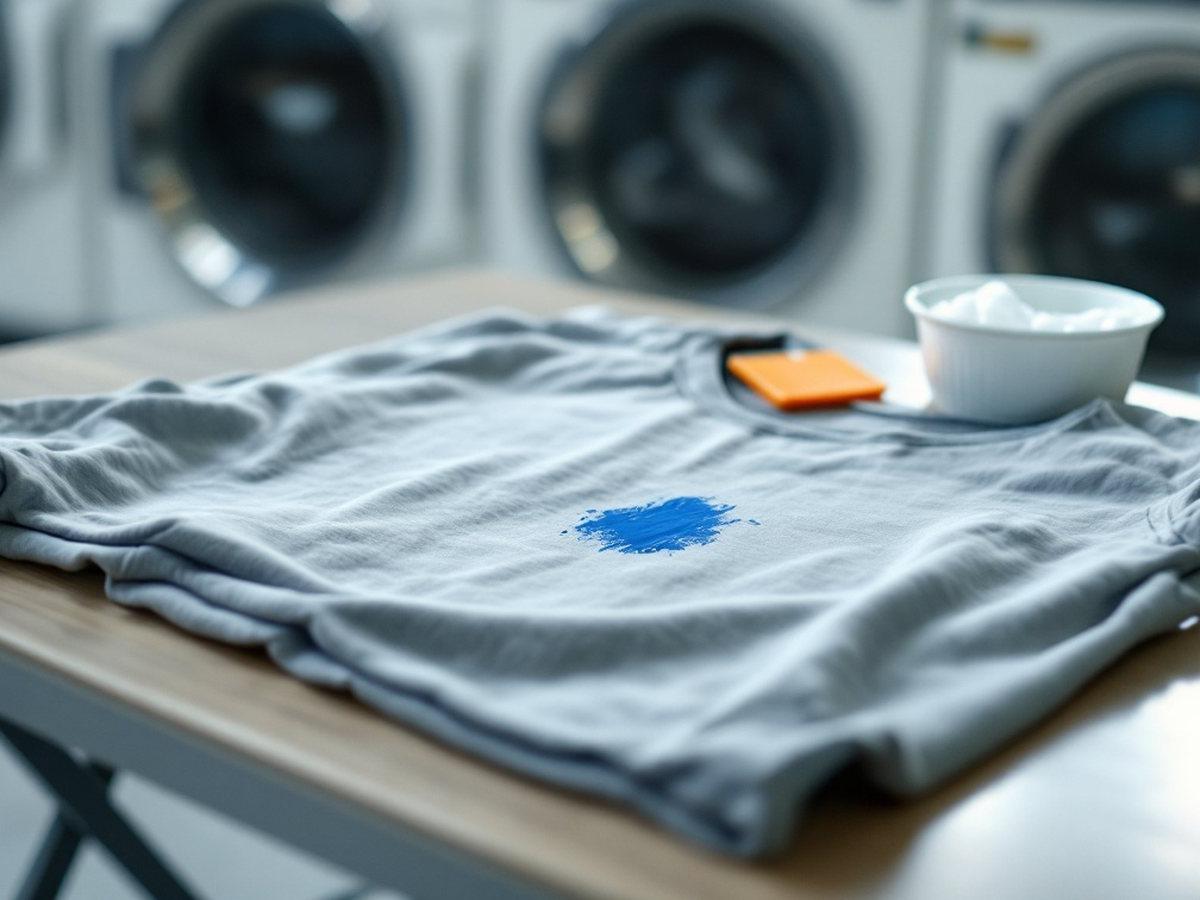
Act while the paint is wet: rinse acrylic or latex paint from the back of the fabric with water, then wash the garment (American Cleaning Institute). Once it dries, removal gets very difficult, and the American Cleaning Institute says dry water-based paint cannot be removed (American Cleaning Institute). Do not put the garment in the dryer until the stain is gone.
This guide covers wet paint, dried paint, oil-based paint, and when to hand the garment to a dry cleaner.
Key takeaways
- Flush wet acrylic or latex paint with water from the back of the fabric before it dries.
- After about 6 to 8 hours, latex paint is very difficult to remove, so treat it the same day.
- Dried paint needs a solvent pretreatment plus detergent, and often more than one round.
- Oil-based paint needs the thinner named on the paint can, or turpentine, not water.
- Skip the dryer until the paint is fully gone, because heat can set what is left.
Can you get acrylic paint out of clothes?
Yes, if you reach it while it is wet. Acrylic and latex are water-based paints, so running water keeps them workable (American Cleaning Institute). Once the water leaves the paint, it hardens into a film that water no longer dissolves (Smithsonian Museum Conservation Institute; Golden Artist Colors).
The table shows what the extension and association guides recommend by paint type and stage.
| Paint | Stage | What to do |
|---|---|---|
| Acrylic or latex | Wet | Rinse in warm water, then launder (American Cleaning Institute). Iowa State Extension says soak in cold water or wash in cool water with detergent. |
| Acrylic or latex | Dried | Very difficult. Solvent pretreatment, liquid detergent, scrub, repeat (Iowa State Extension). |
| Oil-based | Wet | Thinner from the can's label, or turpentine, then detergent (American Cleaning Institute). |
| Oil-based | Dried | No separate method is given. Use the same thinner treatment, and take valuable garments to a dry cleaner. |
The two sources differ on water temperature for wet paint. Check the care label first, and either way the goal is the same: flush the paint out while it is still wet (American Cleaning Institute; Iowa State Extension).
How do you get wet acrylic or latex paint out of clothes?
Work from the back of the fabric so the paint is pushed out, not deeper in (Kansas State University Extension). Follow these steps for water-based paint, then check the spot before drying.
- Scrape off the excess. Lift thick paint with a dull knife or spoon, and do not rub it in. Stainless steel spoons are a standard extension tool for loosening stains on sturdy fabrics (University of Georgia Extension).
- Rinse from the back. Hold the stained area under warm running water so it flushes out (American Cleaning Institute).
- Soap and flush again. Work liquid laundry detergent into the stain, then rinse. Iowa State Extension suggests a cold-water soak or a cool-water wash with detergent (Iowa State Extension).
- Launder. Wash as the care label allows (American Cleaning Institute).
- Check before drying. Air dry the garment first. Heat from a dryer can set a stain that is still there (American Cleaning Institute; Iowa State Extension).
If you are away from home when the paint lands, rinse it at the nearest sink. Every hour matters: the Iowa State guide puts the cutoff at 6 to 8 hours for latex paint (Iowa State Extension).
Can you get acrylic paint out of clothes after it's dried?
Sometimes, but expect repeated work. The American Cleaning Institute says dry water-based paint cannot be removed (American Cleaning Institute). Iowa State Extension is less absolute: removal becomes very difficult after 6 to 8 hours, but it gives a solvent method to try (Iowa State Extension). That method is the one to use on dried acrylic.
- Soak first. Soak the stain in water, then pretreat it with a dry-cleaning solvent and rub in liquid laundry detergent (Iowa State Extension).
- Wait 10 to 15 minutes for the pretreatment to work, then scrub the spot with hot water (Iowa State Extension).
- Treat again before washing. Then wash at the temperature the care label recommends (Iowa State Extension).
- Repeat. The Smithsonian Museum Conservation Institute notes that stain removal is sequential, and even a good treatment can take five to seven reapplications (Smithsonian Museum Conservation Institute).
Use the spot-cleaning method from Iowa State Extension so the solvent does not spread. Lay the stain face down on a pad of clean white cloths. Dab from the back, working from the outside of the stain toward the center, and move the stain to a clean spot on the pad as it transfers (Iowa State Extension).
Does rubbing alcohol remove dried acrylic paint?
It is a common thing to try, but the sources are thin. University of Georgia Extension lists 70 percent isopropyl alcohol as sufficient for most stain jobs, with a warning that it fades some dyes (University of Georgia Extension). None of the extension or association guides read for this post names alcohol specifically for dried acrylic, so treat it as a test-first last attempt on a hidden seam.
The same page warns that alcohol damages acetate, triacetate, modacrylic and acrylic fibers unless you dilute it with 2 parts water (University of Georgia Extension). Acrylic paint on acrylic fabric is an awkward pairing; test before you soak.
Does Dawn dish soap remove acrylic paint?
On wet paint, a grease-cutting dish soap or detergent helps flush it out, which is why the extension guides pair rinsing with detergent (Iowa State Extension; American Cleaning Institute). On dried paint, no guide read for this post lists dish soap as the fix. Detergent is the second step after a solvent, not a substitute for one.
How do you get oil-based paint out of clothes?
Use the thinner, not water. The American Cleaning Institute says to use the solvent the paint can's label advises, and turpentine if you do not have it. Rinse, pretreat with a prewash stain remover, bar soap or laundry detergent, then rinse and launder (American Cleaning Institute).
Iowa State Extension agrees on timing: treat oil-based paint while it is wet, using a thinner recommended for the paint. Spot treat with the thinner until the paint softens and can be flushed away in the washing machine; turpentine, paint thinner or alcohol usually work as solvents (Iowa State Extension).
Thinners are hazardous. Work in a ventilated place away from open flames, pilot lights and sparks, and keep them out of children's reach (University of Georgia Extension). Poison Control also notes that oil-based paints may contain solvents and can cause poisoning, unlike water-based paints (Poison Control).
How many hours does acrylic paint dry?
It depends on thickness. Golden Artist Colors, an acrylic maker, says acrylic dries in two stages. A skin forms first: very thin films can feel dry within seconds, while thick films can take a full day or more (Golden Artist Colors). The full thickness takes longer, from a few days for thin films to much longer for thick ones (Golden Artist Colors).
For laundry, the first stage is the one that matters. A smear on a shirt can skin over quickly, which is why the guides say to treat paint wet (Iowa State Extension; Golden Artist Colors).
What if the paint was already washed and dried?
Treat it as dried paint and expect a lower success rate. Heat from a dryer can set stains that survived the wash, so a stain that went through a dryer is the hardest case (American Cleaning Institute; Iowa State Extension). The Smithsonian Museum Conservation Institute adds that older stains are harder to remove, and that hot water sets many stains (Smithsonian Museum Conservation Institute).
Run the dried-paint method above, and stop if the fabric starts to fray or fade. For a garment you cannot replace, see the next section before you try a stronger chemical.
When should a dry cleaner handle paint?
Hand it over if the care label says dry clean only, if the fabric is silk or another delicate, or if the garment is hard to replace. The Smithsonian Museum Conservation Institute says paint may require dry-cleaning solvents and, because of the ventilation and safety needs, it is preferable to consult a dry cleaner (Smithsonian Museum Conservation Institute).
Tell the cleaner what kind of paint it is and how long ago it happened. A professional dry cleaner can apply solvents that are unsafe to use at a kitchen sink, and some locations offer professional stain removal as a separate service. To compare local options, use the laundromat finder.
Not sure of the label? The care label guide explains each symbol. A different stain is covered in our guides on ink and grease and oil.
Is acrylic paint toxic once dried, and what are the health risks?
Water-based paints, including latex, are generally mild. Poison Control says they may be very mild irritants to the skin or mouth, and swallowing very large amounts may cause stomach problems like vomiting (Poison Control). In one poison center case, a toddler who licked a brush used with acrylic paint was reassured the paint was non-toxic (Poison Control).
The Art and Creative Materials Institute explains the labeling: products with its AP seal were evaluated by a toxicologist as containing nothing in sufficient quantity to be toxic or injurious to humans, including children. The CL seal marks products for older kids and adults who must read the label first (Art and Creative Materials Institute). Check the paint's label if children are involved.
The bigger risk is often the cleaner. University of Georgia Extension says dry-cleaning solvents are highly toxic and many are flammable, so work in a well-ventilated area without open flame, pilot lights or sparks (University of Georgia Extension). Never mix cleaning products, especially chlorine bleach with ammonia (Kansas State University Extension). Kansas State University Extension's older guide also advises rinsing flammable solvents out with water before washing, and laundering before a dryer; it is marked historical, so use it only for precautions (Kansas State University Extension).
Frequently asked questions
Will dried acrylic paint wash off?
Usually not with a regular wash. The American Cleaning Institute says dry water-based paint cannot be removed, and Iowa State Extension says removal is very difficult after 6 to 8 hours. A solvent pretreatment and repeat treatments are the only methods the guides give.
Does acrylic paint come out of clothes?
It does if you rinse it while wet. Rinse from the back with water, then launder. Dried paint is a much harder problem.
What are the health risks associated with acrylic paint?
For water-based paints, Poison Control reports mild skin or mouth irritation, and stomach upset if large amounts are swallowed. Oil-based paints can contain solvents and cause poisoning. Check the paint label and the cleaner's label.
Do vinegar or baking soda remove paint?
None of the extension or association guides read for this post recommend them for paint. Use rinsing and detergent while the paint is wet, and a solvent for dried or oil-based paint.
What does adding rubbing alcohol to acrylic paint do?
Mixing alcohol into wet paint is a painting technique this guide does not cover. On a fabric stain, isopropyl alcohol is a common stain solvent in extension guides, but it can fade some dyes and damage acetate, triacetate, modacrylic and acrylic fibers. Test it on a hidden seam first.
How we researched this
We read the American Cleaning Institute's stain guide, Iowa State and University of Georgia extension pages, the Smithsonian Museum Conservation Institute, Golden Artist Colors on acrylic drying, Poison Control, the Art and Creative Materials Institute and Kansas State's historical stain guide on October 13, 2026. We cited eight sources and prioritized extension and association guidance over product pages. We did not test these methods ourselves. Spray paint and fabric-paint removal are not covered here because we did not find an extension source for them.
Sources
- American Cleaning Institute -- Stain Removal Guide
- Smithsonian Museum Conservation Institute -- Stain Removal
- Golden Artist Colors -- Drying - Technical Notes
- Iowa State University Extension and Outreach -- AnswerLine: summer stains (latex and oil-based paint)
- Kansas State University Extension -- Spot and Stain Removal Guide for Washable Fabrics (C-638, 1991, historical)
- University of Georgia Extension -- Textile care: Products (stain removal product notes)
- Poison Control -- Safe use of art products
- Art and Creative Materials Institute -- Materials Safety