How to Buy a Laundromat: Due Diligence Checklist & Buying Guide
LaundroMaps Team
Buying an existing laundromat is the fastest way to start generating cash flow in the laundry business. You skip the 6-12 month build-out timeline and inherit an established customer base, proven location, and working equipment. But buying a laundromat also means inheriting its problems — hidden maintenance issues, unfavorable leases, and inflated asking prices.
This guide walks you through exactly how to buy a laundromat, from finding listings to closing the deal, with a complete due diligence checklist so you don't overpay or miss critical red flags.
Where to Find Laundromats for Sale
- Business brokers: Specialized brokers like Laundry Broker Network, BizBuySell, and LoopNet list laundromats for sale. Brokers handle valuation and mediation but charge 8-12% commission (paid by the seller).
- Direct outreach: Visit laundromats in your target area and ask owners if they're interested in selling. Many successful deals happen off-market. Owners nearing retirement are often open to conversations.
- Equipment distributors: Speed Queen and Dexter distributors often know which laundromat owners are looking to sell or retool.
- Commercial real estate agents: Some laundromat sales include the real estate (building), making them a commercial property transaction.
- Online marketplaces: BizBuySell.com, BizQuest.com, and BusinessBroker.net regularly list laundromats.
How to Value a Laundromat
Laundromats are valued using a multiple of their net operating income (NOI) — also called seller's discretionary earnings (SDE). The standard formula:
Asking Price = Annual NOI x Multiple
The typical multiple for laundromats ranges from 2.5x to 5x NOI, depending on:
Example: A laundromat with $80,000 annual NOI, a 7-year lease, and equipment averaging 6 years old might be valued at 3.5x = $280,000.
Always verify the NOI yourself — don't rely on the seller's figures alone. Request 2-3 years of tax returns, bank statements, and utility bills.
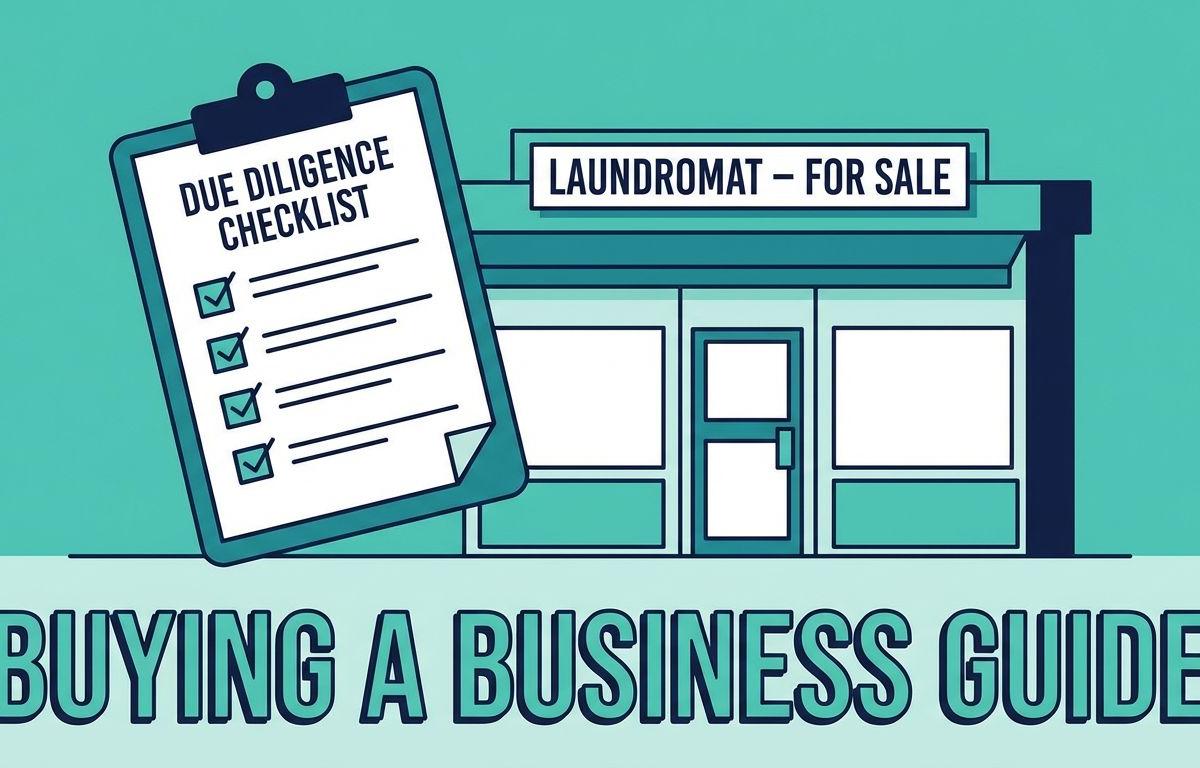
The Due Diligence Checklist
Before making an offer, investigate every aspect of the business. Here's what to verify:
Financial Due Diligence
- Request 3 years of tax returns (Schedule C or business tax returns)
- Get 24 months of bank statements to verify reported revenue
- Review 24 months of utility bills (water, gas, electric) — these reveal actual usage patterns
- Verify coin collection records or card payment reports
- Calculate actual NOI using verified numbers, not seller's claims
Lease Due Diligence
- How many years remain on the lease? (Minimum 7-10 years needed)
- What are the rent escalation terms? (Annual increases should be reasonable, ideally 2-3%)
- Is the lease transferable to a new owner?
- Are there CAM (Common Area Maintenance) charges?
- Does the lease allow 24-hour operation?
- Is there an exclusivity clause preventing another laundromat in the same complex?
Equipment Due Diligence
- List every machine with make, model, age, and condition
- Check maintenance records — well-maintained machines last 15-20 years
- Test every machine during a visit (run a cycle)
- Estimate remaining useful life: a 12-year-old machine may need replacement within 3-5 years
- Get quotes for replacing the oldest machines to factor into your offer
Location & Market Due Diligence
- Drive the area during different times/days to assess foot traffic
- Count competitors within 1-3 miles — use LaundroMaps to identify them
- Check neighborhood demographics (renter %, income levels)
- Verify zoning allows laundromat use
- Inspect plumbing and utility infrastructure capacity
Financing a Laundromat Purchase
Common financing structures for buying an existing laundromat:
- SBA 7(a) loan: 10-20% down, 10-year term, competitive rates. The most common option for laundromat purchases under $5M.
- Seller financing: The seller finances 20-50% of the price. Terms are negotiable. Seller financing signals the seller's confidence in the business.
- Combination: SBA loan for 60-70%, seller note for 20-30%, your cash for 10-20%. This is the most common structure.
For a full financing breakdown, see our guide to starting a laundromat.
Red Flags When Buying a Laundromat
- Seller won't share financials: If they won't provide tax returns and bank statements, walk away.
- Declining revenue trend: Year-over-year revenue drops signal location or competition problems.
- Short lease remaining: Less than 5 years left with no renewal option is extremely risky — the landlord can raise rent dramatically or not renew.
- All cash, no records: Coin-only operations with no formal bookkeeping make verification impossible. Insist on verifiable records.
- Deferred maintenance everywhere: Broken machines, leaking plumbing, and worn flooring mean significant capital expenditure is coming soon.
- Motivated seller with vague reasons: "I just want to retire" is fine. "I want out fast" without explanation warrants deeper investigation.
Frequently Asked Questions
How much does it cost to buy an existing laundromat?
Existing laundromats typically sell for $50,000 to $300,000, depending on size, location, equipment condition, and profitability. The price is usually 2.5x to 5x annual net operating income.
Is buying a laundromat better than building one?
Buying reduces risk — you get proven cash flow, an established customer base, and immediate income. Building gives you more control but costs more ($200K-$500K+) and takes 6-12 months before generating revenue. For first-time buyers, purchasing existing is usually safer.
How much do laundromats make per year?
Average annual revenue is $150,000-$300,000 with 20-35% profit margins. Net owner income ranges from $30,000 to $175,000 for a single location. See our complete profit breakdown.